Choose planted aquarium lighting based on plant difficulty, tank depth and fixture spread. Low-light plants such as Anubias, Java fern and many Cryptocoryne need far less intensity than carpeting plants or demanding red stems. A dimmable LED gives useful flexibility, and a timer keeps the photoperiod consistent. Spectrum affects appearance, but brightness and distribution are usually more important to plant success than chasing one Kelvin number.
A planted light should give you control. Too little limits growth; too much can make algae management harder than the plants themselves.
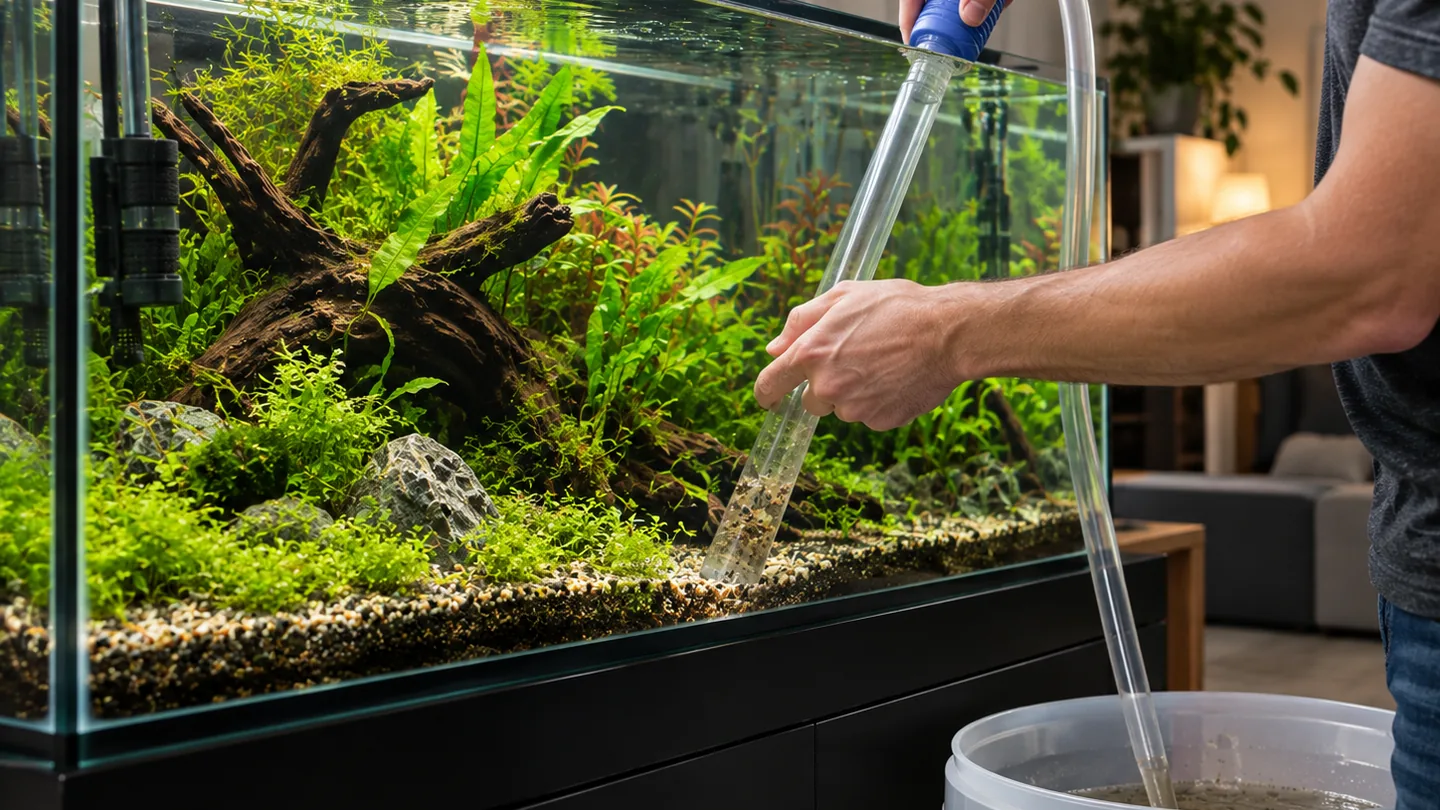
Start with the plants you want to grow
Low-light plants can thrive under modest fixtures, while demanding carpets and red plants may need much stronger light and often CO2 injection.
Buy for the actual plant list rather than assuming every planted tank needs high intensity.
Tank depth changes the requirement
Light intensity falls with distance. A fixture that works on a shallow 30cm tank may be inadequate at the substrate of a deep display.
PAR data can be helpful when available from reliable tests.
Dimming is valuable
A brighter fixture that can be reduced gives more room to adjust than a weak non-dimmable light. Start conservatively and increase slowly if plants need more.
Aquarium Co-Op recommends making one lighting change at a time and allowing plants time to respond.
Look for even spread
A narrow hotspot in the centre can grow algae while corners remain dim. Wide coverage or multiple fixtures may be better on long or deep tanks.
Mounting height also changes spread.
Use a timer from day one
A consistent 6–8 hour starting photoperiod is easier to evaluate than irregular manual switching. Adjust duration and intensity separately.
Frequently asked questions
What colour temperature is best for aquarium plants?
Many plants grow under a broad spectrum; neutral white around 5000–6500K is popular, but intensity and balance matter more than one exact Kelvin value.
Do red plants need red LEDs?
Not specifically. Many red plants need stronger overall light and appropriate nutrition; RGB channels mainly influence spectrum and appearance.
Do low-light plants need a special plant light?
They need suitable usable light, but not necessarily a high-output specialist fixture.
Sources and further reading
This guide separates general aquarium arithmetic from fish-welfare decisions. For species-specific limits, always check the needs of the fish you intend to keep.