A new planted aquarium often does well with roughly 6–8 hours of light per day. Aquarium Co-Op recommends starting in that range and increasing gradually only if plants need more light and algae remains controlled. Mature planted tanks may run longer, but more hours are not automatically better. Use a timer so the schedule is consistent and give fish and plants a proper dark period every night.
Light duration is one of the easiest aquarium variables to control, which makes it a useful first lever when balancing plant growth and algae.
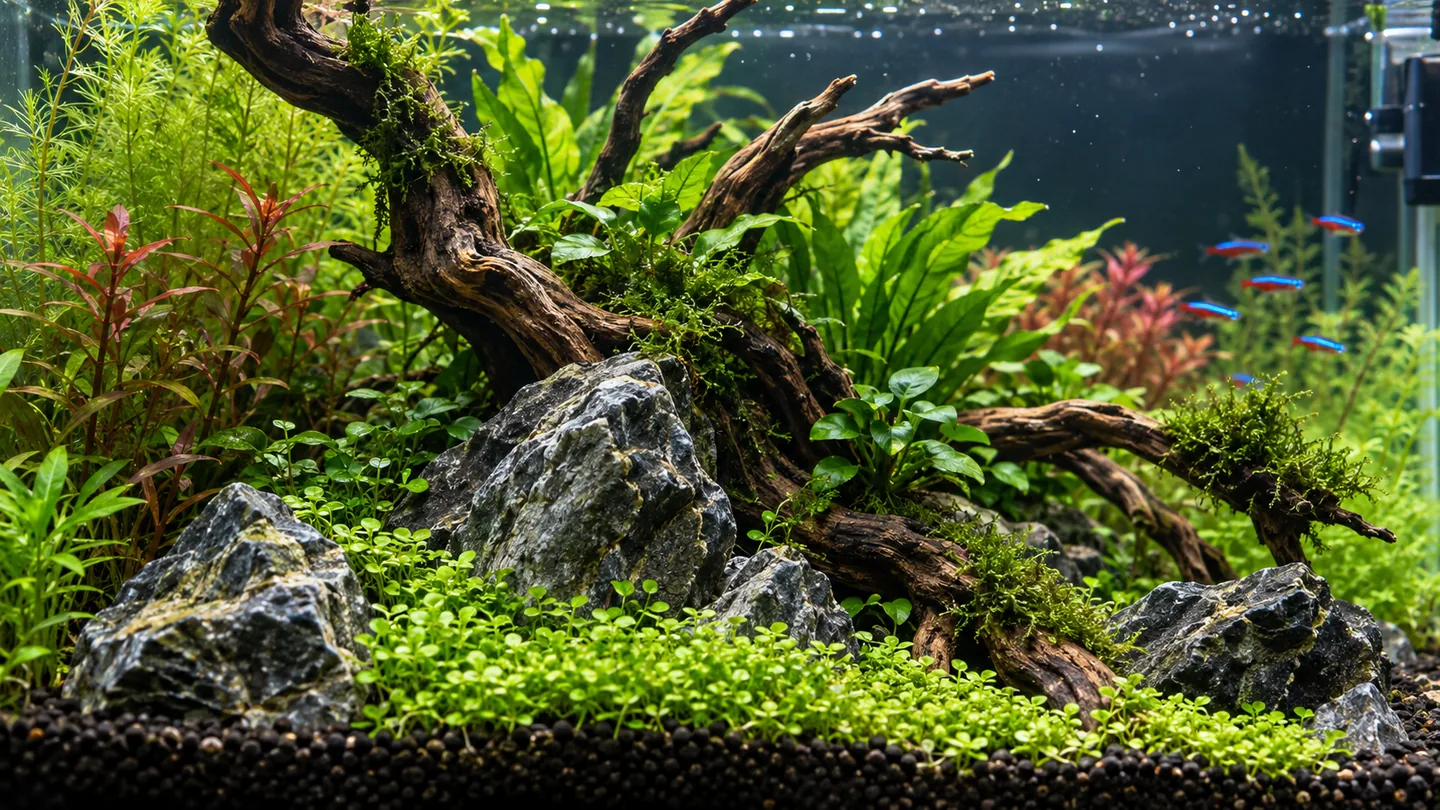
Start shorter on new tanks
New plants are adapting while the aquarium biology is still settling. A modest photoperiod reduces the chance that algae exploits excess light before plants are growing strongly.
Six to eight hours is a practical starting window for many low-tech planted tanks.
Increase only for a reason
If plants are healthy and algae is controlled, there may be no benefit to extending the schedule. If plants need more light, increase duration or intensity gradually rather than changing both at once.
Wait long enough to see the plant response before making another adjustment.
Use a timer
Consistency matters more than remembering to switch the light manually. A simple timer keeps the daily photoperiod repeatable even when you are away.
Choose hours that let you enjoy the aquarium without stretching the total light period unnecessarily.
Darkness is part of the cycle
Fish and plants need a normal day-night rhythm. Do not leave white or blue aquarium lights on all night.
Room darkness also gives shy fish a chance to rest normally.
If algae increases
Reduce either duration or intensity and keep other variables stable. Excess light is one of several algae drivers, alongside nutrients, CO2 balance and plant health.
Frequently asked questions
Is 12 hours too much aquarium light?
It can be for many tanks, especially new or low-tech setups. Use plant and algae response rather than a fixed maximum.
Can I split the light period?
Yes. Some aquarists use a midday break, but total duration and consistency still matter.
Should aquarium lights be on when the room is bright?
The dedicated light schedule should be based on the tank's needs; strong ambient sunlight can add uncontrolled light and algae risk.
Sources and further reading
This guide separates general aquarium arithmetic from fish-welfare decisions. For species-specific limits, always check the needs of the fish you intend to keep.