Healthy plants can consume ammonia and other nitrogen compounds, but they do not automatically replace all functions of a filter. A filter circulates nutrients and oxygen, traps debris and provides well-oxygenated surfaces for beneficial bacteria. Very lightly stocked, heavily planted specialist tanks can run without conventional filtration, but they require deliberate design and close observation rather than simply leaving the filter out.
A planted tank is biologically active, not filter-proof. The question is whether the plant mass and stocking are deliberately balanced enough to replace the jobs a filter normally performs.
What plants contribute
Growing plants use nitrogen and other nutrients, and their surfaces support microorganisms. Fast-growing plant mass can significantly reduce the nitrogen load.
That is helpful, but it is only one part of aquarium stability.
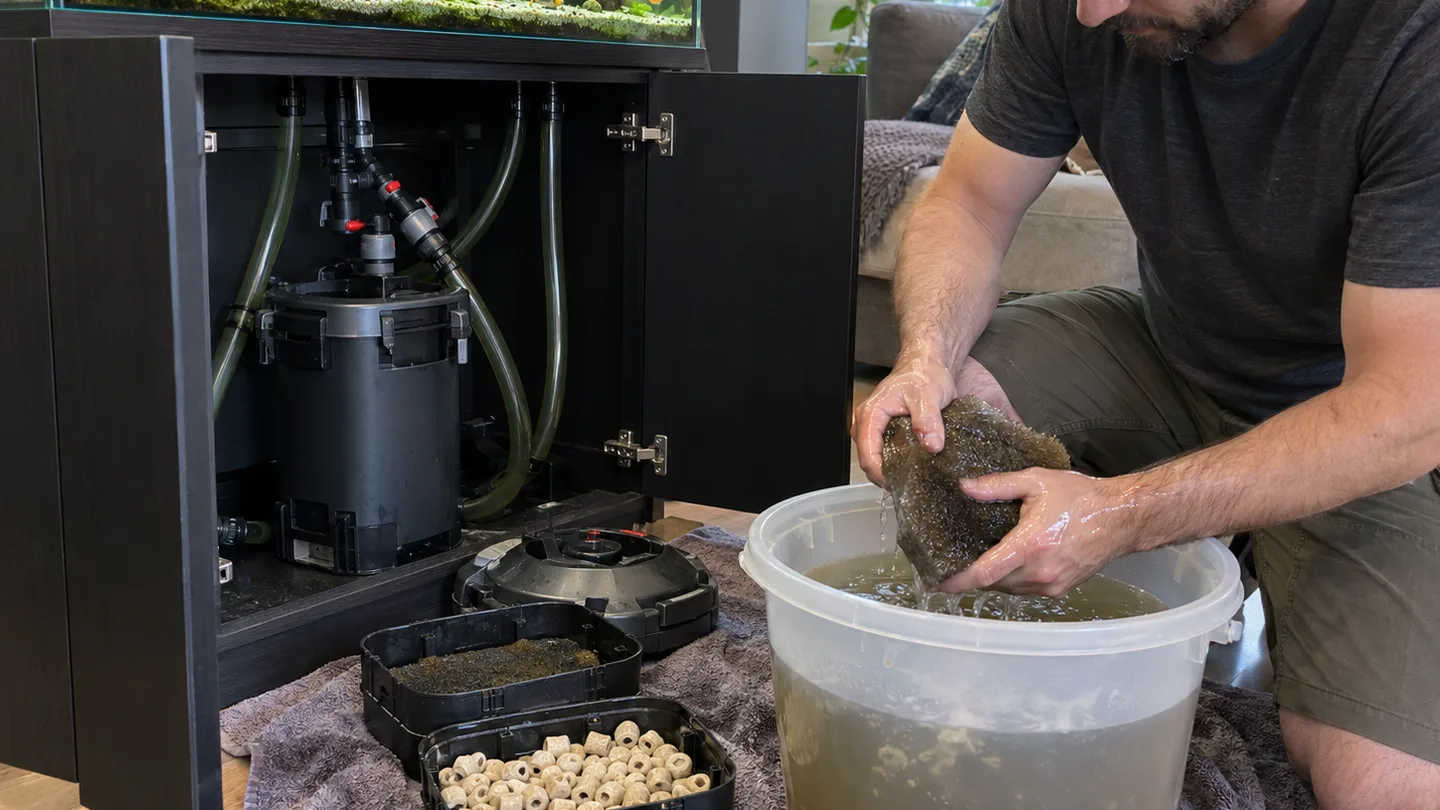
What a filter still adds
- Continuous water circulation.
- Mechanical removal of suspended debris.
- Extra biological media with strong oxygen supply.
- Surface movement for gas exchange.
- A predictable place to seed and preserve beneficial bacteria.
Low-tech does not mean no-flow
Even a simple planted tank benefits from gentle circulation so nutrients and carbon reach leaves and oxygen reaches the whole aquarium.
A small sponge filter is often enough when strong flow is unnecessary.
Filterless tanks are specialist systems
A low-stock, densely planted aquarium may function without a conventional filter if plant growth and microbial surfaces handle the waste. That setup has less room for sudden stocking or feeding mistakes.
Do not copy the absence of a filter without copying the low bioload and plant mass that make it possible.
Choose filtration that suits the plants and fish
Use broad gentle flow around delicate stems, stronger circulation in large planted tanks and intake guards where shrimp are present.
The filter should support the ecosystem rather than dominate it.
Related aquarium tools and guides
Frequently asked questions
Can plants cycle an aquarium?
Plants can consume nitrogen and support microorganisms, but test water and stock conservatively rather than assuming plants guarantee readiness.
Is a sponge filter good for planted tanks?
Yes. It provides gentle circulation, aeration and biological filtration without much equipment complexity.
Does a planted tank need an air stone?
Not always. If the filter provides enough surface agitation and oxygen, an air stone may be unnecessary.
Sources and further reading
This guide separates general aquarium arithmetic from fish-welfare decisions. For species-specific limits, always check the needs of the fish you intend to keep.