Live aquarium plants can take up ammonium and nitrate, reducing the amount that reaches the conventional nitrification pathway. In a heavily planted tank with strong healthy growth, this can support a plant-led or silent cycle. However, newly planted tanks can melt, stall or be too lightly planted to carry the intended bioload. Confirm stable growth and test ammonia and nitrite before stocking heavily.
The question is not whether plants use nitrogen—they do. The real question is whether the plant mass in your aquarium can reliably handle the waste load you plan to add. A single Anubias in a new tank is not the same as a densely planted aquarium full of fast-growing stems and floaters.
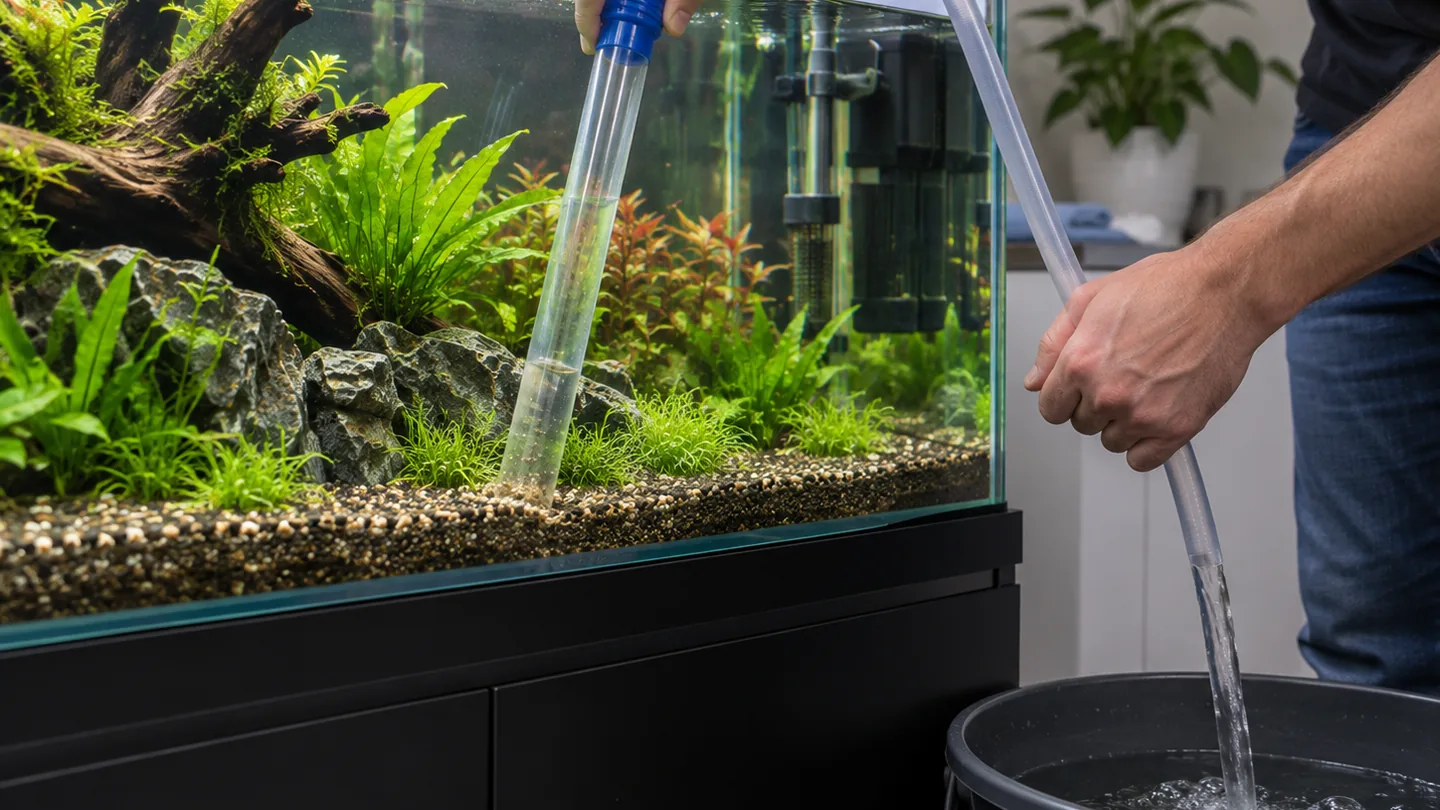
How plants change the nitrogen pathway
Plants can use ammonium directly and also take up nitrate, so part of the nitrogen input can become plant tissue instead of passing entirely through ammonia, nitrite and nitrate accumulation.
This is one reason heavily planted aquariums can show lower nitrate than expected.
Fast growers matter more than decorative plant count
- Floating plants with active growth.
- Healthy stem plants producing new shoots.
- Large plant mass relative to the planned fish load.
- Adequate light and nutrients.
- No widespread melting or nutrient deficiency.
Why a new planted tank can still fail
Many emersed-grown aquarium plants shed old leaves after submersion. If a large portion melts at once, the tank can gain decomposing organic material just when a beginner assumes plants are providing extra safety.
Lighting or nutrient problems can also halt growth and remove the nitrogen uptake you were relying on.
How to verify a plant-led startup
Watch for sustained new plant growth, not just green leaves on day one. Test ammonia and nitrite repeatedly, especially after livestock is added.
Stock gradually so plant and microbial communities can respond to a rising waste load.
Filtration still adds resilience
Plants do not make circulation, mechanical filtration or oxygenated biological surfaces irrelevant. A conventional filter adds resilience when plant growth slows or livestock load changes.
Use plants and filtration as complementary systems.
Related aquarium tools and guides
Frequently asked questions
Can I skip cycling if I have live plants?
Not safely by default. A heavily planted, actively growing aquarium can handle nitrogen differently, but you still need evidence that ammonia and nitrite remain controlled.
Which plants help most during startup?
Fast-growing stems and floating plants usually take up nutrients faster than slow epiphytes, provided they are healthy and have suitable light.
Do plants remove nitrite?
Plants primarily use ammonium and nitrate; conventional nitrifying bacteria remain important for processing nitrite in most aquariums.
Sources and further reading
This guide separates general aquarium arithmetic from fish-welfare decisions. For species-specific limits, always check the needs of the fish you intend to keep.