Use a cycled aquarium with stable temperature and filtration, a substrate appropriate to the plants, a timer-controlled light of moderate intensity, and easy species such as Anubias, Java fern, Java moss, Cryptocoryne or many stem plants. Avoid over-lighting, fertilise according to plant demand, and do not assume injected CO2 is required for every planted tank.
A low-tech planted aquarium is not a neglected aquarium. It is a system deliberately designed around slower-growing, less demanding plants and a manageable balance of light, nutrients and livestock. The easiest way to fail is to install a very strong light and then try to solve the resulting algae with more products.
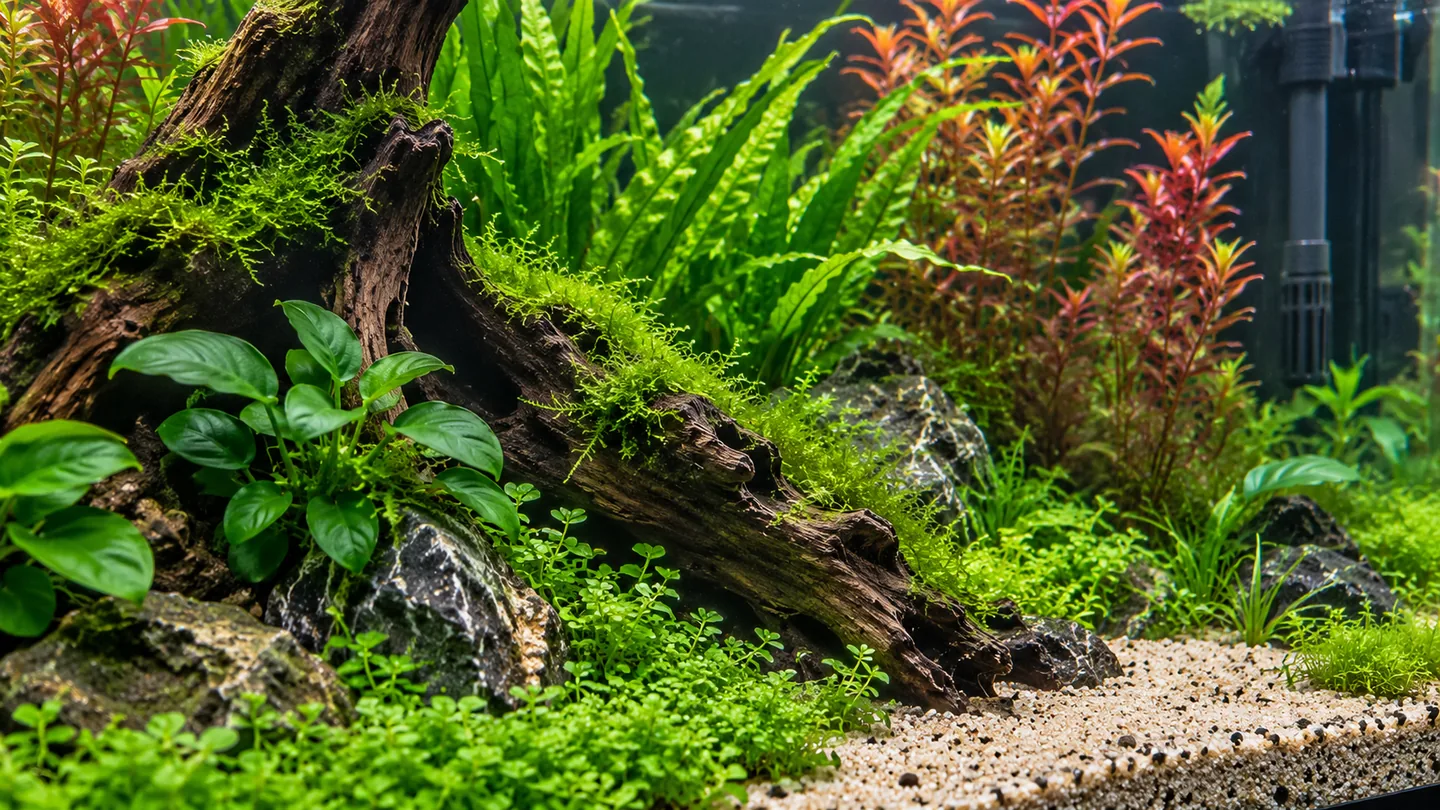
Choose plants before choosing the light
Start with species that are known to grow under low to moderate light and without injected CO2. Epiphytes such as Anubias and Java fern are especially forgiving because they attach to rock or wood rather than depending on a deep nutrient-rich bed.
Fast-growing stems and floating plants can also help use available nutrients, but they may need regular trimming.
Keep lighting moderate and consistent
Use a timer so the photoperiod is predictable. More light is not automatically better: if plant growth is limited by carbon or nutrients, excess light can favour algae.
Begin conservatively and adjust after several weeks based on plant growth rather than changing intensity every few days.
Substrate options
| Substrate | Best use | Watch for |
|---|---|---|
| Inert gravel | Easy plants and water-column feeders | Root feeders may need root tabs |
| Sand | Natural appearance and bottom-dwellers | Can compact if overly deep |
| Aquasoil | Rooted plants and shrimp setups | May alter pH/KH and can release ammonia when new |
| Bare areas with pots | Flexible plant placement | Less natural appearance |
Fertiliser should follow plant demand
Low-tech does not mean nutrient-free. Fish waste supplies some nitrogen and phosphorus, but trace elements or root nutrients may still be limiting.
Use a complete fertiliser or root tabs only where needed and follow the product's dosing guidance. Increase slowly if plants show sustained deficiency rather than dosing heavily on day one.
Plant heavily enough to create a real planted system
- Use several plant species rather than one token plant.
- Group stems densely enough to establish rather than spacing every sprig far apart.
- Attach epiphytes to hardscape without burying rhizomes.
- Remove melting leaves before they decay heavily.
- Trim and replant healthy tops as the tank fills in.
Stock after the biological system is ready
Live plants do not remove the need to monitor ammonia and nitrite in a new tank. A planted aquarium still benefits from a mature filter and controlled stocking.
Some heavily planted setups can establish differently from bare tanks, but beginners should verify water quality rather than assuming plants make cycling irrelevant.
Related aquarium tools and guides
Frequently asked questions
Do low-tech planted tanks need CO2?
Not necessarily. Many plants grow well without injected CO2 if light intensity, plant choice and nutrients are appropriate.
How many hours should the light be on?
There is no universal number, but many low-tech tanks start around 6-8 hours and adjust based on plant growth and algae. Consistency is more important than chasing a perfect figure.
Do aquarium plants need fertiliser if I have fish?
Sometimes. Fish waste provides some nutrients but may not supply everything plants need, especially root feeders or trace elements.
Sources and further reading
This guide separates general aquarium arithmetic from fish-welfare decisions. For species-specific limits, always check the needs of the fish you intend to keep.