Clean and inspect the empty tank, choose a plant plan, add the substrate and hardscape, install filtration and lighting, plant heavily, fill slowly with conditioned water, then run and cycle the aquarium before adding fish. Keep lighting moderate at first and fertilise according to actual plant demand rather than dosing heavily from day one.
Starting from an empty tank is the easiest moment to get a planted layout right because substrate depth, wood, rock and root zones can be arranged before water limits access. The most common mistake is choosing a powerful light first and then trying to find plants that can cope with the resulting imbalance.
Choose the plant style before the substrate
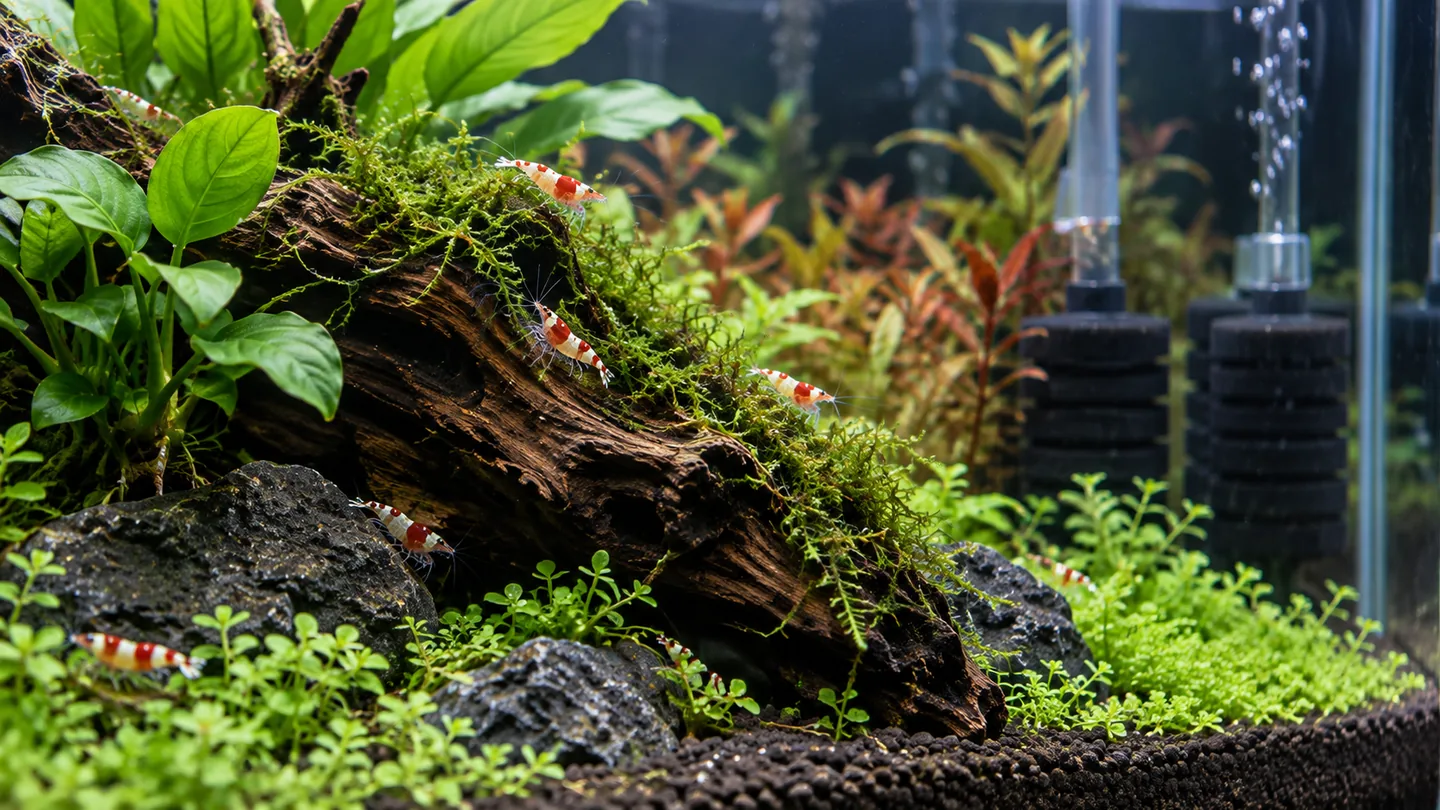
Anubias, Java fern and mosses can grow attached to hardscape and need little rooting depth. Cryptocoryne, swords and many stems use the substrate more directly. Carpeting plants may need stronger light and often benefit from injected CO2.
That means plant choice should decide whether inert gravel, sand, aquasoil or a mixed strategy makes sense.
Build hardscape before water goes in
- Place the tank and level the stand.
- Add the chosen substrate and create any planned slope.
- Position the main rocks and wood securely.
- Check that heavy pieces cannot fall against the glass.
- Leave access for cleaning and plant trimming.
Plant heavily enough to matter
A few token plants do not create the same biological and visual effect as a genuinely planted tank. Use enough plant mass that the aquarium begins with multiple established growth points.
Plant epiphytes on rock or wood without burying their rhizomes. Rooted plants should be inserted deeply enough to hold but not so deeply that crowns are buried.
Start lighting conservatively
A new planted tank has little established plant mass and can be prone to algae if lighting is intense or overly long. Use a timer and begin with a controlled photoperiod.
Increase light only after observing healthy plant growth and stable nutrient availability.
Cycle and stabilise before full stocking
Plants can use nitrogen compounds, but they do not make water testing unnecessary. Establish biological filtration and verify ammonia and nitrite are zero before normal fish stocking.
Some active soils release ammonia when new, so planted tanks may still need an extended startup period and extra water changes.
Related aquarium tools and guides
Frequently asked questions
Do I need aquasoil for a planted tank?
No. Many easy plants grow in inert gravel or sand with water-column fertiliser or root tabs. Aquasoil is useful for some layouts but not compulsory.
Do I need CO2 injection?
Not for every planted tank. Many low-tech species grow well without injected CO2 under moderate light.
Should I plant before filling the tank?
Often yes. Rooted plants are easier to place while the tank is empty or partially filled, while epiphytes can be attached to hardscape in advance.
Sources and further reading
This guide separates general aquarium arithmetic from fish-welfare decisions. For species-specific limits, always check the needs of the fish you intend to keep.