Plant melt commonly occurs when emersed-grown plants adapt to submerged life, when Cryptocoryne experiences a major environmental change, or when roots and crowns are damaged during planting. Nutrient shortages, excessive light changes and poor water quality can also contribute. If the crown or rhizome is firm and new shoots appear, the plant may recover even after losing most old leaves.
The worst-looking plant in the tank is not necessarily the one closest to death. Many aquatic plants deliberately discard leaves that are poorly adapted to new conditions.
Emersed-to-submerged transition is common
Commercial plants are often grown with leaves above water. Those leaves can die after submersion while new underwater-adapted leaves replace them.
Crypt melt is a special case
Cryptocoryne can shed many leaves after relocation or a major parameter change. Stable conditions and healthy roots often lead to regrowth.
Check how the plant was planted
Buried Anubias or Java fern rhizomes can rot, while buried crowns on swords or Vallisneria can also cause decline. Correct the planting depth before adding more fertiliser.
Remove decaying tissue
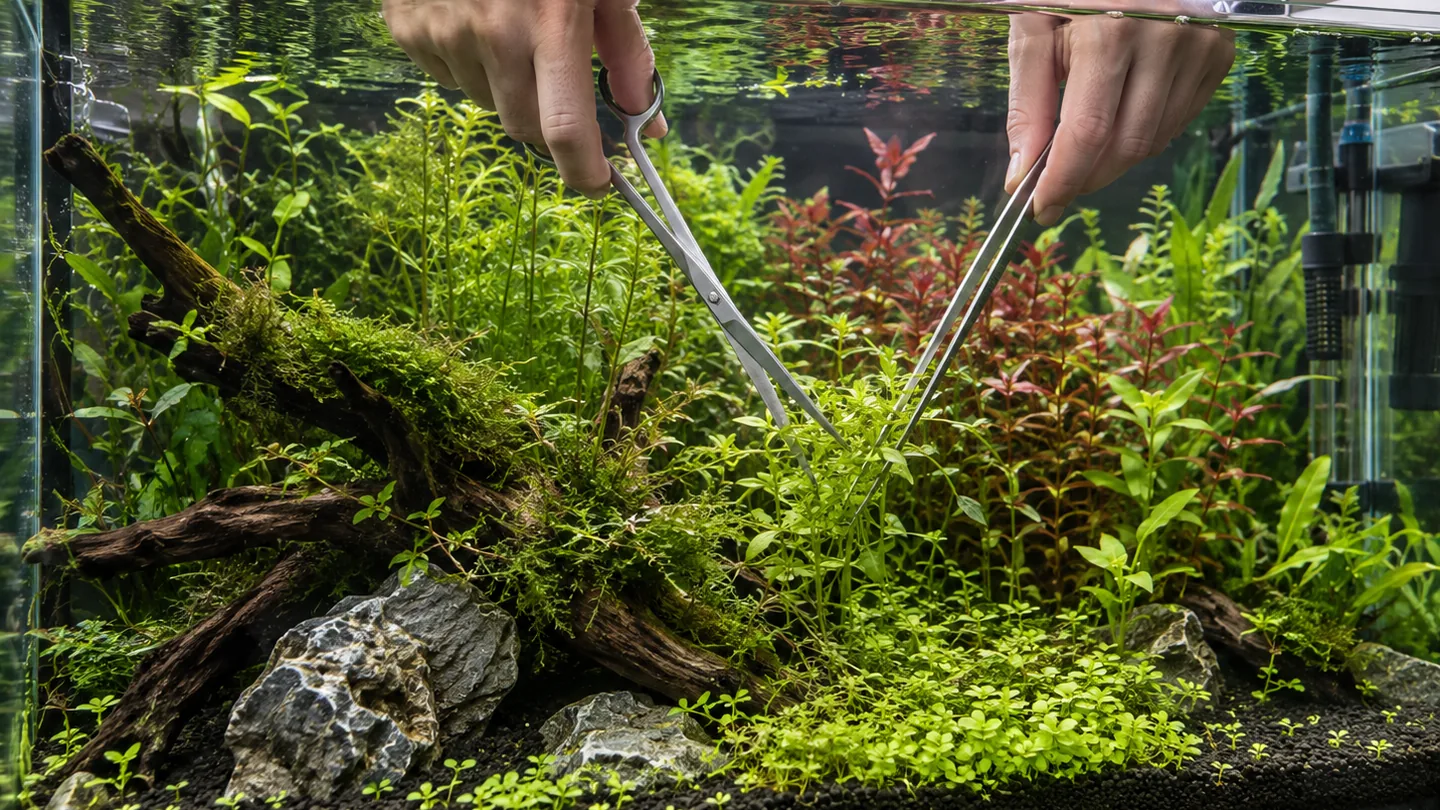
Cut away leaves that are soft, transparent or disintegrating so they do not add unnecessary organic waste. Preserve healthy roots, rhizomes and crowns.
Stability beats panic adjustments
Keep lighting, temperature and water chemistry steady while the plant recovers. Constantly moving it or changing fertiliser every few days adds more stress.
Related aquarium tools and guides
Frequently asked questions
Can a melted aquarium plant grow back?
Yes, if the roots, crown or rhizome remain healthy and conditions are suitable.
Why do new plants melt after purchase?
Many were grown emersed and must replace those leaves with submerged-form growth.
Should I remove all melted leaves?
Remove tissue that is clearly decaying, but avoid damaging healthy crowns or new shoots.
Sources and further reading
This guide separates general aquarium arithmetic from fish-welfare decisions. For species-specific limits, always check the needs of the fish you intend to keep.