Cryptocoryne species are popular low-tech aquarium plants because many tolerate modest light and do not require injected CO2. They feed heavily through their roots, so root tabs are useful in inert sand or gravel. Newly moved crypts can lose leaves in a transition known as crypt melt, but healthy roots often produce new adapted leaves if conditions remain stable.
Crypts often look dramatic when they melt, yet the correct response is usually patience rather than repeatedly uprooting them.
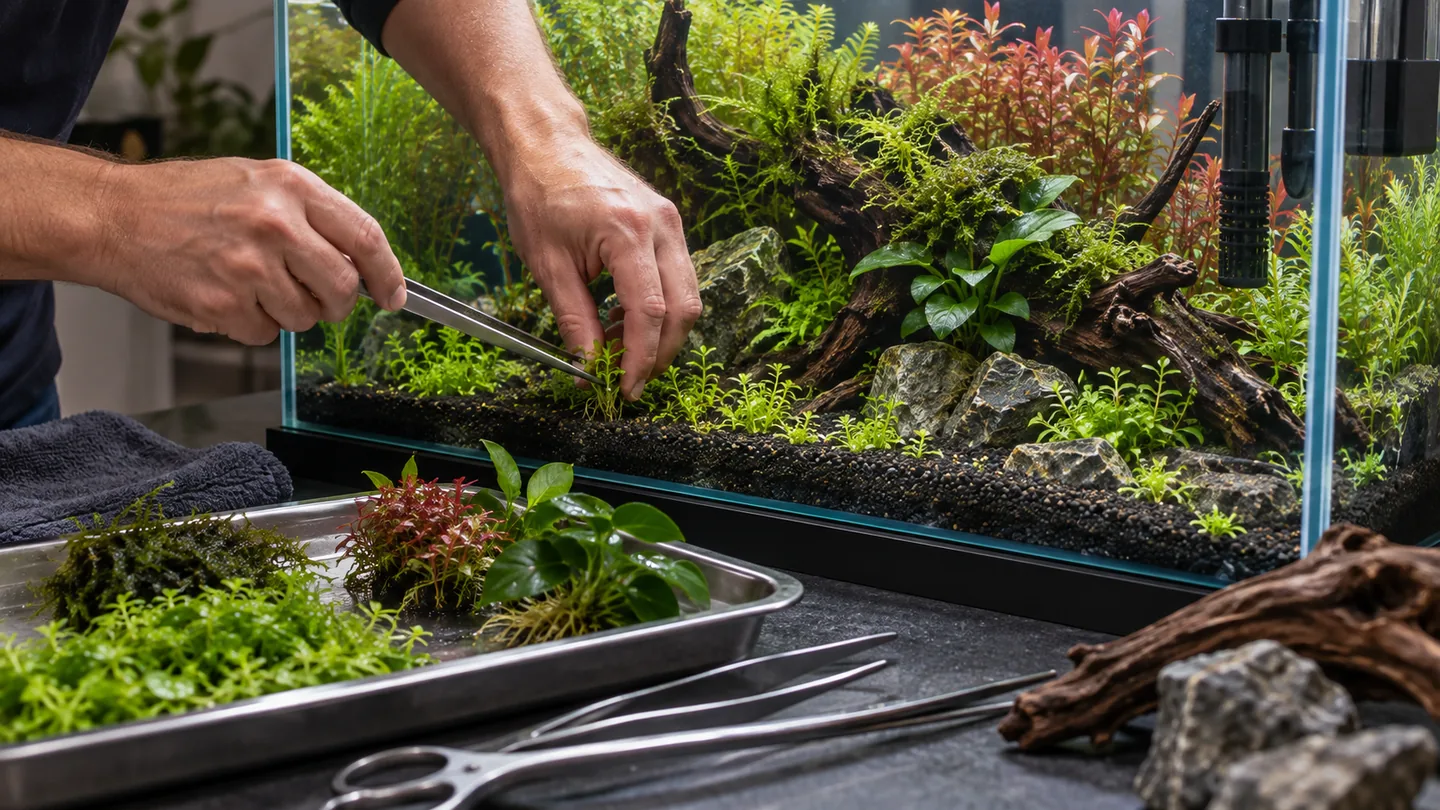
Plant roots, not the crown
Bury the root system securely while keeping the crown where leaves emerge at or just above the substrate surface. A stable planting position helps the plant settle.
Feed the root zone
Crypts are strong root feeders. In inert substrate, use root tabs near the root mass and renew them as directed.
Understand crypt melt
A change in water, light or planting conditions can cause older leaves to break down. Remove decaying leaves and watch for new growth from the crown before assuming the plant is dead.
Keep conditions consistent
Frequent replanting, sudden lighting changes and major chemistry swings can trigger setbacks. Once a crypt is growing well, leave it alone where possible.
Propagation happens from the roots
Established plants can produce daughter plants through underground runners. Allow them to develop before separating and replanting.
Related aquarium tools and guides
Frequently asked questions
What is crypt melt?
It is the rapid loss of older leaves after a change in conditions. Healthy roots may still regrow new foliage.
Do Cryptocoryne need CO2?
No. Many common varieties grow well without injected CO2.
Do crypts need root tabs?
They strongly benefit from root nutrition, especially in inert sand or gravel.
Sources and further reading
This guide separates general aquarium arithmetic from fish-welfare decisions. For species-specific limits, always check the needs of the fish you intend to keep.