For most freshwater setups you need a suitable tank and stand, a filter with biological media, water conditioner, a test kit, a thermometer, a heater if the species needs tropical temperatures, a light with a timer, substrate or a bare-bottom plan, hides/decor as appropriate, a siphon and aquarium-only bucket, plus species-appropriate food.
Starter kits can be useful, but the word 'kit' does not mean every requirement is covered. The right list depends on whether you are keeping tropical community fish, goldfish, shrimp, a planted aquascape or something more specialised. Use this as the base list, then add species-specific equipment only after checking the animals' needs.
The non-negotiable foundation
| Equipment | Why it matters | Typical mistake |
|---|---|---|
| Aquarium | Provides the stable water volume and swimming space | Choosing by price rather than adult fish needs |
| Stand/support | Carries the full static load | Using furniture that bows or wobbles |
| Filter | Processes suspended waste and supports beneficial bacteria | Buying on flow number alone |
| Water conditioner | Makes mains water safe when disinfectants are present | Assuming standing water always removes everything |
| Water tests | Shows invisible ammonia/nitrite problems | Judging water quality by clarity |
| Thermometer | Measures actual temperature | Trusting the heater dial as a measurement |
Do you need a heater?
A heater is species-dependent, not a universal aquarium rule. Tropical fish generally need controlled warm water; many true coldwater species do not. Even when a heater is used, setpoint, wattage and placement should match the tank, room temperature and manufacturer's instructions.
Use an independent thermometer. A heater is a control device; the thermometer is the check that tells you whether the result is actually stable.
Lighting, lid and timer
Fish benefit from a predictable day/night pattern, and planted tanks also need enough light for the chosen plants. A timer is inexpensive and removes the temptation to leave the light on late every night.
A lid can reduce evaporation and may be essential for fish that jump. It also changes gas exchange and equipment access, so choose a lid that works with the filter and light rather than treating it as decoration.
Substrate, plants and hardscape
Gravel, sand and planted substrates are not interchangeable. Bottom-dwelling fish may have substrate preferences, rooted plants may need a suitable bed or fertilisation strategy, and some specialist soils can affect water chemistry.
Rocks, wood and caves should be secure and aquarium-safe. Never use household cleaners on hardscape. If you collect natural materials, identify and test them properly before they enter the tank.
Maintenance equipment that saves trouble later
- A siphon or gravel vacuum sized for the tank.
- One or more buckets reserved only for aquarium work.
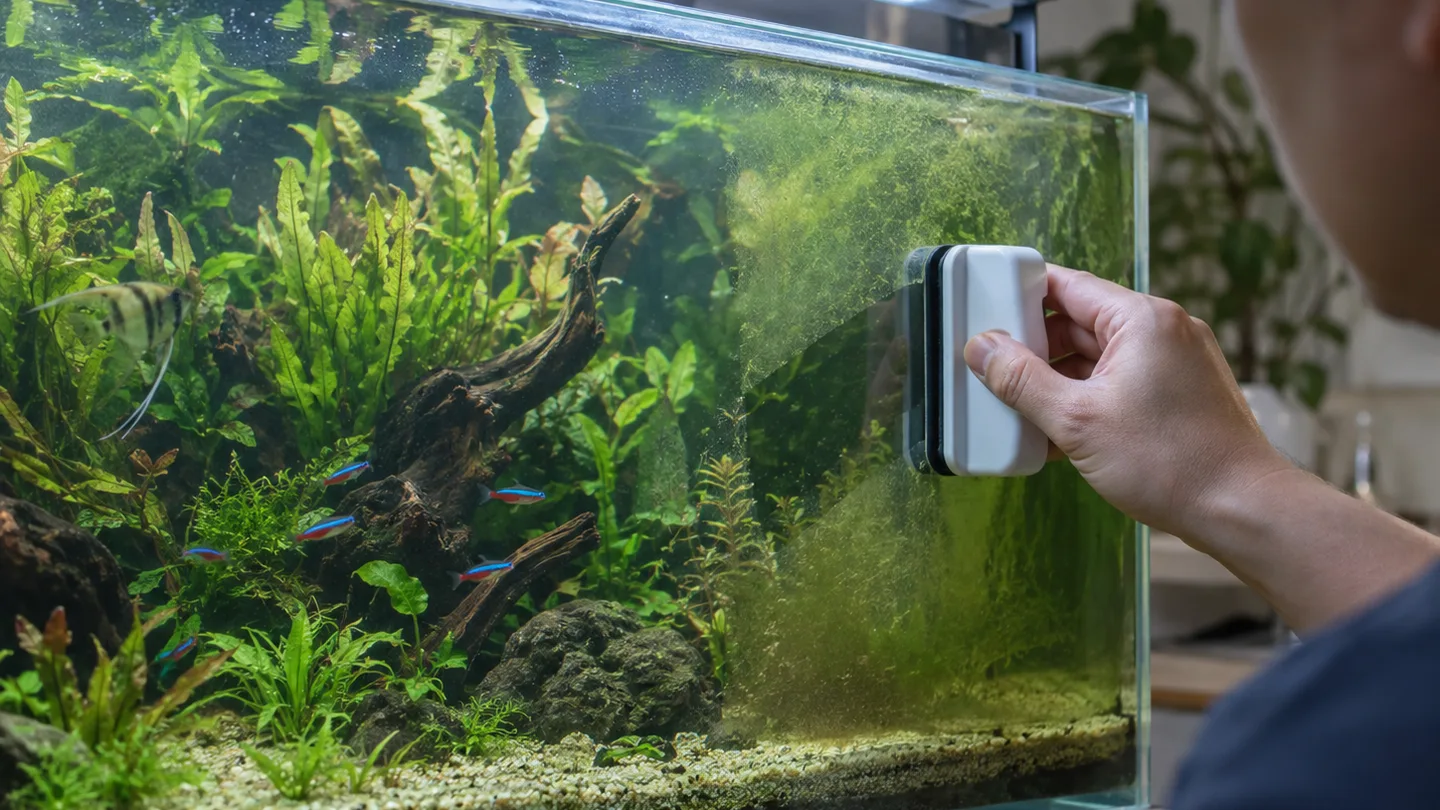
- Algae scraper appropriate for glass or acrylic.
- Towels kept near the tank for small spills.
- Fish net or specimen container.
- Spare dechlorinator and a way to measure doses accurately.
- A timer for lights and, where useful, a battery air pump for power cuts.
Useful extras, not automatic essentials
Air pumps, CO2 systems, automatic feeders, UV sterilisers, dosing pumps and app-connected controllers can all be useful in the right setup, but none should be bought simply because it appears on a generic 'must-have' list.
Spend first on the parts that keep water safe and make maintenance easy. A reliable filter, testing routine and appropriate tank size usually do more for a beginner than decorative technology.
Related aquarium tools and guides
Frequently asked questions
Do I need an air pump if I have a filter?
Not always. If the filter creates adequate circulation and surface movement, an additional air pump may not be necessary. Some setups benefit from extra aeration, sponge filtration or backup air during power cuts.
Do I need a water test kit before buying fish?
Yes. Testing is part of cycling a new aquarium and remains useful whenever fish behaviour, water quality or maintenance changes.
Do I need a lid on a fish tank?
It depends on the species and setup, but many fish can jump and lids also reduce evaporation. Choose a lid compatible with your equipment and gas-exchange needs.
Sources and further reading
This guide separates general aquarium arithmetic from fish-welfare decisions. For species-specific limits, always check the needs of the fish you intend to keep.