Before bringing fish home, confirm the tank is on a level, load-rated stand; the filter, heater and thermometer work; tap water has been conditioned; the aquarium has completed a biological cycle; ammonia and nitrite test at zero; and the planned fish are suitable for the tank's adult capacity and conditions.
Aquarium shopping is easy to do in the wrong order because fish are the exciting part. This checklist deliberately puts the invisible jobs first: support, water treatment, filtration and testing. Tick those off before choosing livestock and you remove many of the causes of 'new tank syndrome'.
Before buying the tank
- Choose the fish or broad type of community you want to keep before fixing the tank size.
- Check adult fish size, group size, activity level and temperature needs.
- Measure the intended space, including clearance for filter hoses, lid access and maintenance.
- Confirm the floor and furniture can support the filled system.
- Plan access to safe electrical sockets with drip loops and no overloaded extension arrangement.
Core equipment checklist
| Item | Required? | What to check |
|---|---|---|
| Aquarium and suitable stand | Yes | Level, stable and appropriate for the tank design |
| Filter | Yes | Adequate biological media and sensible flow |
| Heater | For tropical species | Thermostatic, correctly sized, installed to instructions |
| Thermometer | Strongly recommended | Independent check of real water temperature |
| Water conditioner | Usually yes with mains tap water | Handles the disinfectants in your supply |
| Water test kit | Yes | At minimum ammonia and nitrite during cycling |
| Light and timer | Usually | Predictable day/night period |
| Siphon/bucket | Yes for maintenance | Aquarium-only equipment, never used with cleaning chemicals |
Setup-day checklist
- Inspect the glass, silicone and stand before filling.
- Level and stabilise the stand; do not try to move a filled tank.
- Rinse substrate and decor as appropriate without detergents.
- Build the substrate and hardscape.
- Install filter, heater and thermometer but wait to power equipment until the tank is filled correctly.
- Fill slowly, dose water conditioner and check for leaks.
- Plant live plants if used.
- Start circulation and heating, then verify temperature and flow.
Cycling checklist
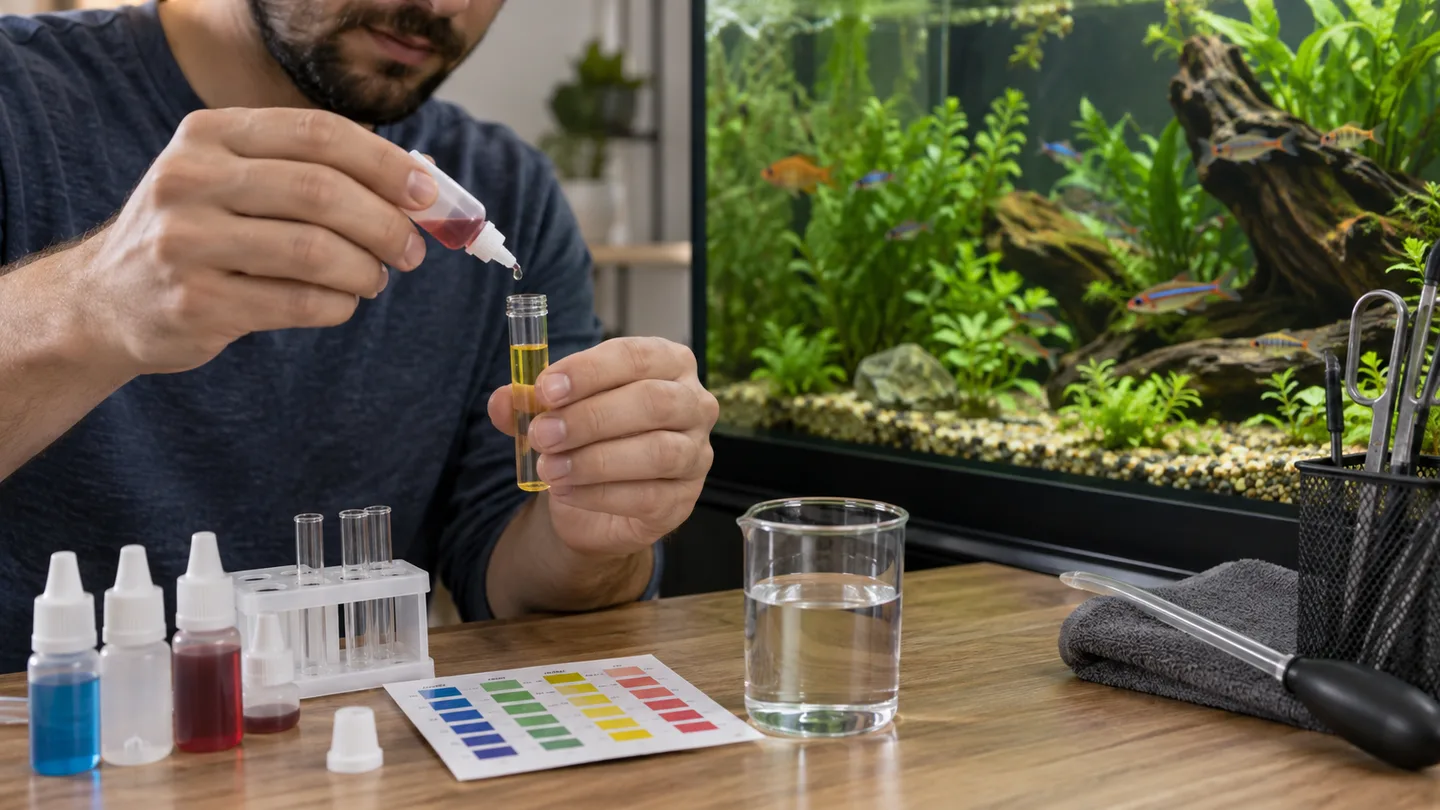
Clear water can still contain harmful dissolved ammonia or nitrite. A test kit is the only practical way for a home aquarist to confirm those compounds are where they should be.
- Select a fishless cycling method or another welfare-conscious method you understand.
- Keep biological filtration operating continuously.
- Test ammonia and nitrite regularly.
- Record results rather than relying on memory.
- Do not use 'the water looks clear' as evidence that the cycle is complete.
- Wait for ammonia and nitrite to return to zero before normal stocking.
Before the first fish
- Research compatibility and adult size again.
- Check the current aquarium temperature matches the species plan.
- Confirm ammonia and nitrite are zero.
- Have dechlorinator and water-change equipment ready before an emergency happens.
- Decide how new fish will be acclimated and whether quarantine is needed.
- Buy a suitable food before the fish arrive.
First-week livestock checklist
- Feed lightly enough that food is not accumulating.
- Observe breathing, swimming and appetite each day.
- Retest ammonia and nitrite after adding fish.
- Avoid adding another batch immediately just because the first fish look fine.
- Make a partial water change if testing shows a water-quality problem and correct the underlying cause.
Related aquarium tools and guides
Frequently asked questions
What are the absolute essentials for a freshwater aquarium?
A suitable aquarium and stand, filtration, conditioned water, a thermometer, a heater where the species requires one, water testing, maintenance equipment and an established biological cycle are the core essentials.
Do aquarium starter kits include everything?
Usually not. Kits vary and may still require a stand, heater, thermometer, conditioner, test kit, siphon, substrate, decor and species-appropriate food.
Can I use a household bucket for aquarium water changes?
Use a clean bucket reserved for aquarium work. Buckets that have held detergents, bleach or other household chemicals are a contamination risk.
Sources and further reading
This guide separates general aquarium arithmetic from fish-welfare decisions. For species-specific limits, always check the needs of the fish you intend to keep.