A 10-gallon tank can work for carefully chosen small livestock but changes quickly when something goes wrong. A 20-gallon long offers more horizontal swimming space and water stability without becoming huge. A 29-gallon adds volume and height. A 40-gallon breeder gives excellent footprint and flexibility but needs a stronger stand, more water and more room. Choose by the adult fish plan, not by gallon number alone.
There is no single best aquarium size for every beginner because the right answer depends on species, available floor space, budget and the amount of water you are prepared to move during maintenance. What is consistent is that very small tanks are less forgiving: waste becomes concentrated faster and temperature can change more quickly.
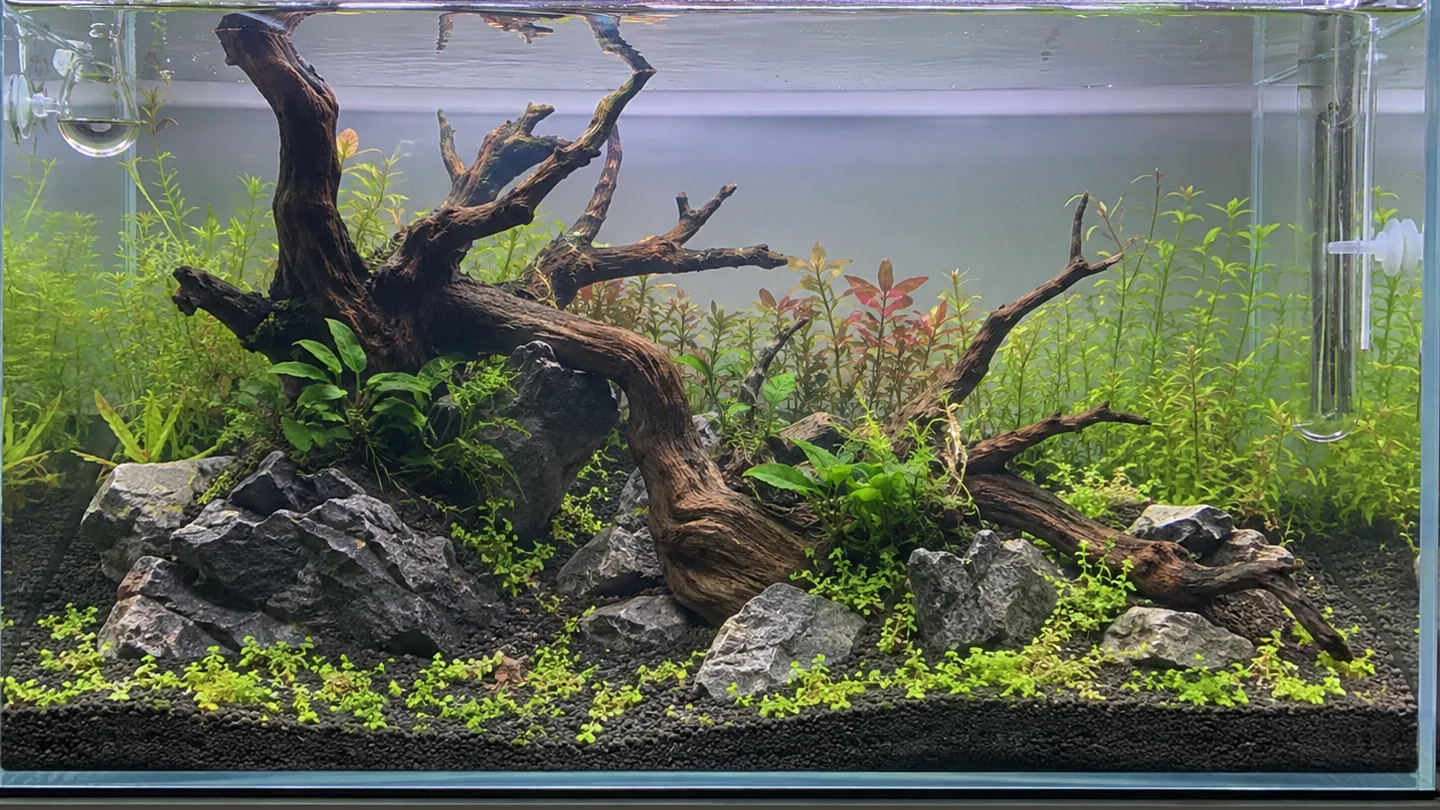
Side-by-side comparison
| Nominal size | Main strength | Main compromise | Good beginner fit |
|---|---|---|---|
| 10 US gal (~38 L) | Compact and affordable | Less margin for water-quality mistakes | Single-species or small carefully planned setup |
| 20 US gal long (~76 L) | Excellent horizontal footprint | Takes more shelf/stand length | Strong all-round beginner choice |
| 29 US gal (~110 L) | More water volume in a modest footprint | Extra height is not equal to extra swimming length | Community tank where vertical space is useful |
| 40 US gal breeder (~151 L) | Wide footprint and flexible aquascaping | Heavier, larger stand and bigger water changes | Beginner with enough room and budget |
Why larger tanks can be easier
A larger volume dilutes a given amount of waste more than a tiny volume does. It also has more thermal mass, so room-temperature swings generally have a slower effect. That does not make a large aquarium self-maintaining, but it can give you more time to react.
The RSPCA explicitly advises choosing more space than the minimum and notes that larger volumes tend to have more stable temperature and water conditions.
Why footprint matters as much as gallons
A long, wide tank provides more horizontal swimming distance, more territory and usually more surface area for gas exchange than a tall tank with similar volume. This is why a 20-gallon long can be more useful for many small community fish than a taller tank with a similar number on the label.
Species with long bodies, high activity or territorial behaviour may need a particular tank length even when the raw volume looks adequate.
Weight and maintenance scale quickly
Bigger tanks are more forgiving chemically, but the physical job is larger. A partial water change on a 40-gallon system can involve several buckets; a fully aquascaped tank can weigh hundreds of kilograms once glass, water, substrate and rock are included.
Before moving up a size, check the stand, floor, access route, water-change method and whether you can reach the bottom comfortably for maintenance.
A practical decision rule
- Start with the species and adult group size you actually want.
- Choose the longest, widest tank that fits the room and budget rather than the tallest one that fits a small footprint.
- Avoid tiny novelty tanks as a shortcut to easy fishkeeping.
- If two sizes both meet the livestock plan, the larger stable volume is often the more forgiving choice.
- Do not buy a 40-gallon tank if its water changes will be so inconvenient that maintenance gets skipped.
Related aquarium tools and guides
Frequently asked questions
Is a 10 gallon aquarium too small for a beginner?
It is not automatically too small, but it offers less margin for stocking and water-quality mistakes. A carefully planned 10-gallon can work; a 20-gallon-class tank is often more forgiving.
Is a 20 gallon long better than a 20 gallon high?
For many active small fish, the long version offers more horizontal swimming room and usually a larger surface area. The high version can suit layouts or species that genuinely use vertical space.
Is a 40 gallon breeder too big for a first aquarium?
Not if you have the space, stand, budget and a practical maintenance plan. Its broad footprint is useful, but the filled weight and water-change volume are much greater than a 10- or 20-gallon tank.
Sources and further reading
This guide separates general aquarium arithmetic from fish-welfare decisions. For species-specific limits, always check the needs of the fish you intend to keep.