During the first month, keep the filter running continuously, establish the nitrogen cycle, test ammonia and nitrite frequently, keep lighting moderate, avoid full stocking, feed lightly after fish are added, perform conditioned partial water changes when water quality requires them, and resist replacing filter media or making large chemistry changes unless there is a clear reason.
New aquariums change quickly because biological filtration, plant growth and livestock are all establishing at once. A calendar can organise the work, but water tests decide when the tank is ready for each next step.
Days 1-7: equipment and cycle
- Check for leaks and stable temperature.
- Confirm filter flow and surface movement.
- Use a recognised cycling method.
- Test ammonia and nitrite rather than waiting passively.
- Keep lights moderate if live plants are present.
- Do not add fish simply because the tank looks clear.
Days 8-14: follow the chemistry, not the date
Ammonia, nitrite and nitrate patterns vary between tanks. The cycle may still be in an early stage or may advance quickly if mature media was used.
Continue the cycling method and avoid making major equipment changes that interrupt filter flow.
Days 15-21: confirm readiness before stocking
If ammonia and nitrite still do not return to zero as expected under your cycling method, the aquarium is not ready for normal stocking. Investigate pH, temperature, ammonia source and filter conditions rather than forcing the timeline.
If the cycle is complete, carry out any appropriate pre-stocking water change and confirm temperature and chemistry suit the intended species.
Days 22-30: first fish and observation
Add a modest first group appropriate to the species and tank. Feed normally but avoid excess. Retest ammonia and nitrite after the bioload increase.
Observe appetite, breathing and aggression every day. Do not add the next batch immediately simply because the first 24 hours went well.
What not to do in the first month
- Replace all filter media because it looks dirty.
- Deep-clean the whole substrate repeatedly.
- Chase pH with multiple chemicals.
- Leave lights on for very long periods to 'help plants grow'.
- Add algae-eating fish as a substitute for understanding the cause of algae.
- Double the livestock in one weekend.
Related aquarium tools and guides
Frequently asked questions
Should I change water during the first month?
Yes when the cycling method calls for it or when livestock water quality requires it. Water changes do not automatically destroy the cycle because most nitrifying bacteria live on surfaces and filter media, not freely in the water.
When should I clean the filter for the first time?
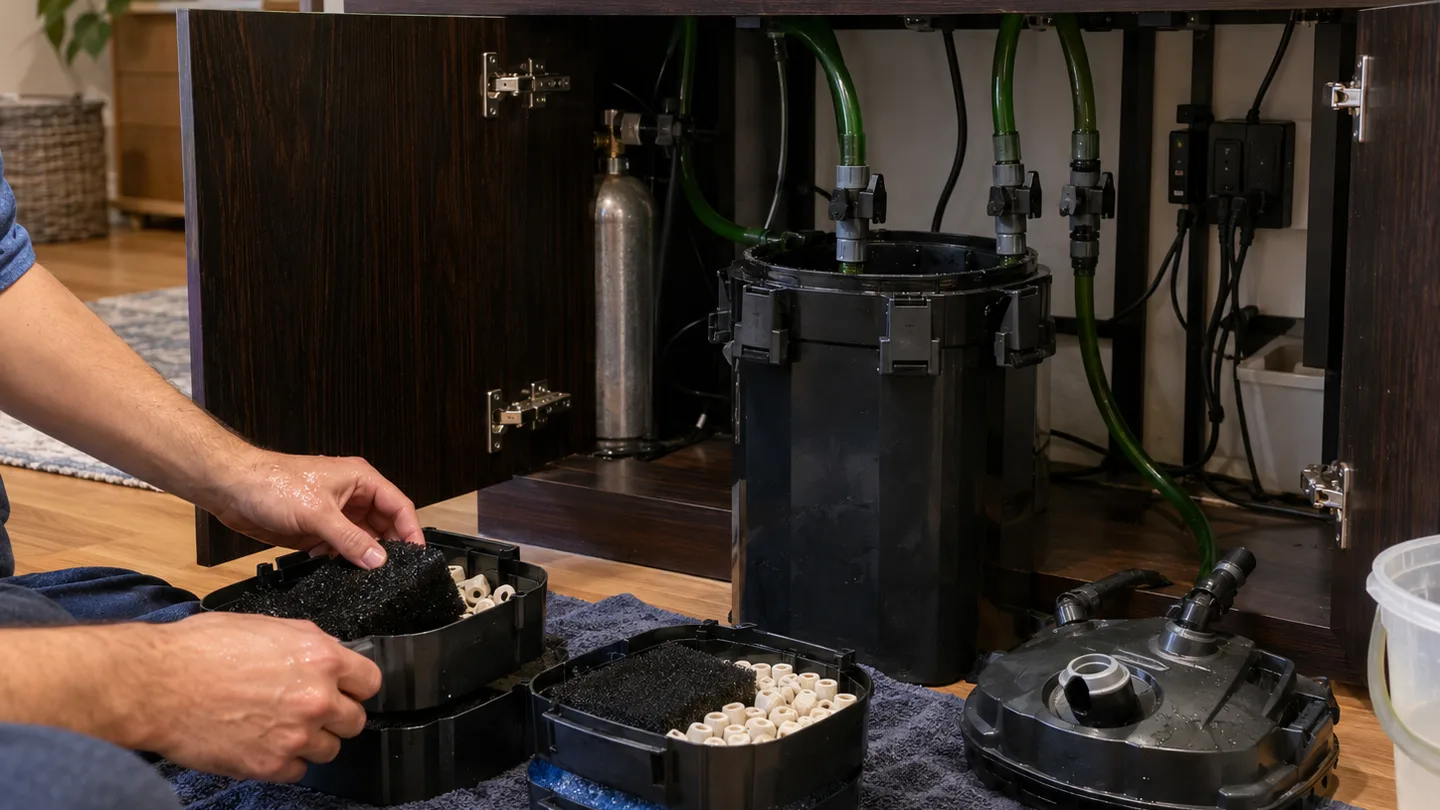
Only when flow or debris indicates it needs maintenance. Preserve established biological media and avoid replacing everything together.
Is algae normal in a new aquarium?
Some algae is common as a new system matures. Review light, feeding, plant growth and maintenance rather than treating every patch as an emergency.
Sources and further reading
This guide separates general aquarium arithmetic from fish-welfare decisions. For species-specific limits, always check the needs of the fish you intend to keep.