Week 1 is equipment, leak checks and starting the cycle. Weeks 2-4 are usually dominated by ammonia and nitrite testing while biological filtration develops. Some tanks are ready for first fish within this period; others take longer. Once the cycle is proven, add a modest first group, retest after the bioload increase and build stocking gradually over subsequent weeks.
A week-by-week plan helps beginners know what to watch, but it becomes dangerous when a calendar milestone is treated as proof that the tank is biologically ready. Use the schedule for tasks and water tests for decisions.
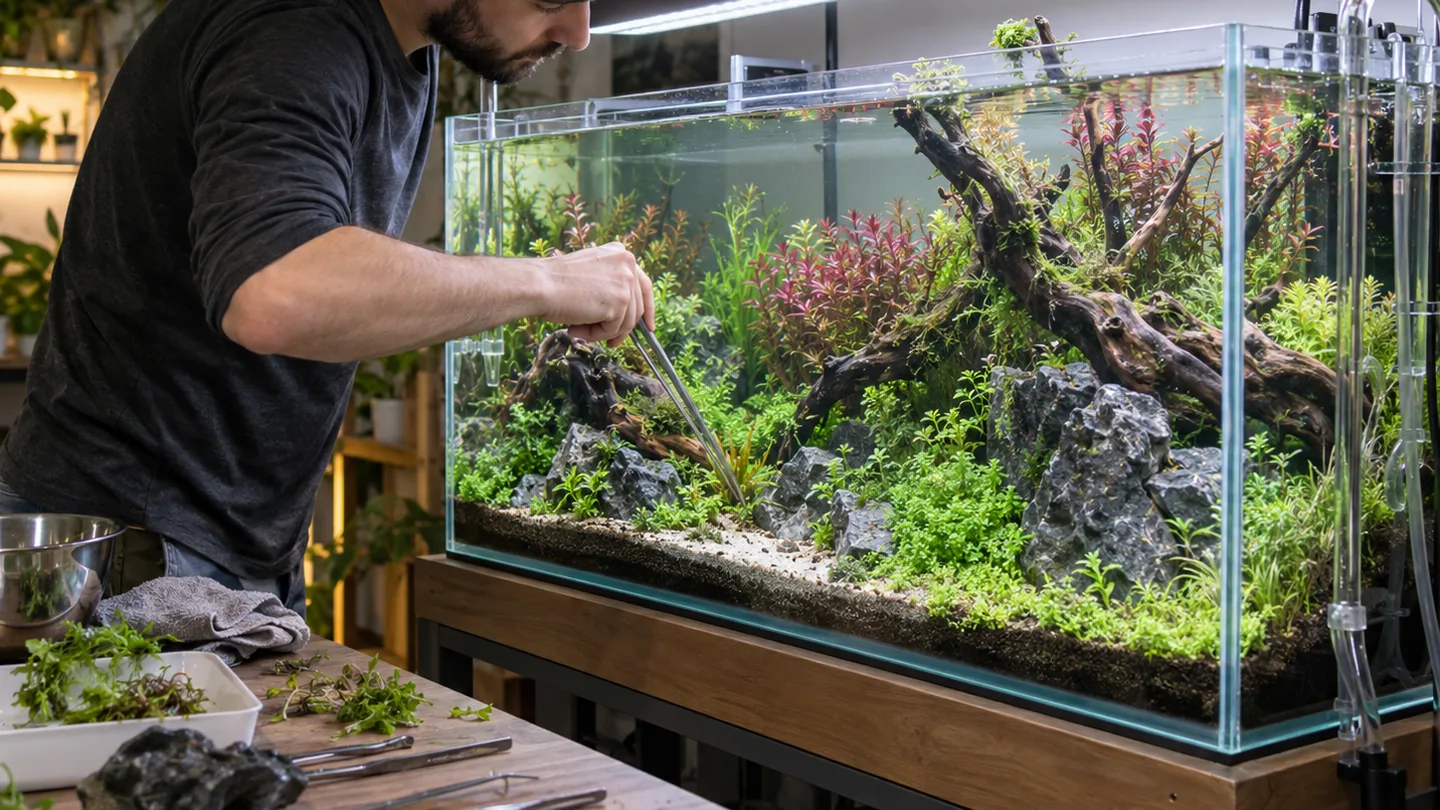
Week 1: build and verify the system
- Level the stand and inspect the tank.
- Add substrate, hardscape and plants.
- Fill with conditioned water.
- Start filter and heater.
- Confirm stable temperature and no leaks.
- Begin a recognised fishless cycling method.
Week 2: watch the early cycle
Depending on the method, ammonia may rise and nitrite may begin to appear. A seeded filter can progress faster; a cold or very low-pH tank may progress more slowly.
Do not make unnecessary filter-media changes. Keep the filter oxygenated and running continuously.
Week 3: expect variation, not a guaranteed pattern
Some aquariums show a clear nitrite stage by now while others do not. Nitrate may appear, but heavily planted tanks can use it, and source water may already contain nitrate.
If the cycle seems stalled, review ammonia source, pH, temperature and filter flow before assuming the process has failed.
Week 4 and beyond: prove the cycle
A tank is ready when the chosen cycling method demonstrates that ammonia is processed and both ammonia and nitrite return to zero. If that has not happened, continue cycling even if a month has passed.
Once ready, make any appropriate water change, verify conditions and add the first sensible stocking group.
Weeks after first fish: build slowly
- Test ammonia and nitrite after each meaningful stocking increase.
- Watch behaviour and feeding, not only test numbers.
- Add the next group only after the current population is stable.
- Keep maintenance regular and predictable.
- Record problems and changes so you can connect cause and effect.
The timeline can be shorter or longer
Mature filter media can shorten startup dramatically; cold water, low alkalinity or an inadequate ammonia source can extend it. Bottled bacteria products also vary by formulation, age and storage.
The safest conclusion is that cycling duration is a measured outcome, not a promise on a calendar.
Related aquarium tools and guides
Frequently asked questions
Should a tank be cycled after four weeks?
Many are, but some are not. Test ammonia and nitrite and verify the biological process rather than assuming four weeks is enough.
What should happen in week two of cycling?
Often ammonia is being processed and nitrite begins to rise, but exact timing varies. A lack of that pattern does not automatically mean failure.
When can I add a second group of fish?
After the first group is settled and ammonia and nitrite remain at zero under normal feeding. The exact interval depends on tank and stocking size.
Sources and further reading
This guide separates general aquarium arithmetic from fish-welfare decisions. For species-specific limits, always check the needs of the fish you intend to keep.