If you accidentally add chlorinated or chloraminated tap water without conditioner, treat the tank promptly with a suitable dechlorinator according to its emergency or normal-use directions. Chlorine and chloramine can irritate or damage fish gills and can harm beneficial bacteria. Watch the fish for rapid breathing or distress, keep oxygenation strong, and test ammonia and nitrite over the following days in case the biological filter was affected.
The severity of a missed dose depends on the disinfectant concentration, the amount of untreated water added, tank volume and how quickly the mistake is corrected. A small top-up and a major water change are not equivalent, but neither should simply be ignored.
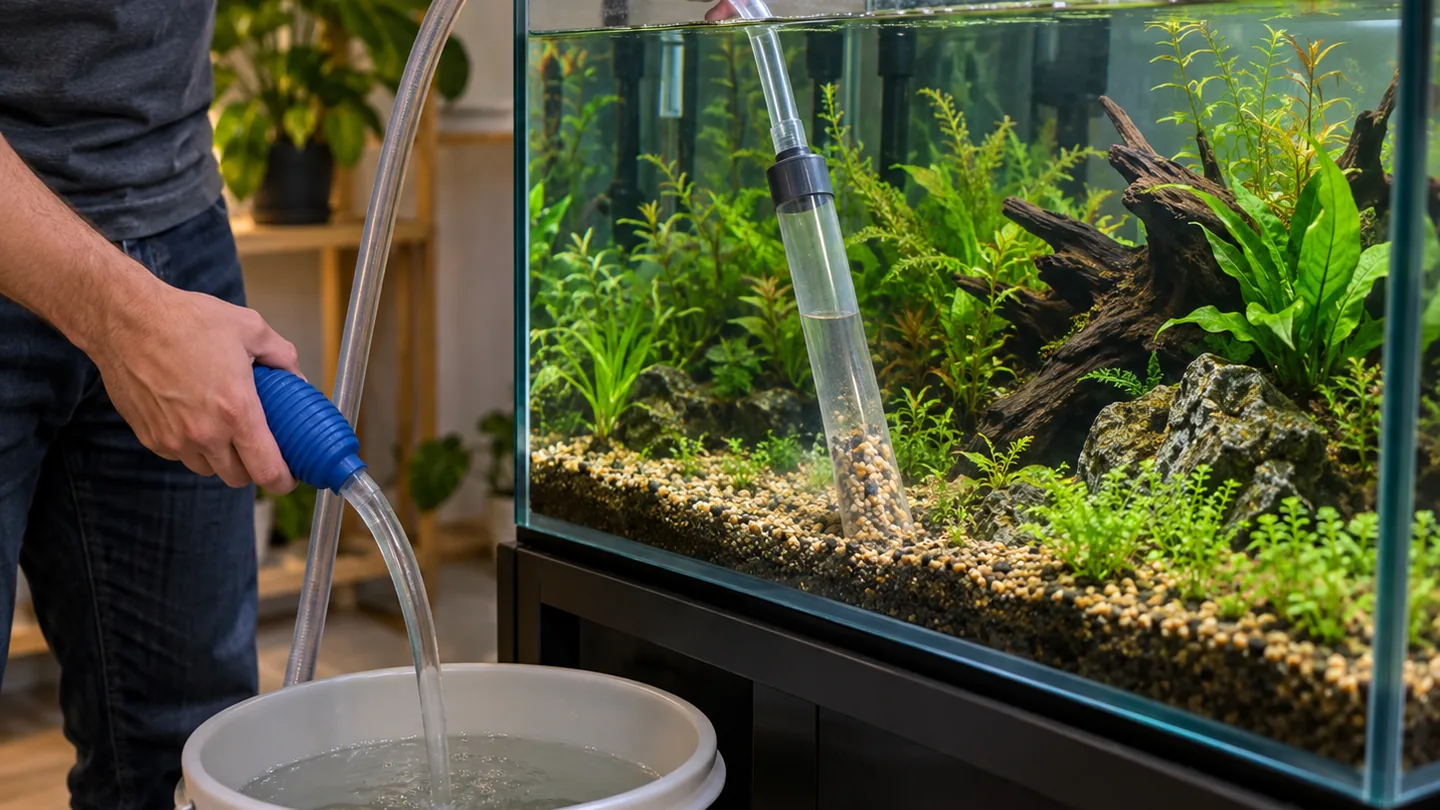
First action: neutralise the disinfectant
Use a conditioner that handles the disinfectant in your supply and follow the label directions. The priority is to stop ongoing chlorine or chloramine exposure rather than trying to remove all the newly added water first.
Watch the fish closely
- Rapid breathing or gasping.
- Lethargy or loss of balance.
- Clamped fins or unusual agitation.
- Fish gathering near high-flow or high-oxygen areas.
Support oxygenation
Gill irritation can make respiration harder, so keep the filter and surface movement running and add aeration if available. Avoid further stressful handling unless there is a clear reason to move the fish.
Check the biological filter afterwards
Disinfectants can also damage nitrifying microorganisms. Test ammonia and nitrite after the incident, especially following a large untreated water change.
If either appears, manage the tank as a cycle disturbance with conditioned water changes and conservative feeding.
Prevent the repeat
Keep the conditioner beside the water-change equipment, pre-dose buckets where practical or use a written maintenance sequence. A simple routine is more reliable than trying to remember an extra step in the middle of a large water change.
Related aquarium tools and guides
Frequently asked questions
Will one missed conditioner dose kill all my fish?
Not necessarily. Severity depends on concentration, volume and exposure time, but it should be treated promptly.
Should I replace all the water again?
Usually the first priority is to neutralise the disinfectant. A second huge water change can create additional stress unless there is another reason to do it.
Can chlorine crash the cycle?
It can damage beneficial bacteria, particularly after significant exposure. Test ammonia and nitrite afterwards rather than assuming the biofilter is unchanged.
Sources and further reading
This guide separates general aquarium arithmetic from fish-welfare decisions. For species-specific limits, always check the needs of the fish you intend to keep.