For a normally stocked freshwater aquarium, ammonia should read 0 mg/L. The RSPCA lists 0 mg/L as the safe level. Detectable ammonia means waste is being produced faster than the biological filter is processing it, the filter has been disrupted, the tank is overfed or overstocked, or the system is still cycling. Treat a positive result as a problem to investigate rather than as a normal maintenance number.
Ammonia is produced from fish waste, decomposing food and other organic material. In a mature aquarium, nitrifying microorganisms should convert it quickly enough that hobby tests read zero. When ammonia becomes measurable, the useful question is not 'how much can the fish tolerate?' but 'why is the system failing to keep it at zero?'.
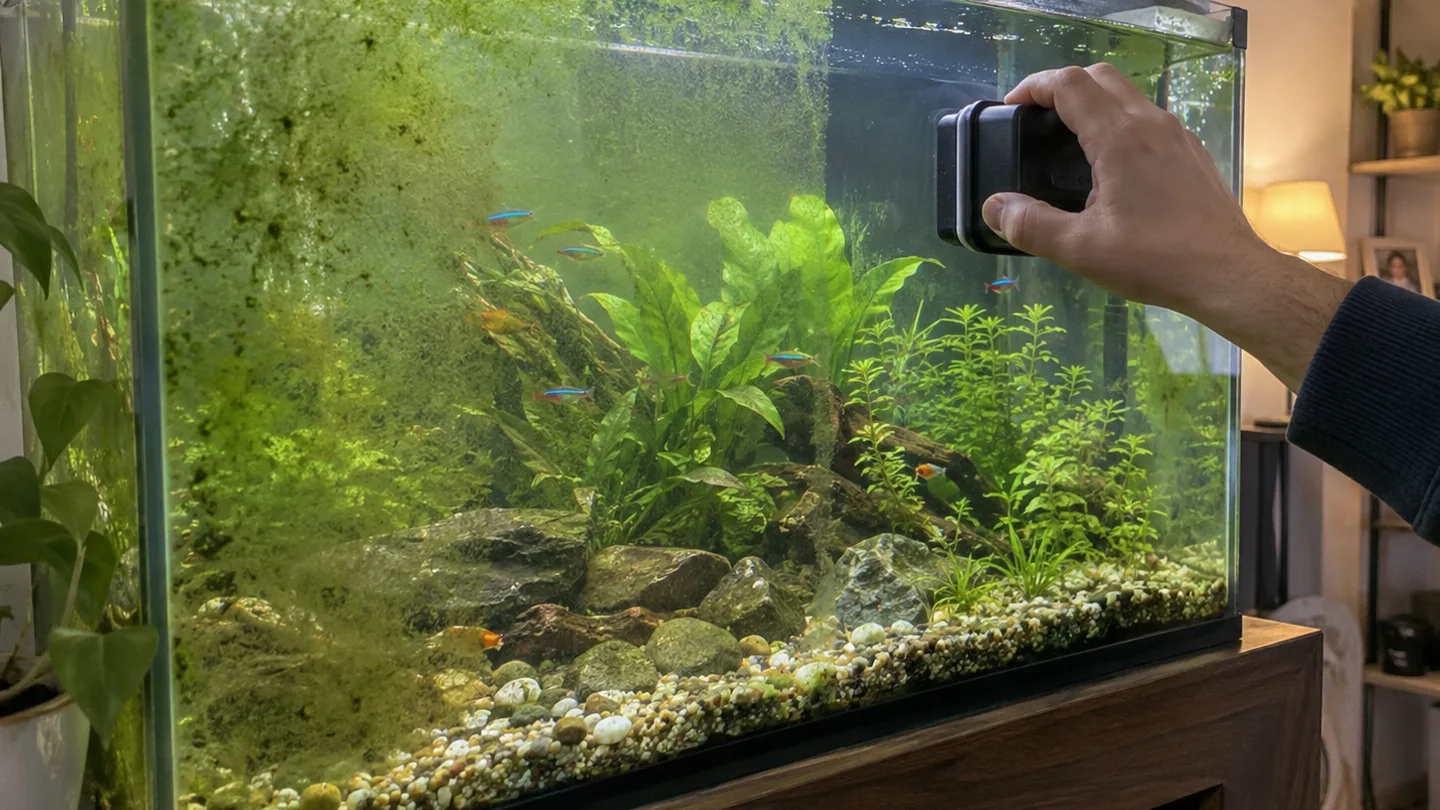
Why ammonia is dangerous
Ammonia can damage gills and create severe physiological stress. Its toxicity also changes with pH and temperature, which is one reason a single 'acceptable' non-zero number is a poor safety target.
A stable mature tank should process routine ammonia continuously rather than allowing it to accumulate.
Common causes of a positive ammonia test
- A new or incompletely cycled aquarium.
- Adding too many fish at once.
- Overfeeding or a dead fish hidden in the tank.
- Replacing too much biological filter media.
- Cleaning biological media aggressively under untreated tap water.
- A stopped filter, power cut or severe oxygen problem.
- A sudden increase in waste or decaying organic material.
What to do when ammonia is above zero
Test again to confirm the result, check the fish and filter, and use conditioned partial water changes to reduce exposure. The RSPCA advises substantial daily water changes when ammonia or nitrite is above zero until conditions improve.
Feed conservatively while you diagnose the cause and keep the filter running with good oxygenation.
Do not confuse cycling targets with stocked-tank targets
Fishless cycling deliberately uses an ammonia source to build the biofilter. That does not mean the same concentration is acceptable once fish are present.
After stocking, the target returns to zero measurable ammonia.
Track the recovery
Retest after corrective action rather than assuming one water change solved the problem. If ammonia repeatedly returns, investigate stocking, feeding, filter capacity, maintenance and the possibility that the cycle has been damaged.
Related aquarium tools and guides
Frequently asked questions
Is 0.25 ppm ammonia safe?
Treat any confirmed non-zero reading in a stocked freshwater tank as a warning that needs action rather than as a normal target.
Can a mature aquarium suddenly get ammonia?
Yes. Filter disruption, overfeeding, a dead animal, medication, power loss or a sudden bioload increase can overwhelm biological filtration.
Should I stop feeding if ammonia is high?
Reducing feeding temporarily can reduce additional waste, but it does not replace water changes and fixing the cause.
Sources and further reading
This guide separates general aquarium arithmetic from fish-welfare decisions. For species-specific limits, always check the needs of the fish you intend to keep.