Java moss is a versatile low-tech plant that grows without substrate or injected CO2. It can be tied or glued to wood and rock, left loose in protected areas or used as dense cover for shrimp and fry. It tolerates low light, but thick mats can trap detritus and shade themselves, so occasional trimming and gentle cleaning improve long-term appearance.
Java moss is famous for surviving neglect; making it look intentional takes a little more work.
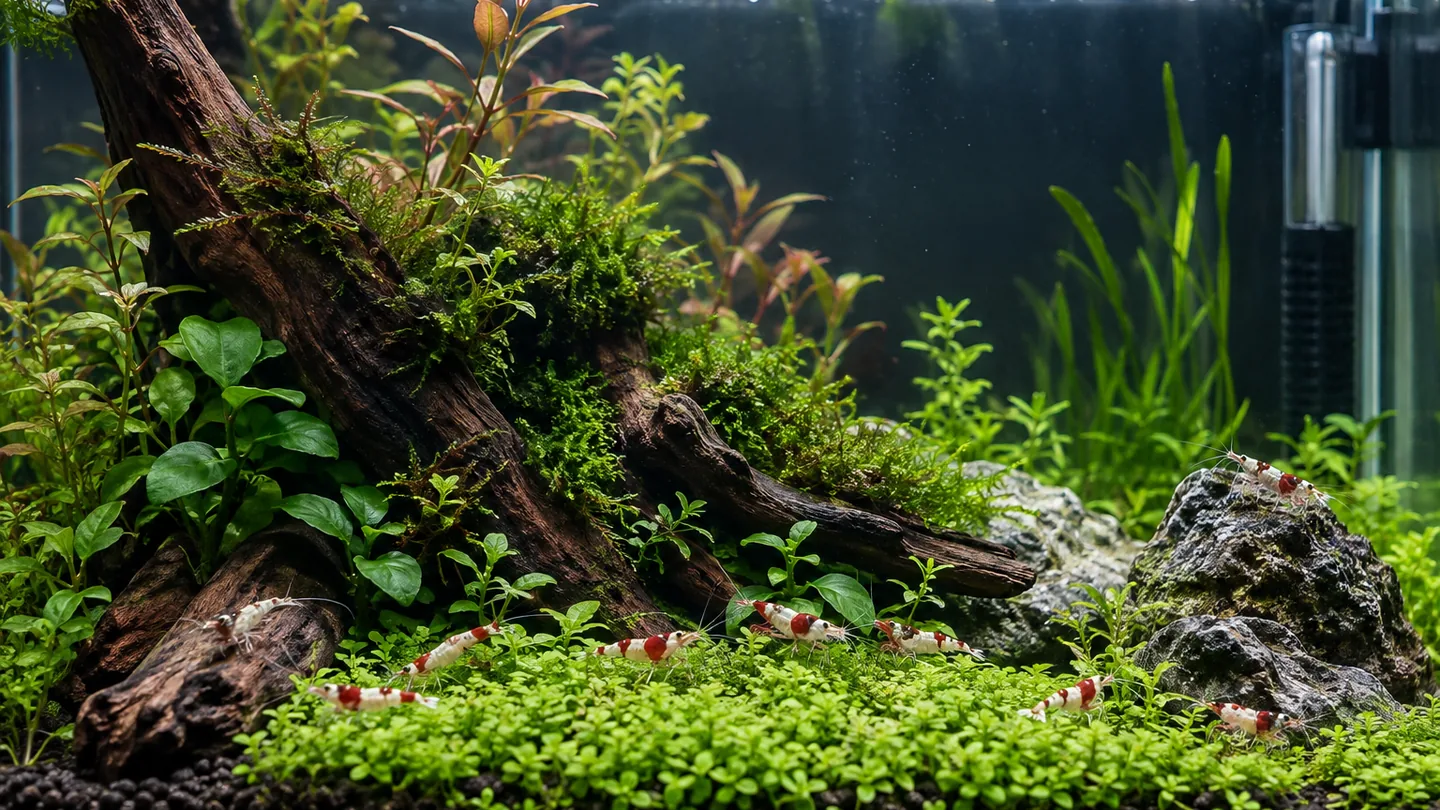
Attach it lightly
Spread a thin layer over wood or rock and secure it with thread or small spots of aquarium-safe gel glue. Thick clumps attached all at once often trap debris underneath.
Low light is enough
Java moss does not need intense lighting. Moderate light generally produces manageable growth with less algae pressure than an overly bright setup.
Trim before it becomes a solid mat
Regular trimming encourages compact branching and prevents the interior from becoming shaded, dirty or detached.
Keep debris from collecting
Fine moss traps particles easily. During water changes, gently waft water through the moss or siphon nearby without ripping it from the hardscape.
Excellent for shrimp and fry
Its dense branching provides refuge and a large biofilm surface, making Java moss especially useful in breeding and shrimp tanks.
Related aquarium tools and guides
Frequently asked questions
Does Java moss need CO2?
No. It grows without injected CO2.
Can Java moss grow on gravel?
It can sit on gravel, but attaching it to hardscape usually gives a cleaner, more controllable shape.
Why is my Java moss turning brown?
Possible causes include trapped debris, poor light balance, algae, damage or nutrient problems.
Sources and further reading
This guide separates general aquarium arithmetic from fish-welfare decisions. For species-specific limits, always check the needs of the fish you intend to keep.