Stem plants are usually cut above a node and the healthy tops can be replanted. Rosette plants such as swords and Cryptocoryne are better thinned by removing entire old leaves at the base rather than chopping leaf blades in half. Rhizome plants such as Anubias and Java fern can have old leaves removed at the rhizome, while mosses can be lightly sheared and loose clippings siphoned out.
Good trimming improves shape, light penetration and plant health. Bad trimming damages the growth point or leaves piles of decaying clippings behind.
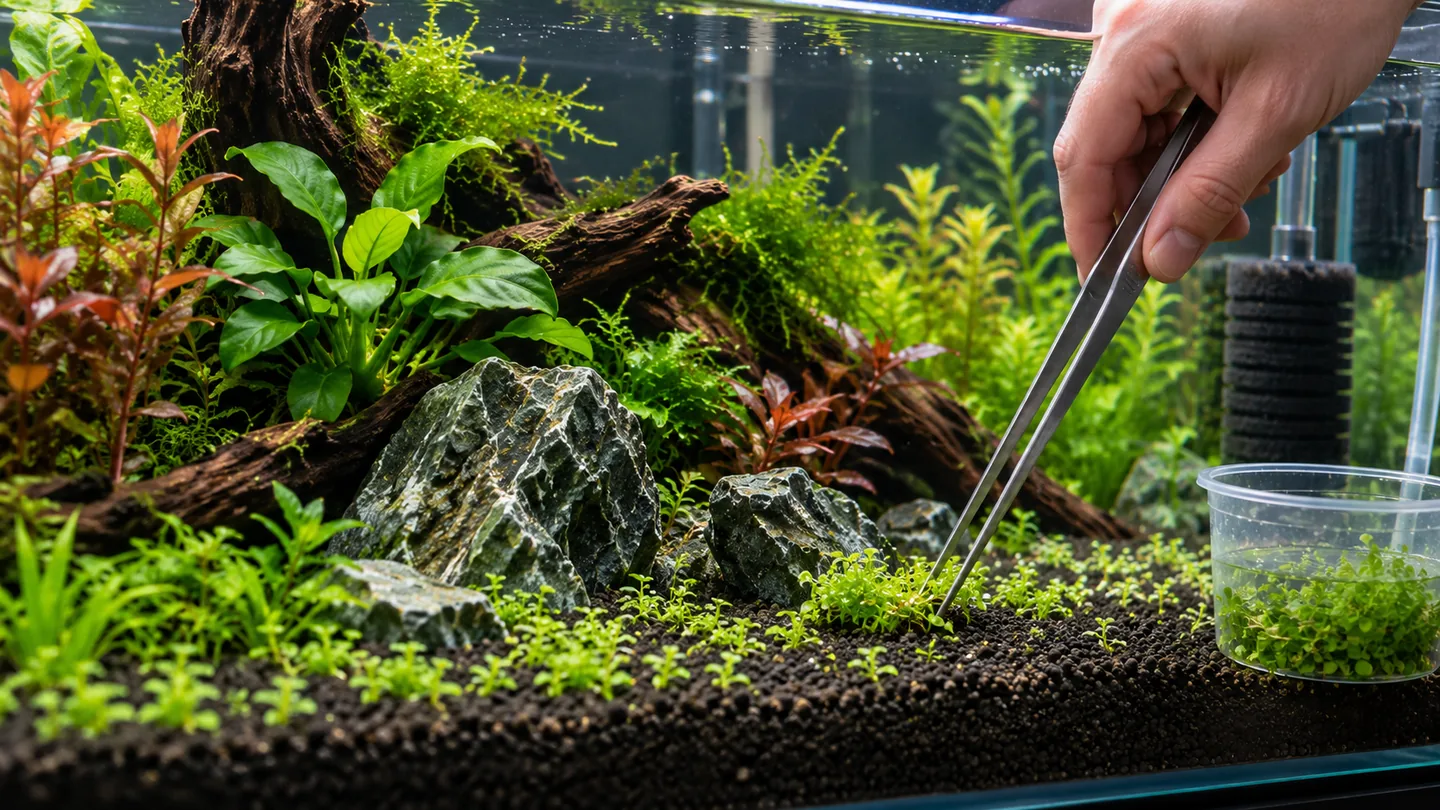
Stem plants
Cut healthy stems above a node, leaving enough lower growth to branch. Replant the best tops if you want a denser group.
Rosette plants
For swords and crypts, remove old leaves close to the crown with a clean cut. Avoid damaging the central growth point.
Rhizome plants
Remove tired leaves close to the rhizome. If dividing the plant, cut a healthy rhizome section with roots and several leaves attached.
Mosses and carpets
Trim a thin layer rather than hacking deeply into the attachment point. Siphon loose fragments immediately so they do not spread or decay elsewhere.
Floating plants
Rather than trimming individual leaves, remove excess whole plants to maintain open surface area and prevent heavy shading.
Related aquarium tools and guides
Frequently asked questions
Should I trim yellow leaves?
Yes when they are clearly declining, especially if healthy new growth is already replacing them.
Can I trim Amazon sword leaves in half?
It is usually better to remove whole old leaves at the base for a cleaner result.
Should I trim all plants at once?
You can, but very heavy pruning can suddenly change shade and nutrient demand; large aquascapes are often easier to manage in sections.
Sources and further reading
This guide separates general aquarium arithmetic from fish-welfare decisions. For species-specific limits, always check the needs of the fish you intend to keep.