Good shrimp plants provide dense texture and large grazing surfaces rather than simply looking decorative. Java moss is especially useful because its fine branching structure collects biofilm and gives shrimplets cover. Anubias and Java fern add sturdy leaves without needing rich substrate, while Cryptocoryne and floating plants increase structure and nutrient uptake. Avoid sudden fertiliser overdoses and copper-containing treatments that are not shrimp-safe.
A planted shrimp tank works best when the plants support grazing, shelter and stable water quality at the same time.
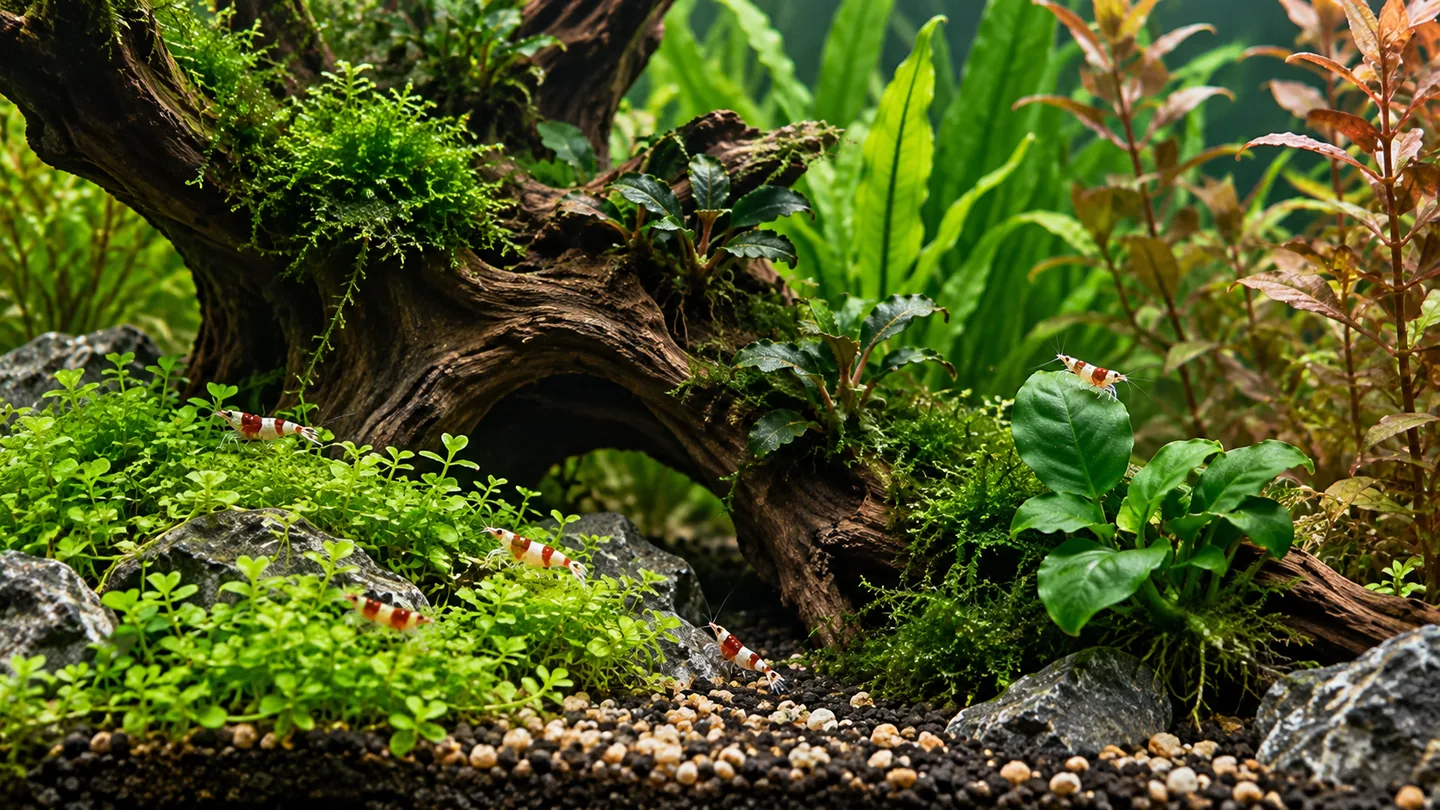
Best fine-textured cover
- Java moss for dense grazing and shrimplet shelter.
- Other aquarium mosses attached to wood or rock.
- Fine-leaved stems where flow and lighting suit them.
Easy low-tech structure
- Anubias on hardscape.
- Java fern on wood or stone.
- Cryptocoryne in the substrate.
- Small floating plants for shade and nutrient uptake.
Biofilm matters as much as the plant itself
Shrimp graze microorganisms and soft growth from leaves, roots and hardscape. More plant surface area means more places for that natural food web to develop.
Avoid obsessively scrubbing every leaf perfectly clean.
Keep maintenance shrimp-safe
Use fertilisers according to label directions and check that any medication or algae treatment is safe for invertebrates. Large sudden chemistry changes can be more damaging than a little algae.
Do not overcrowd the whole floor
Leave open feeding and observation areas so you can remove excess food and monitor the colony.
Related aquarium tools and guides
Frequently asked questions
Is Java moss good for shrimp?
Yes. It provides dense cover and a large surface for biofilm grazing.
Do shrimp eat live plants?
Healthy shrimp mainly graze biofilm, algae and decaying material rather than destroying healthy established plants.
Can shrimp tanks have floating plants?
Yes. They add shade and nutrient uptake, but should be thinned so the entire surface is not blocked.
Sources and further reading
This guide separates general aquarium arithmetic from fish-welfare decisions. For species-specific limits, always check the needs of the fish you intend to keep.