Use a cycled aquarium with stable water chemistry, gentle shrimp-safe filtration such as a sponge filter or protected intake, plants and hardscape that develop biofilm, and no copper-containing treatment unless explicitly safe for the shrimp species. Match the shrimp to your tap-water hardness and acclimate slowly because sudden parameter changes can be stressful.
Freshwater shrimp have a small bioload but they are not automatically easier than fish. They are sensitive to sudden chemistry changes, and a brand-new sterile-looking tank often provides less natural grazing than a mature planted aquarium. Stability matters more than chasing perfect numbers.
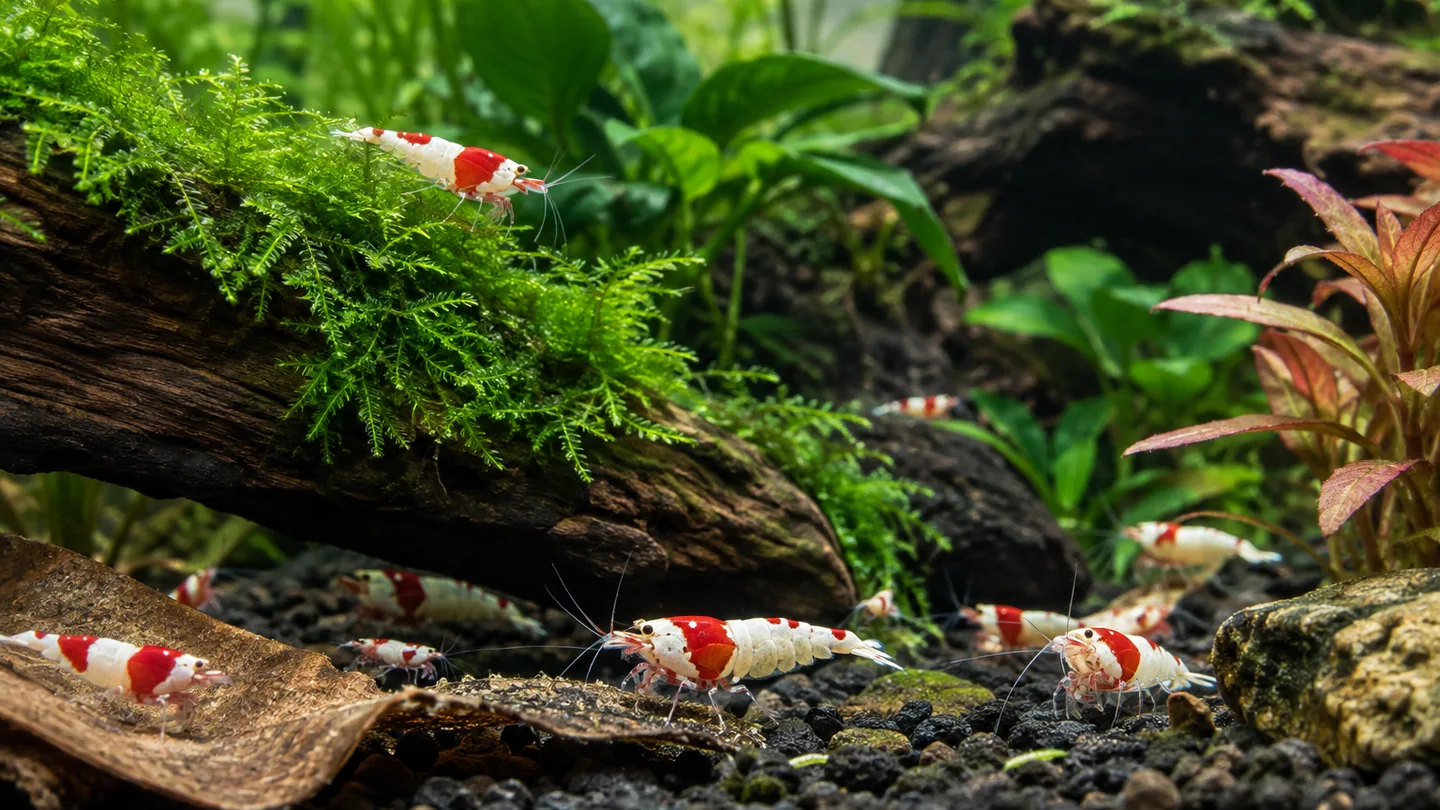
Choose the shrimp before choosing the water chemistry
Neocaridina and Caridina are often grouped together as 'freshwater shrimp', but their preferred hardness and pH can differ significantly. A beginner should choose a species that fits the local water rather than constantly altering water chemistry.
Test GH, KH and pH before buying livestock so you know what you are working with.
Use shrimp-safe filtration
Sponge filters are popular because the intake cannot easily suck in tiny shrimplets and the sponge provides a large grazing surface.
If using a hang-on or canister filter, fit a fine pre-filter sponge to the intake so juvenile shrimp are protected.
Plants and hardscape create food surfaces
Moss, wood, rocks and plant leaves accumulate biofilm and microorganisms that shrimp graze throughout the day. A completely bare new tank has fewer of these natural food sources.
Leaf litter and botanicals are used in many shrimp setups, but add them deliberately and monitor how they affect water chemistry.
Substrate can affect water chemistry
Inert gravel or sand is simple for Neocaridina in suitable tap water. Active planted or shrimp soils can lower pH and carbonate hardness, which may be useful for some Caridina setups but unnecessary for others.
Fluval notes that Stratum can support slightly acidic conditions and is used for shrimp and planted tanks. That kind of effect means substrate choice is part of water-chemistry planning.
Acclimate slowly and avoid contamination
- Match temperature before transfer.
- Use gradual acclimation where there is a meaningful chemistry difference.
- Avoid sudden GH, KH or pH swings.
- Check every treatment and fertiliser for shrimp safety.
- Be especially cautious with copper-containing medications.
Do not overfeed a small shrimp tank
Shrimp graze continuously, so extra food should be offered in amounts the colony can finish. Excess food decomposes and can destabilise a small aquarium.
Remove uneaten concentrated foods and let plants, wood and surfaces contribute natural grazing between feeds.
Related aquarium tools and guides
Frequently asked questions
Do shrimp need a cycled tank?
Yes. They need stable, biologically mature water. A tank that has also developed some biofilm and microfauna is usually better than a freshly cycled sterile setup.
Do shrimp need a heater?
It depends on the species and room temperature. Many common dwarf shrimp tolerate a broad range, but stability matters and species-specific requirements should be checked.
Can I keep shrimp with fish?
Sometimes, but many fish will eat baby shrimp and some will eat adults. A dedicated shrimp tank gives the best survival rate for a breeding colony.
Sources and further reading
This guide separates general aquarium arithmetic from fish-welfare decisions. For species-specific limits, always check the needs of the fish you intend to keep.