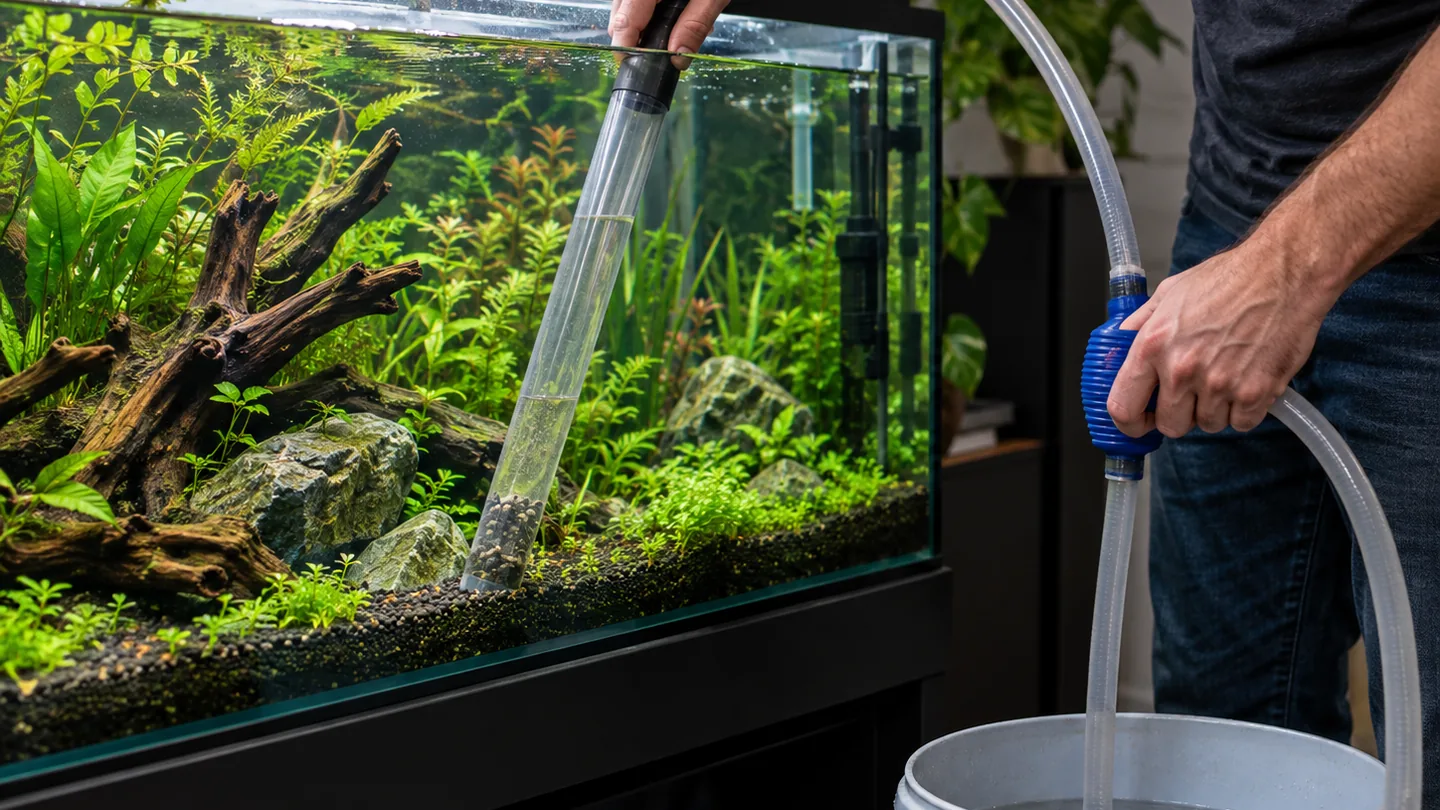
Aquarium gravel should be vacuumed often enough that fish waste, uneaten food and decaying material do not build up excessively. For many tanks, checking the substrate during weekly maintenance and cleaning a portion at a time works well. Heavily stocked or heavily fed tanks may need more frequent vacuuming, while planted tanks with light stocking may need less. Let visible debris and water-quality trends guide the schedule.
There is no useful universal answer such as 'vacuum every seven days'. A bare community tank, a planted aquarium and a goldfish tank can produce very different amounts of waste.
Signs the gravel needs attention
- Visible fish waste between stones.
- Uneaten food collecting in low-flow areas.
- Clouds of debris when fish or tools disturb the bottom.
- Nitrate rising faster than usual.
- Organic material building up underneath decorations.
Rotate sections instead of deep-cleaning everything
Vacuum one-third or another manageable section during each water change, then cover a different area next time. This keeps maintenance consistent without turning every session into a major disturbance.
The exact fraction is not important; the principle is gradual, repeatable cleaning.
High-waste tanks need more attention
Goldfish, large cichlids and heavily fed grow-out tanks can load the substrate quickly. In those aquariums, weekly or even more frequent spot-cleaning may be justified.
Planted aquariums are different
Rooted plants and nutrient-rich substrates should not be churned aggressively. Vacuum exposed gravel and open areas while leaving established root zones largely intact.
Do not confuse brown gravel with unsafe gravel
A thin natural biofilm or mulm in a mature planted aquarium is not automatically harmful. Focus on excessive decaying waste and deteriorating water quality rather than cosmetic perfection.
Frequently asked questions
Should I vacuum all the gravel at once?
Usually not necessary. Rotating sections is gentler and easier to sustain.
Can dirty gravel raise nitrate?
Yes. Trapped organic waste eventually contributes to nitrogen production as it decomposes.
Do bottom feeders clean gravel for me?
No. They may eat some food and move debris, but they also create waste and do not replace maintenance.
Sources and further reading
This guide separates general aquarium arithmetic from fish-welfare decisions. For species-specific limits, always check the needs of the fish you intend to keep.