A weekly partial water change is a sensible starting routine for many freshwater tanks. The RSPCA recommends regular weekly changes, while aquarium guidance varies according to stocking and nitrate accumulation. Test before the change, record the result and adjust frequency so ammonia and nitrite stay at zero and nitrate and dissolved waste do not build up. Heavily stocked, small or messy tanks often need more frequent changes; lightly stocked planted aquariums may need less.
There is no single schedule that fits a lightly stocked planted 200-litre aquarium and a heavily stocked 40-litre tank. Water-change frequency should be tied to how quickly the aquarium's chemistry moves between maintenance sessions.
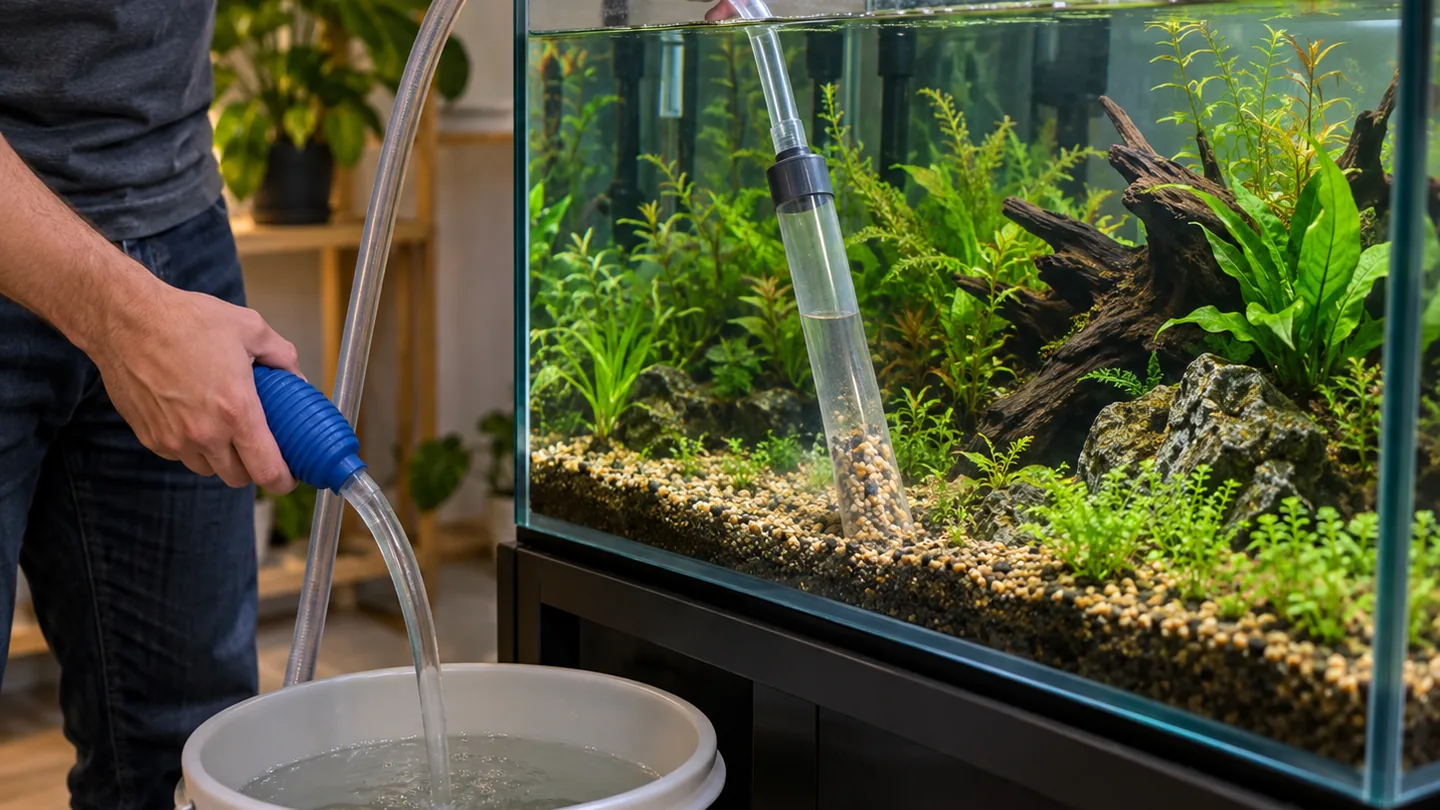
Start weekly, then use your own data
A weekly routine is easy to remember and catches problems before they become large. Test nitrate before the change for several weeks and watch how quickly it rises.
If water quality remains very stable, you can judge whether the schedule is more frequent than necessary. If nitrate climbs rapidly or debris accumulates, increase maintenance.
Tanks that often need more frequent changes
- Small aquariums with little dilution volume.
- Heavily stocked community tanks.
- Goldfish and other high-waste species.
- Grow-out tanks and heavy feeding.
- Newly established tanks with unstable chemistry.
- Aquariums where nitrate rises quickly between tests.
Plants can slow nitrate accumulation
Fast-growing live plants use nitrogen, so planted tanks may accumulate nitrate more slowly. That does not make water changes unnecessary because dissolved organic waste, minerals and other compounds also change over time.
Use the full water-quality picture rather than nitrate alone.
Avoid waiting for water to look dirty
Clear water can still contain nitrate and other dissolved waste. Visual appearance is not a reliable maintenance trigger.
Testing and a consistent routine are safer than waiting for cloudiness or odour.
Make the schedule easy to sustain
A realistic routine completed every week is better than an ambitious deep clean that gets postponed. Combine water changes with light substrate cleaning, glass wiping and a quick equipment check rather than dismantling the aquarium each time.
Related aquarium tools and guides
Frequently asked questions
Is once a month enough for a fish tank?
It can be too infrequent for many tanks. Let water tests and waste accumulation decide rather than assuming monthly is safe.
Do planted tanks need water changes?
Usually yes. Plants help with nutrients but do not replace all the functions of fresh conditioned water.
Should I change water if nitrate is low?
Often yes, because water changes also refresh minerals and dilute compounds that a basic nitrate test does not measure.
Sources and further reading
This guide separates general aquarium arithmetic from fish-welfare decisions. For species-specific limits, always check the needs of the fish you intend to keep.