A good weekly aquarium routine includes observing fish behaviour, checking temperature and equipment, testing the water, changing a suitable portion of water, siphoning visible debris, wiping algae from viewing panels, removing dead leaves and confirming filter flow. Rotate bigger jobs such as deep filter servicing rather than doing everything every week.
The best maintenance checklist is short enough to actually use. Weekly work should focus on water quality and obvious waste, while heavier jobs are spread across longer intervals.
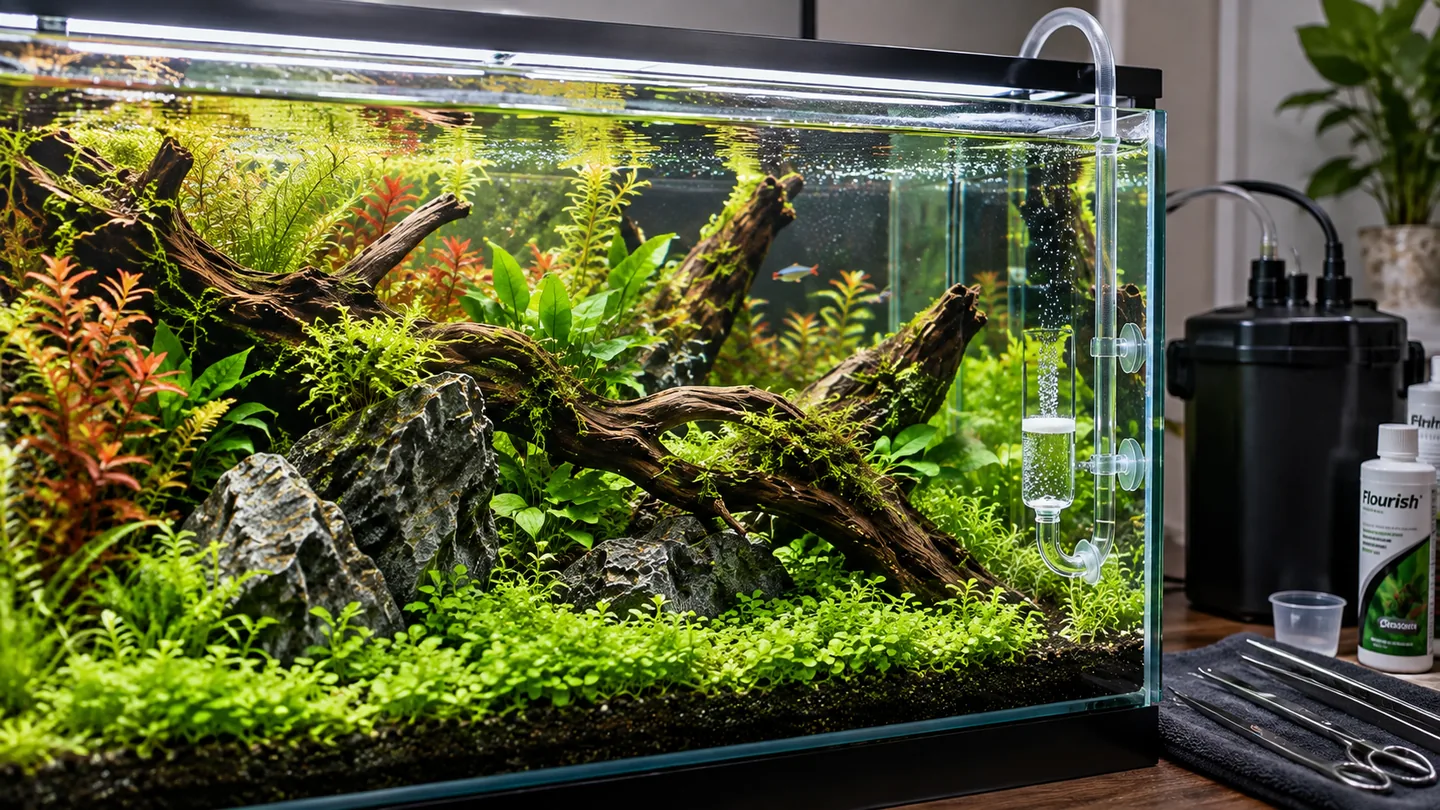
1. Observe before touching anything
- Check fish are active and breathing normally.
- Look for missing fish or new injuries.
- Check temperature.
- Confirm filter flow and heater operation.
- Look for leaks around hoses and equipment.
2. Test the water
In a mature stable tank, test the parameters that help you track its normal trend. Test more broadly after livestock additions, medication, power cuts or unusual behaviour.
3. Perform the planned water change
Condition new water, match temperature and remove enough water to keep nitrate and other waste under control. Use the siphon to collect visible debris at the same time.
4. Tidy the aquarium
- Wipe front and side panels as needed.
- Remove dead plant leaves.
- Vacuum dirty open substrate areas.
- Clear debris from filter intakes.
- Top up only with appropriate water after the change if needed.
5. Record anything unusual
A quick note of nitrate, pH, water-change percentage and any fish behaviour makes long-term trends easier to recognise.
Frequently asked questions
Do I need to clean the filter every week?
Usually not. Check flow weekly and service the filter when it is actually becoming clogged.
Should I test water every week?
Weekly testing is useful while learning a tank's pattern; a very stable mature aquarium may need a different schedule.
Should I vacuum all substrate weekly?
No. Focus on visible waste and rotate sections where appropriate.
Sources and further reading
This guide separates general aquarium arithmetic from fish-welfare decisions. For species-specific limits, always check the needs of the fish you intend to keep.