Fishless cycling uses an ammonia source without livestock and lets the biological filter establish before fish arrive. Fish-in cycling develops the filter while fish are already producing waste, so the aquarist must use frequent testing and conditioned water changes to keep ammonia and nitrite as close to zero as practical. For welfare and simplicity, fishless cycling is usually the better choice.
The nitrogen cycle must establish somehow, but the method determines who absorbs the risk while it happens. Fishless cycling puts the uncertainty on the aquarist and test kit. Fish-in cycling puts some of it on living fish. That is why reputable welfare guidance generally favours fishless startup for a brand-new aquarium.
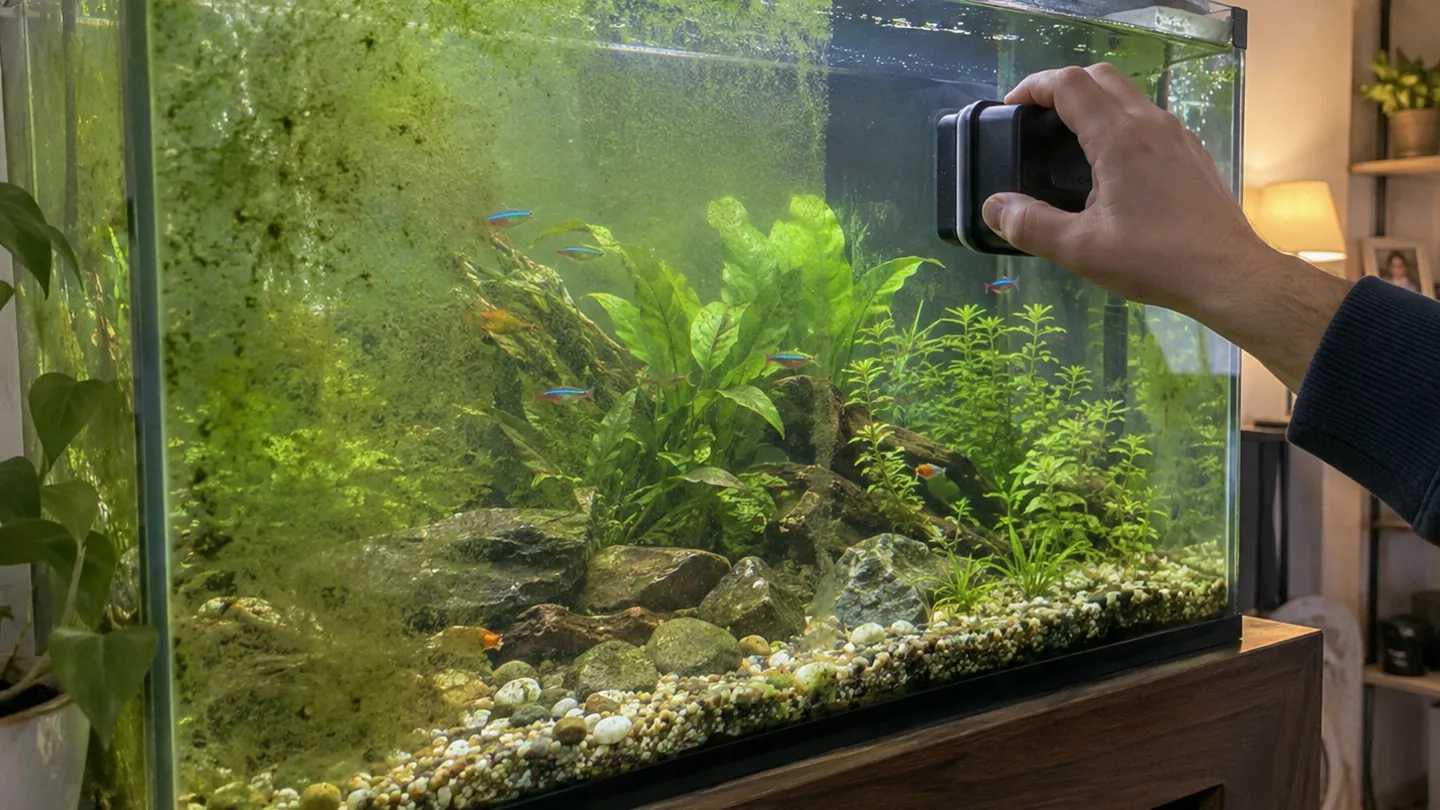
How fishless cycling works
The aquarium is fully set up with conditioned water and a running filter, then an ammonia source is added without fish present. Water tests track ammonia, nitrite and the development of nitrifying bacteria.
Once the system can process the chosen ammonia input and both ammonia and nitrite return to zero, the aquarium can be stocked gradually.
How fish-in cycling works
Fish are added before the biological filter is mature. Their waste supplies ammonia, and the aquarist tests frequently and changes water whenever ammonia or nitrite rises.
A carefully managed fish-in cycle can keep exposures low, but it requires close attention and offers less margin for error than fishless cycling.
Side-by-side comparison
| Factor | Fishless | Fish-in |
|---|---|---|
| Fish exposed to cycle spikes | No | Potentially |
| Testing required | Yes | Yes, often more urgently |
| Water changes during startup | Method-dependent | Often frequent |
| Beginner margin for error | Higher | Lower |
| Can dose ammonia precisely | Usually | No, fish waste varies |
| Welfare default | Preferred | Use only with careful management |
Does fish-in cycling make the tank cycle faster?
Not automatically. Bacteria respond to ammonia availability, temperature, pH, oxygen and seed material, not to the presence of fish as such. A measured fishless ammonia source can provide the same basic nitrogen input without exposing livestock.
Mature filter media can speed either approach significantly by introducing an existing bacterial population.
If fish are already in the tank
Do not remove water changes because you think the bacteria need high ammonia. The priority is protecting the fish. Test frequently, feed conservatively, use conditioned replacement water and make partial water changes whenever ammonia or nitrite appears.
The filter will still establish while you keep toxic compounds low.
Related aquarium tools and guides
Frequently asked questions
Is fishless cycling cruel?
No fish are present, which is the main welfare advantage. The process is simply establishing microorganisms in the filter before livestock arrives.
Can I switch from fish-in to fishless cycling?
If fish can be moved safely to an established suitable aquarium, yes. Otherwise manage the fish-in cycle closely and protect water quality while the filter matures.
Do bottled bacteria remove the need to cycle?
They can shorten establishment when viable and used correctly, but water testing still matters and full immediate stocking is risky.
Sources and further reading
This guide separates general aquarium arithmetic from fish-welfare decisions. For species-specific limits, always check the needs of the fish you intend to keep.