Aquarium lids reduce evaporation, help retain heat and prevent many fish from jumping out. They also keep dust and household objects out of the tank. The trade-offs are reduced open-air gas exchange, condensation, possible light loss through dirty glass and less room for emergent plants. The right cover depends on livestock, room humidity, lighting and maintenance preferences.
A lid changes the aquarium's relationship with the room: less water and heat escape, but the tank also becomes less open to air.
Jump prevention is the strongest reason
Many fish can jump unexpectedly, especially when startled or during feeding and spawning. A secure lid greatly reduces that risk.
Close gaps around cables and filter pipes for known jumpers.
Lids reduce evaporation
Less evaporation means fewer top-ups and less heat lost with escaping water vapour. That can reduce heater workload in cool rooms.
It also reduces humidity released into the room.
Gas exchange still matters
A lid does not seal an aquarium airtight, but poor surface movement under a tight cover can still reduce gas exchange. Keep the filter return or air system moving the surface.
Mesh covers allow more open exchange.
Lighting and condensation
Glass lids can collect mineral deposits and condensation that reduce light transmission. Clean them regularly in planted tanks.
Some lights are designed for open-top mounting and may require clearance.
Open-top setups have valid advantages
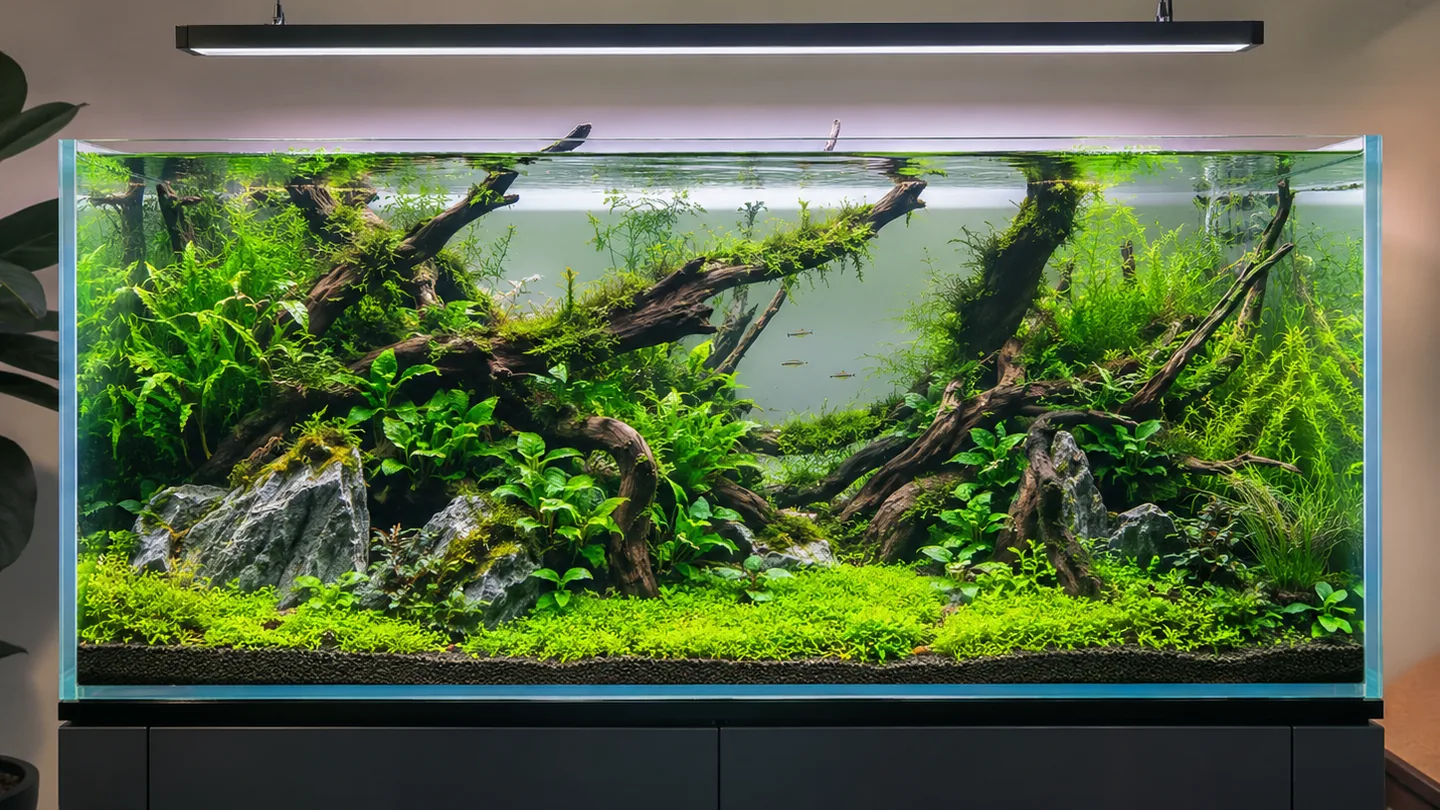
Open tanks suit emergent plants, hardscape above the water and maximum air access. They require more topping up and more attention to jumping risk.
Choose deliberately rather than assuming one style is always superior.
Frequently asked questions
Do bettas need a lid?
Bettas can jump, so a secure lid is strongly advisable even though they breathe atmospheric air.
Does a lid reduce oxygen?
It can reduce open-air exchange somewhat, but adequate surface movement and ventilation gaps usually maintain oxygen in a normally stocked tank.
Will a lid stop all evaporation?
No. It reduces evaporation substantially but does not eliminate it.
Sources and further reading
This guide separates general aquarium arithmetic from fish-welfare decisions. For species-specific limits, always check the needs of the fish you intend to keep.