Fish do not biologically require a plastic filter box, but they do require stable water quality, oxygen and waste processing. A conventional filter makes those jobs easier by moving water through mechanical and biological media. Specialist low-stock planted tanks can operate without one, but a normal beginner aquarium should use a suitably sized filter rather than relying on the tank to balance itself.
The important question is not whether a fish can physically survive without a filter. It is whether the aquarium can reliably process ammonia, keep oxygen available and avoid accumulating waste without one.
What a filter normally does
- Moves water through oxygen-rich biological media.
- Traps suspended debris.
- Creates circulation and surface movement.
- Provides a stable home for beneficial bacteria.
- Makes maintenance more predictable.
How filterless systems replace those jobs
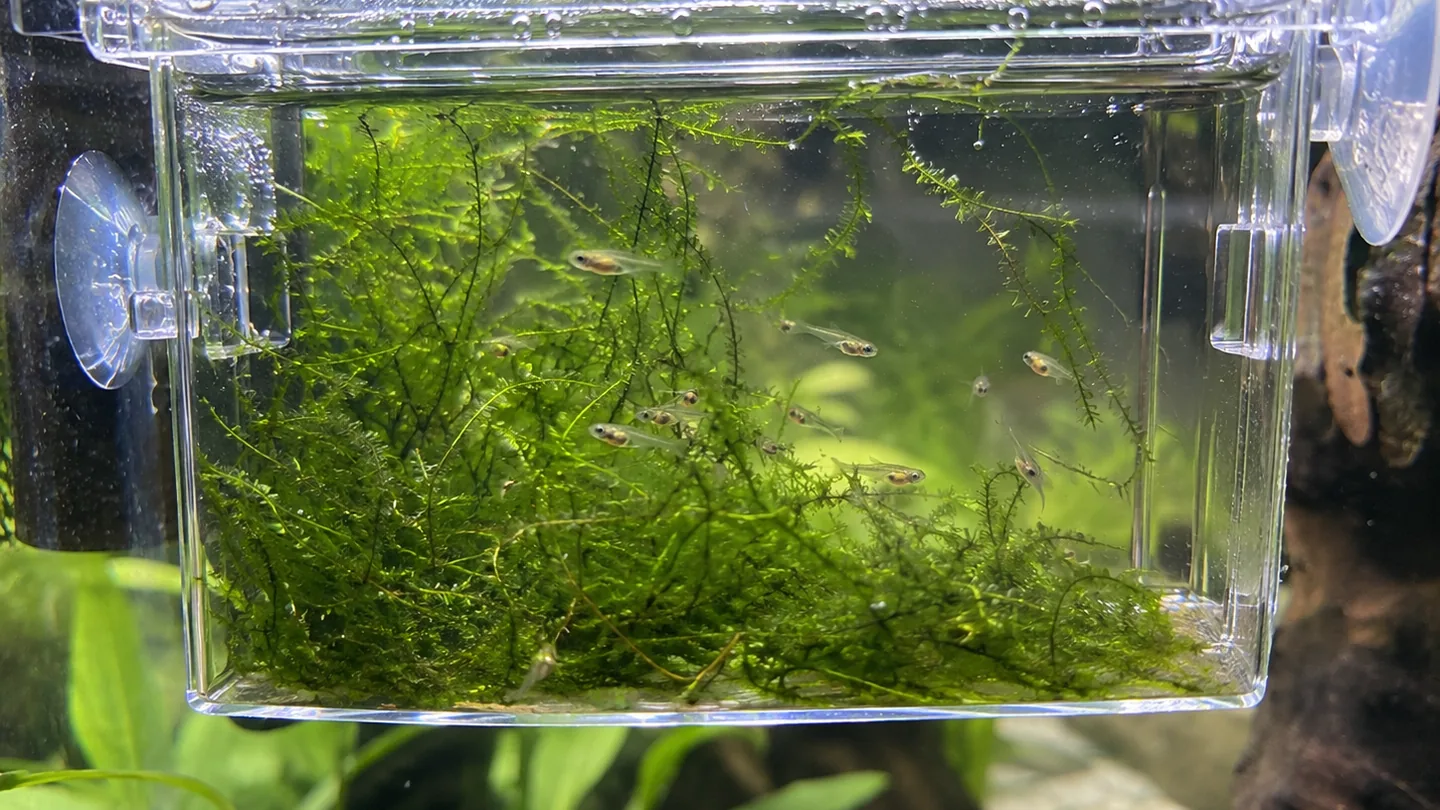
Heavily planted tanks can use plant growth, substrate, hardscape and microbial surfaces to process waste. Low stocking and conservative feeding keep the load within that capacity.
That is a deliberately balanced system, not simply a normal tank with the filter removed.
Why beginners benefit from a filter
A filter increases biological reserve and gives waste a predictable path. It also makes problems easier to diagnose because you know where most water movement and media are located.
The extra margin is valuable while learning feeding, stocking and maintenance.
Oxygen can become the hidden issue
Many filters improve gas exchange by disturbing the surface. Removing the filter can reduce oxygen even before ammonia becomes a problem.
If you run without a filter, make sure circulation and gas exchange are provided another way.
If the filter stops unexpectedly
Treat a failed filter differently from a deliberately designed filterless aquarium. Restore aeration and filtration as soon as possible, keep media wet and test ammonia and nitrite after a prolonged outage.
Frequently asked questions
Can a betta live without a filter?
A betta can survive in still water, but a gentle filter usually makes water quality more stable and reduces maintenance risk.
Do plants replace a filter?
Plants can absorb nitrogen and help stability, but they do not automatically replace mechanical filtration, circulation and biological reserve.
Can I turn the filter off at night?
No. Filters should normally run continuously because bacteria and gas exchange depend on ongoing water movement.
Sources and further reading
This guide separates general aquarium arithmetic from fish-welfare decisions. For species-specific limits, always check the needs of the fish you intend to keep.