Many aquarium plants grow successfully without injected CO2 because carbon dioxide naturally enters the water from fish respiration, microbial activity and gas exchange. Easy species such as Java fern, Anubias, Cryptocoryne, Vallisneria, Amazon swords, mosses and many floating plants are well suited to low-tech setups. The key is matching light intensity to the slower carbon supply so algae does not gain an advantage.
CO2 injection is a growth tool, not an entry ticket to keeping live plants.
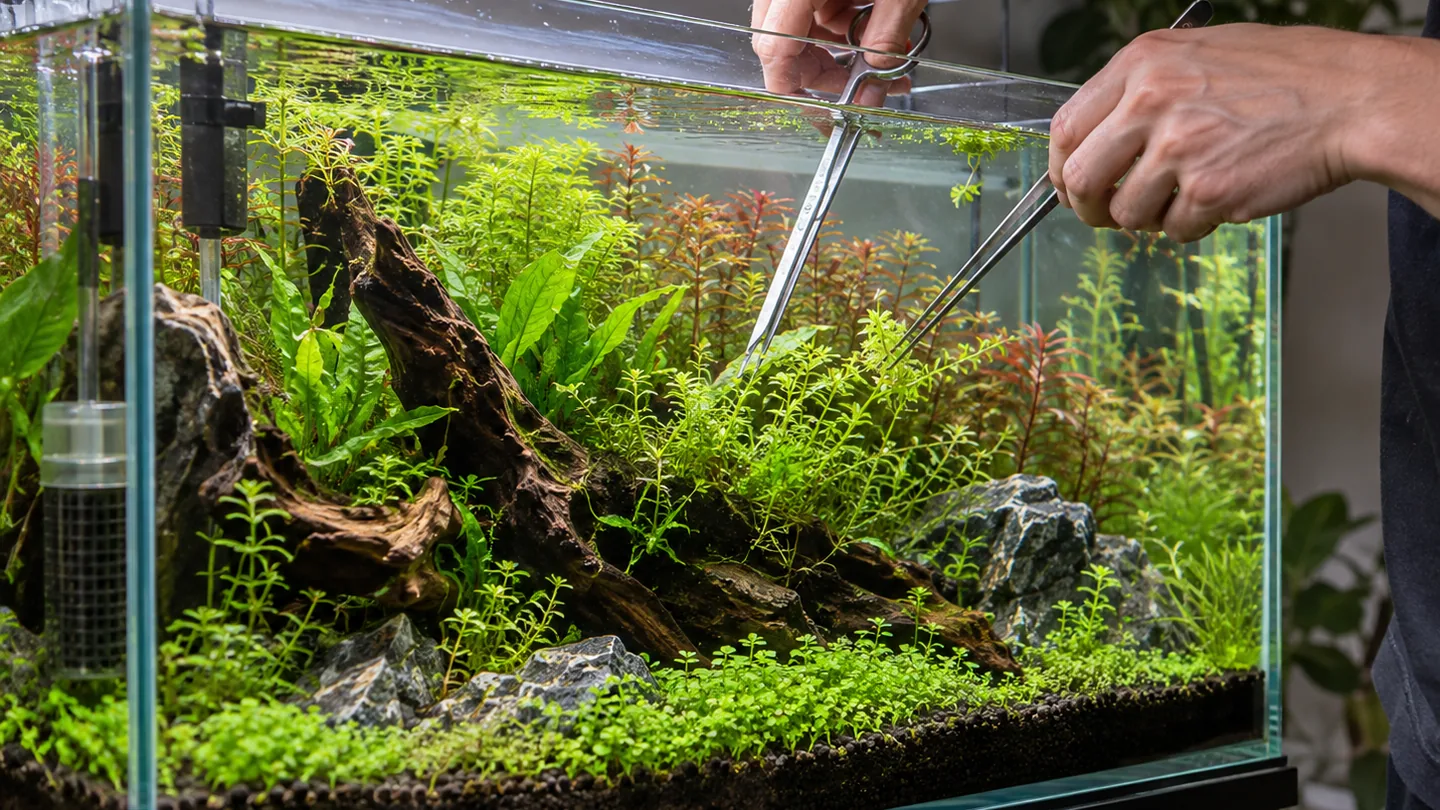
Choose plants with realistic demand
Slow-growing rhizome plants, many rooted rosette plants and floaters are far easier without injection than demanding carpeting plants or high-light red stems.
Do not overpower the tank with light
Strong light drives demand for carbon and nutrients. If the tank cannot supply them, plants can stall while algae uses the excess light.
Nutrients still matter
A non-CO2 tank can still be deficient in nitrogen, potassium, iron or root-zone nutrients. Use liquid fertiliser and root tabs according to plant type rather than assuming fish waste covers everything.
Floating plants have an advantage
Floaters access atmospheric CO2 directly through their leaves, which is one reason they can grow rapidly in low-tech tanks.
Expect a different growth pace
Healthy low-tech growth is often slow and steady. That can mean less pruning, lower equipment cost and easier long-term maintenance.
Related aquarium tools and guides
Frequently asked questions
Do all planted tanks need a CO2 system?
No. Many species grow well without one.
Why do high-light plants struggle without CO2?
More light increases photosynthetic demand, which can exceed the naturally available carbon supply.
Can I add CO2 later?
Yes, but increase light and fertilisation only as needed and adjust gradually.
Sources and further reading
This guide separates general aquarium arithmetic from fish-welfare decisions. For species-specific limits, always check the needs of the fish you intend to keep.