Good angelfish tank mates are usually peaceful community fish large enough not to be treated as prey and calm enough not to nip the angelfish's long fins. Suitable Corydoras and some medium-sized tetras or rasboras can work when water requirements overlap. Avoid tiny fish that fit in an adult angelfish's mouth, persistent fin-nippers and highly territorial cichlids competing for the same space.
Young angelfish can look harmless in a shop tank, but adults are tall-bodied cichlids with a predatory feeding response and stronger territorial behaviour. Tank-mate decisions should be made for adult angelfish, not juveniles.
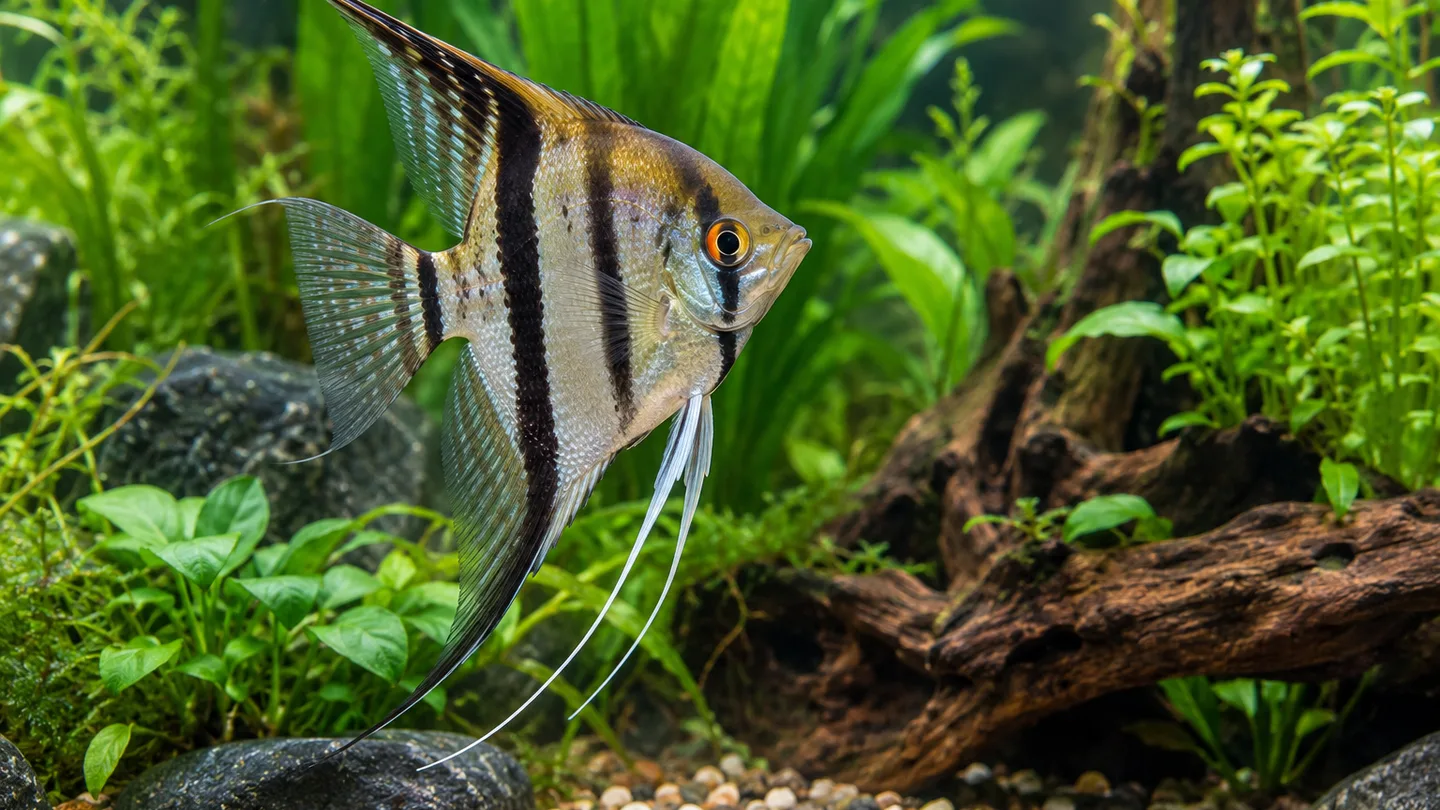
What makes a good angelfish companion
- Large enough not to be swallowed by an adult angelfish.
- Peaceful and not known for fin-nipping.
- Comfortable in warm water and compatible hardness.
- Able to use a different swimming zone or share mid-water without crowding.
Small fish can become prey
A fish may be peaceful and still be unsuitable if an adult angelfish can swallow it. Size relationships change as the angelfish grows, so combinations that work with juveniles can become risky later.
Breeding pairs change the social dynamic
A bonded pair may defend eggs or a spawning site aggressively. Community fish can be pushed away from a large part of the aquarium during breeding.
Long fins need protection
Tiger barbs and other persistent nippers are poor companions for slow long-finned angelfish. Repeated fin damage creates stress and raises the risk of secondary problems.
Related aquarium tools and guides
Frequently asked questions
Can angelfish live with Corydoras?
Often yes when temperature and tank size suit both, because Corydoras use the bottom zone.
Can angelfish live with small tetras?
It can be risky because adult angelfish may eat fish small enough to swallow.
Do angelfish become more aggressive when breeding?
Yes. Pairs can defend a spawning area strongly.
Sources and further reading
This guide separates general aquarium arithmetic from fish-welfare decisions. For species-specific limits, always check the needs of the fish you intend to keep.