Angelfish can be kept singly, as a compatible pair or in a carefully planned group, but group dynamics change as juveniles mature and pairs form. A tank that looks spacious for six small juveniles may become crowded once adults establish territories. Tall tank dimensions matter because of their body shape, and horizontal space matters because pairs may defend sections of the aquarium.
The common mistake is to choose a number while the fish are small and assume the social structure will remain unchanged. Angelfish mature into territorial cichlids and may form pairs that alter the entire group dynamic.
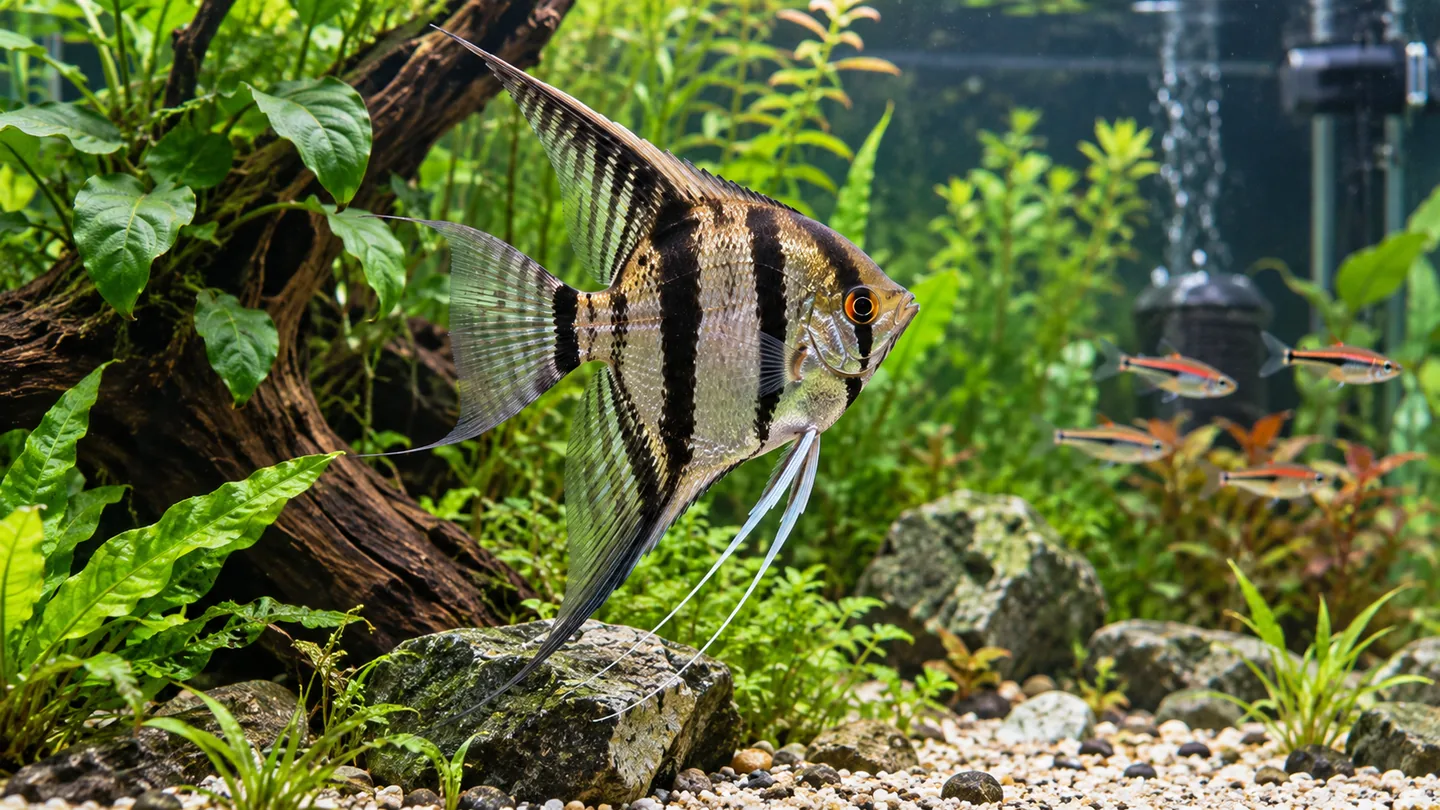
Juvenile groups are not adult groups
Young angelfish often tolerate close company. As they mature, dominance and pair formation become much more important.
Pairs may defend large areas
A spawning pair can push other angelfish and community fish away from a chosen site. In a cramped aquarium, subordinate fish may have nowhere to escape.
Tank shape matters
- Enough height for the tall body and fins.
- Enough length for separate territories.
- Plants and wood to break sight lines.
- Open areas for normal swimming.
Have a rehoming plan
If you raise a juvenile group to form pairs, be prepared to separate incompatible adults rather than forcing them to coexist.
Related aquarium tools and guides
Frequently asked questions
Can I keep one angelfish?
Yes. A single angelfish can be kept if the tank and care are suitable.
Can I keep a pair?
Yes, but a breeding pair can become territorial toward other fish.
Do six juveniles always remain a peaceful group?
No. Maturity can produce pair formation and aggression.
Sources and further reading
This guide separates general aquarium arithmetic from fish-welfare decisions. For species-specific limits, always check the needs of the fish you intend to keep.