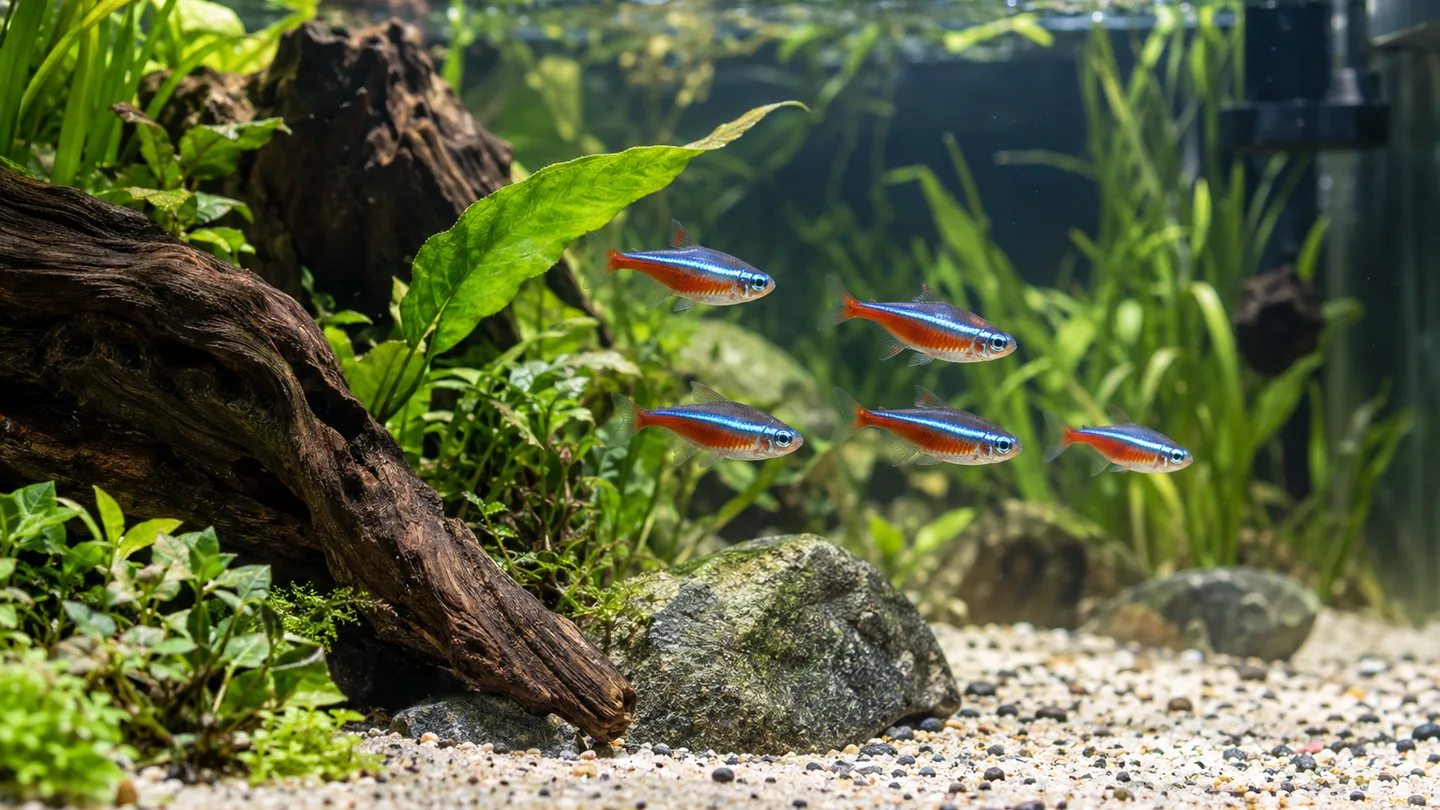
Neon tetras are small omnivorous fish with small mouths. Fine flakes, micro-pellets and appropriately sized frozen foods such as small daphnia or brine shrimp work well. Food should be small enough to swallow without repeated spitting and should be distributed so the whole shoal gets access rather than only the boldest fish at the front.
A food can be nutritionally excellent and still be a poor choice if the fish cannot comfortably eat it. With neon tetras, particle size and distribution matter as much as the ingredient list.
Best staple formats
- Fine tropical flakes crushed into small pieces.
- Very small micro-pellets that sink slowly through the shoal.
- Complete nano-fish foods designed for small community species.
Good variety foods
- Small frozen daphnia.
- Baby brine shrimp or other appropriately sized crustaceans.
- Fine frozen community-food blends.
Feed the shoal, not just the fastest fish
Scatter small amounts across a wider area so timid individuals can feed away from dominant tank mates. A single large pinch in one spot encourages competition and lets food escape uneaten.
Watch whether all fish emerge and feed normally; reduced appetite can be an early sign of stress or illness.
Keep portions small
Because the fish themselves are small, the total amount of food needed is easy to overestimate. Add a small portion, let the shoal finish it and only then consider a little more.
This approach keeps waste lower and makes it easier to spot changes in appetite.
Frequently asked questions
Can neon tetras eat regular flakes?
Yes, if the flakes are a suitable complete food and crushed small enough for them.
Do neon tetras need live food?
No, but appropriately sized live or frozen foods can add useful variety.
Why do neon tetras spit food out?
The pieces may be too large, too hard or unfamiliar. Try a smaller appropriate food and check that the fish are otherwise healthy.
Sources and further reading
This guide separates general aquarium arithmetic from fish-welfare decisions. For species-specific limits, always check the needs of the fish you intend to keep.