Good plants for sand include Cryptocoryne, Vallisneria, Amazon swords and many stem plants, provided the sand is not excessively compacted and root feeders receive root tabs. Java fern, Anubias and mosses are even easier because they can be attached to wood or rock rather than planted in the substrate. Coarser sand is generally easier for roots than extremely fine compacted sand.
Sand does not prevent a planted aquarium. Its main limitation is that plain inert sand contains little nutrition and very fine grains can pack closely.
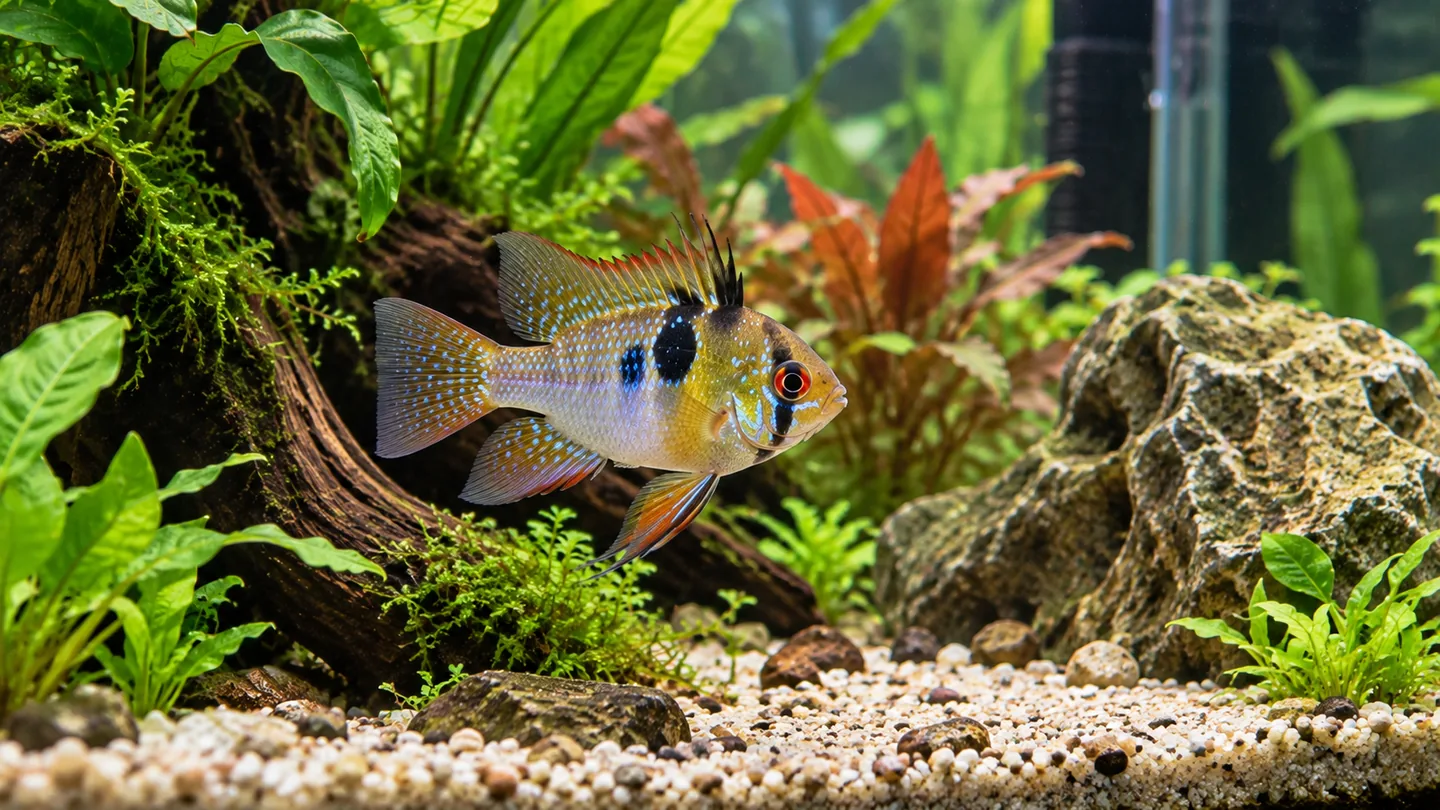
Strong choices for planting into sand
- Cryptocoryne for midground groups.
- Vallisneria for tall background growth.
- Amazon swords for large focal plants.
- Water wisteria and many stem plants where the grain is not too compact.
Plants that ignore the substrate
- Java fern attached to wood or rock.
- Anubias with the rhizome above the substrate.
- Java moss tied or glued to hardscape.
- Floating plants that never root in the bed.
Use root tabs for heavy root feeders
Aquarium Co-Op specifically identifies swords, crypts and runner-forming plants as strong candidates for root tabs. Push tablets deep into the sand near the root zone rather than leaving them exposed.
Avoid overcompacting the bed
Very fine sand can make it harder for new roots to penetrate. Use a sensible depth, avoid repeatedly compressing the surface and allow established roots to occupy the bed.
Plant carefully
Use tweezers for small plants, bury roots without burying crowns or rhizomes, and add water gently so freshly planted stems are not washed out.
Related aquarium tools and guides
Frequently asked questions
Can Amazon swords grow in sand?
Yes, especially when root tabs provide nutrients in inert sand.
Do I need aquasoil under sand?
No. Many plants grow in sand alone with suitable fertilisation.
Can Java fern be planted in sand?
Its roots can touch the substrate, but the rhizome should remain exposed; attaching it to hardscape is often easiest.
Sources and further reading
This guide separates general aquarium arithmetic from fish-welfare decisions. For species-specific limits, always check the needs of the fish you intend to keep.