Sand creates a natural-looking, fine surface and suits many bottom-dwelling fish, but waste tends to sit visibly on top and very fine sand can compact. Gravel is easier to vacuum deeply, gives plant roots more open space and is forgiving for beginners, but coarse or sharp pieces may not suit delicate barbels. Both can support healthy aquariums when grain size and livestock are chosen sensibly.
Substrate affects more than appearance. It changes how waste settles, how easily rooted plants anchor and how comfortable bottom-dwelling fish are. The best choice is therefore practical rather than decorative alone.
Where sand works best
- Bottom dwellers that sift or rest on the substrate.
- Aquascapes that need a smooth natural foreground.
- Tanks where visible waste can be siphoned from the surface.
- Layouts using plants attached to wood or rock rather than heavy root feeders.
Where gravel works best
- Beginner community tanks.
- Rooted plants that benefit from open pore spaces.
- Tanks where deep gravel-vacuuming is part of maintenance.
- Setups where you want substrate that is less likely to shift under flow.
Plant growth depends on more than particle size
Aquarium Co-Op notes that many rooted plants can grow successfully in inert gravel if nutrients are supplied with root tabs, while fine sand can be more difficult for some roots to penetrate. Active aquasoils add another option when nutrient-rich substrate is required.
Choose the substrate around the plants you intend to keep rather than assuming a planted tank automatically needs soil.
Maintenance is different, not necessarily harder
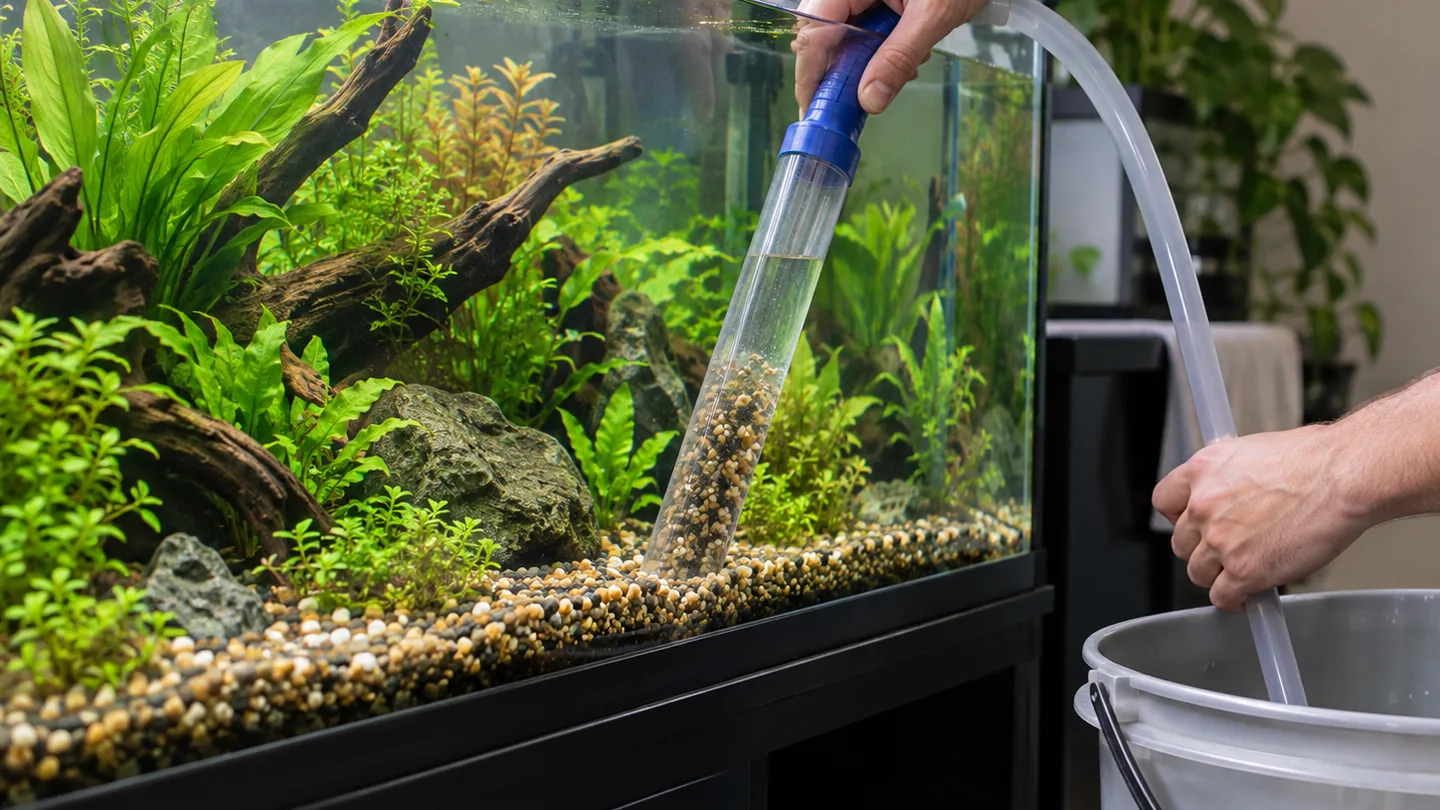
With sand, hover the siphon just above the surface so you lift debris without removing large amounts of substrate. With gravel, push the vacuum into sections of the bed to remove trapped waste.
Both benefit from sensible depth, regular maintenance and avoiding areas where debris accumulates without water movement.
Choose safe grain size and texture
Avoid sharp decorative material for fish that spend time on the bottom. Extremely fine sand can pack tightly, while very coarse gravel can trap more debris and be awkward for small rooted plants.
Rinse inert substrate before use unless the manufacturer specifically says otherwise.
Related aquarium tools and guides
Frequently asked questions
Is sand dirtier than gravel?
Not necessarily. Waste is often more visible on sand because it stays on the surface, while gravel can hide debris between particles.
Can aquarium plants grow in sand?
Yes. Many can, especially with root tabs or water-column fertilisation, although very fine compacted sand may make rooting harder.
Can I use both sand and gravel?
Yes, but they tend to migrate and mix unless separated by hardscape or retaining barriers.
Sources and further reading
This guide separates general aquarium arithmetic from fish-welfare decisions. For species-specific limits, always check the needs of the fish you intend to keep.