The one-inch-per-gallon rule can be a rough historical starting point for some very small slender fish, but it is not a safe general stocking method. It treats all inches of fish as equal, ignores adult body shape and waste production, and says nothing about shoaling, aggression or swimming space. Modern stocking decisions should use species-specific adult requirements and the actual tank dimensions.
Simple rules are attractive because they turn a complicated biological question into arithmetic. The problem is that fish are not identical units, so the arithmetic can produce absurd results.
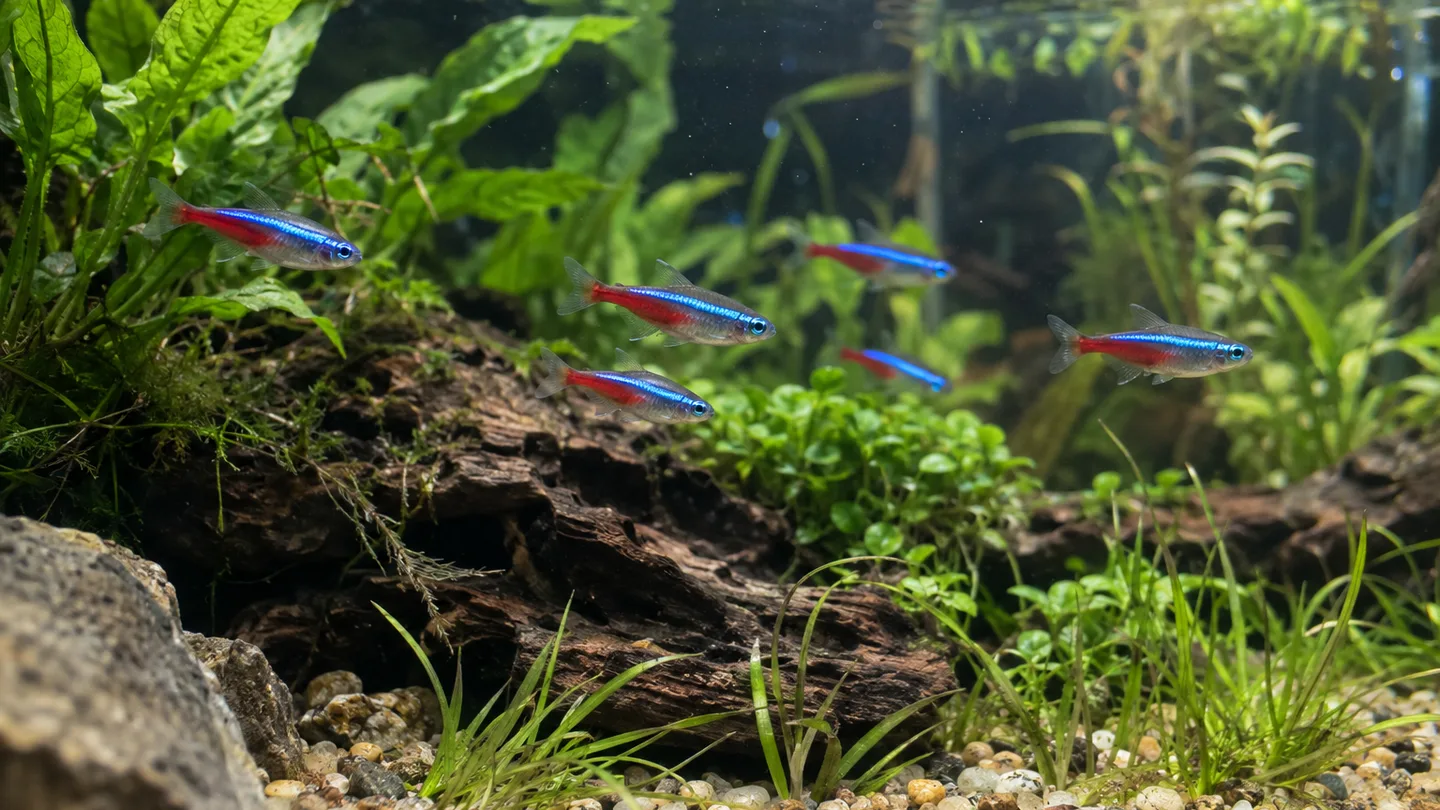
Body mass does not scale linearly with length
A fish twice as long is not merely twice the biological load. Its body volume and waste production can increase much more dramatically.
Behaviour disappears from the formula
A territorial fish may need most of a tank even when its length looks small. A shoaling fish may need six or more companions even if each individual is tiny.
Tank shape disappears too
The rule treats a tall narrow aquarium and a long wide aquarium of the same volume as identical despite major differences in swimming and bottom area.
Use a multi-factor approach instead
- Adult size and body shape.
- Minimum social group.
- Activity and territory.
- Tank length and footprint.
- Filtration and oxygenation.
- Water chemistry and maintenance capacity.
Related aquarium tools and guides
Frequently asked questions
Is the one-inch rule ever useful?
Only as a very rough sanity check for some small fish, never as the sole stocking decision.
Why do some shops still mention it?
It is simple to explain, but simplicity does not make it biologically complete.
What should I use instead?
Use species-specific adult requirements plus tank dimensions, group behaviour, filtration and a conservative stocking calculator.
Sources and further reading
This guide separates general aquarium arithmetic from fish-welfare decisions. For species-specific limits, always check the needs of the fish you intend to keep.