Common signs of overstocking include repeated ammonia or nitrite problems, nitrate rising very quickly, fish gasping or crowding high-flow areas, persistent aggression, weak or fragmented shoals, little open swimming space and a tank that becomes unstable after a missed maintenance day. Good filtration can hide some waste symptoms, so behaviour and space must be assessed alongside water tests.
An aquarium can pass a basic water test and still be too crowded. Stocking is limited by biology, behaviour and physical space together, not by filtration alone.
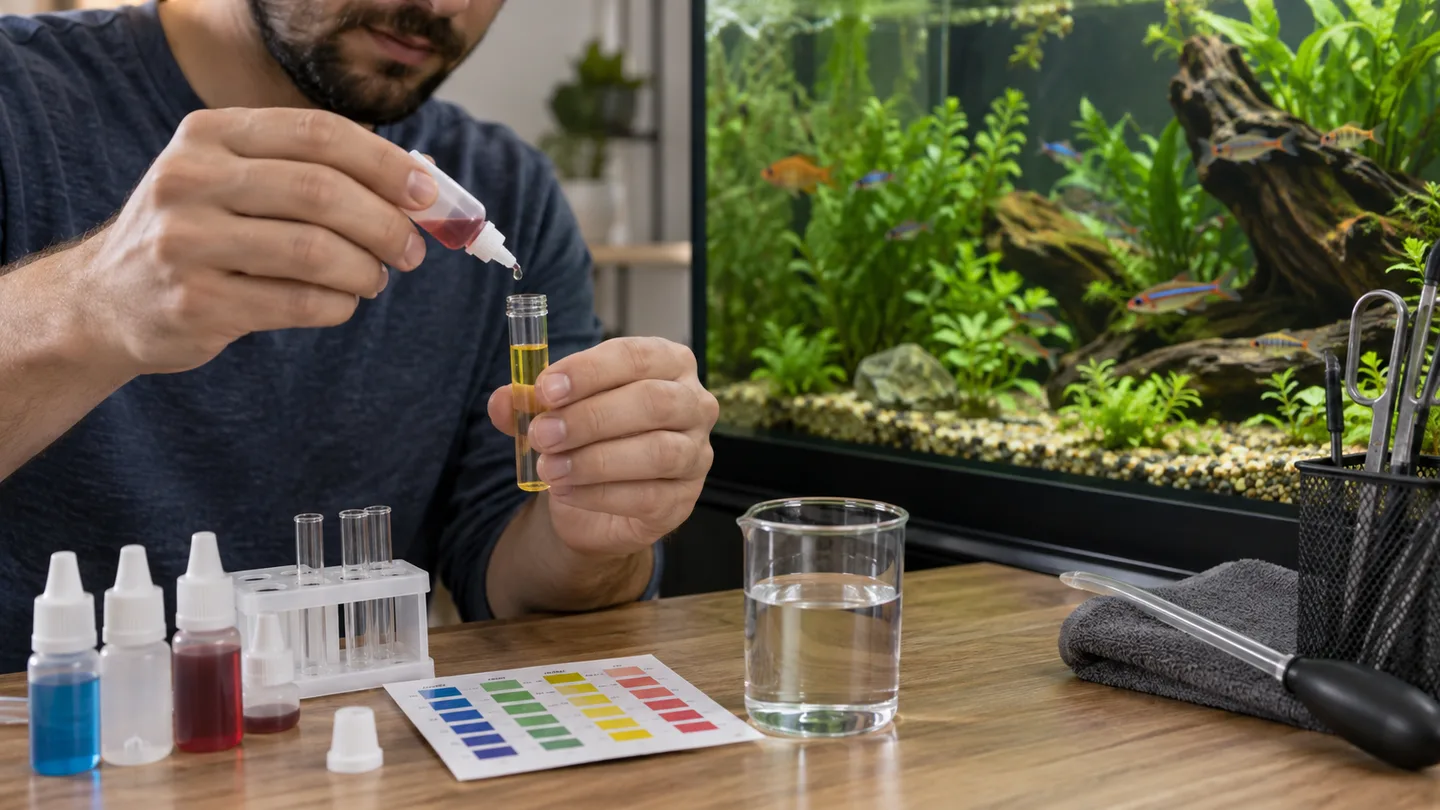
Water-quality warning signs
- Ammonia or nitrite appears in a supposedly mature tank.
- Nitrate rises very quickly between routine water changes.
- Water becomes cloudy or oxygen-poor after feeding.
- The filter clogs rapidly with waste.
Behavioural warning signs
- Fish cannot maintain normal territories.
- Aggression or chasing is persistent rather than occasional.
- Shoaling fish are scattered or constantly stressed.
- Fish spend abnormal amounts of time hiding or crowding one area.
Maintenance should not be a rescue operation
If the aquarium only remains stable through very large, very frequent emergency-style water changes, the stocking level may be too high for the system.
Reduce pressure rather than adding equipment forever
More filtration or aeration can help, but it cannot create territory. Rehoming fish, reducing future additions or moving livestock to a larger tank is often the real solution.
Frequently asked questions
Can an aquarium be overstocked if ammonia is zero?
Yes. Behavioural crowding, oxygen demand and lack of territory can exist even when biological filtration processes ammonia.
Does high nitrate prove overstocking?
Not by itself, but a consistently rapid rise can indicate that waste production exceeds the maintenance routine.
Can plants prevent overstocking?
No. Plants can use nutrients and provide cover, but they do not create unlimited swimming or territorial space.
Sources and further reading
This guide separates general aquarium arithmetic from fish-welfare decisions. For species-specific limits, always check the needs of the fish you intend to keep.