A fish lying on its side may be severely stressed, weak, injured or unable to control buoyancy. Poor water quality and temperature should be checked immediately because they can affect multiple body systems. Swim bladder problems are one possibility but are not the only explanation. If the fish cannot right itself, stops eating or shows swelling, lesions or rapid breathing, seek specialist aquatic-vet advice.
'Swim bladder' is often used as a catch-all label for any fish that tilts or rolls. That can hide the real problem. Loss of balance is a symptom shared by several conditions.
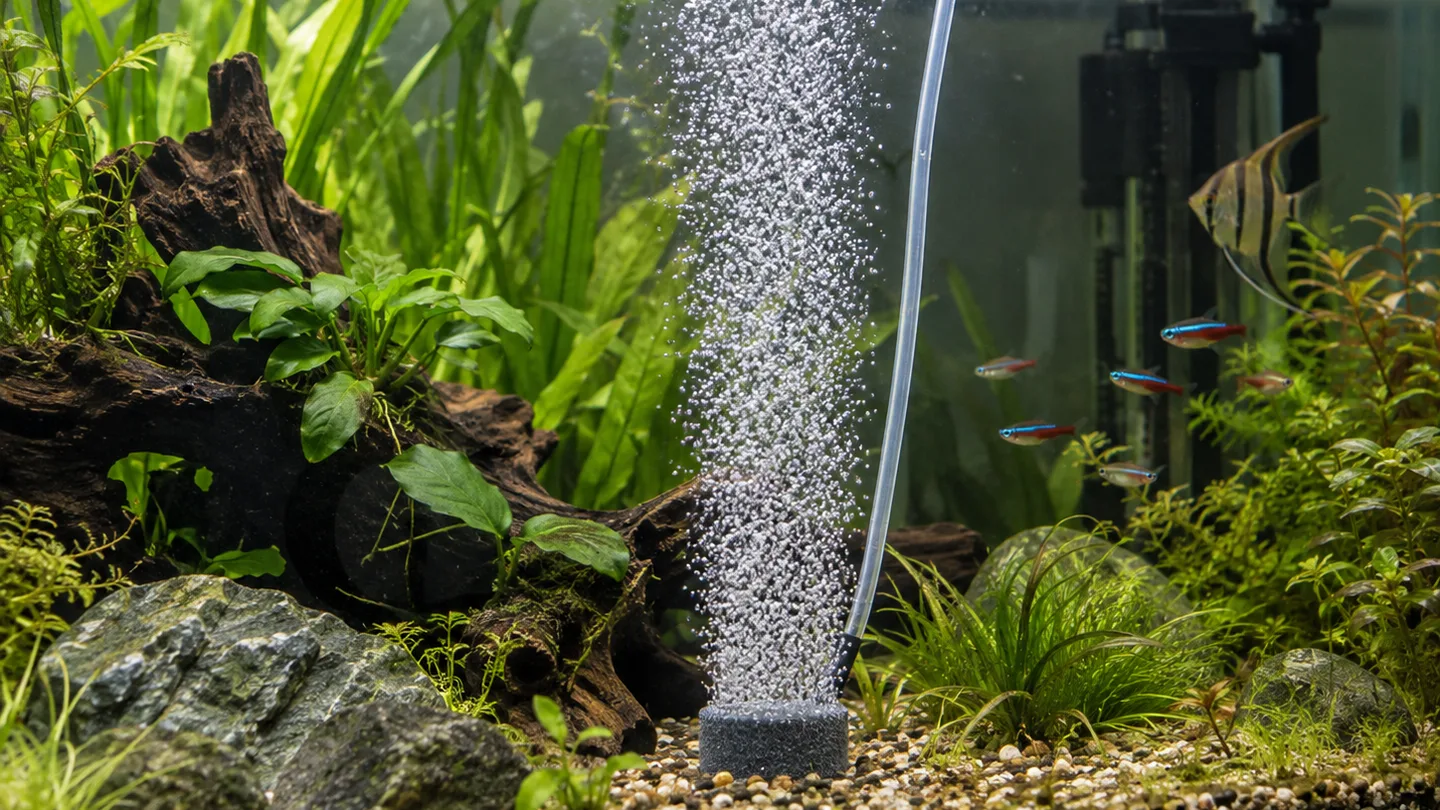
Rule out the environment first
- Test ammonia and nitrite.
- Confirm temperature.
- Check filter and aeration.
- Look for sudden pH or maintenance changes.
- Ask whether other fish are also behaving abnormally.
Consider normal species behaviour
Some fish rest at unusual angles or even upside down as part of normal behaviour. Research the species before deciding the posture is pathological.
A sudden change from that individual fish's normal swimming is much more informative.
Possible physical causes
Buoyancy disorders, severe weakness, trauma, infection, constipation, internal swelling and organ disease can all affect posture. Visual observation alone may not distinguish them accurately.
Support the fish without blind treatment
Keep water quality excellent and reduce stress. Avoid piling multiple medications into the tank without a diagnosis.
RSPCA identifies sinking, swimming to one side and loss of balance as signs of poor health and recommends specialist help when diagnosis is uncertain.
Related aquarium tools and guides
Frequently asked questions
Is lying on the side always swim bladder disease?
No. Several illnesses, injuries and environmental problems can cause loss of balance.
Can bad water make a fish lose balance?
Yes. Severe water-quality stress can affect swimming and overall strength.
Should I fast the fish?
Fasting is sometimes suggested for digestive-related buoyancy problems, but it is not appropriate for every cause. Diagnose first.
Sources and further reading
This guide separates general aquarium arithmetic from fish-welfare decisions. For species-specific limits, always check the needs of the fish you intend to keep.