Corydoras, loaches and many catfish naturally spend time near the substrate. Concern rises when a normally mid-water or active fish suddenly sits on the bottom, isolates itself or struggles to swim. Check ammonia, nitrite, temperature and oxygen, then look for bullying, recent transport, injury or other signs of disease. Persistent abnormal posture warrants specialist advice.
The aquarium floor is a normal habitat for some fish and an emergency waiting room for others. Species knowledge is essential before interpreting the behaviour.
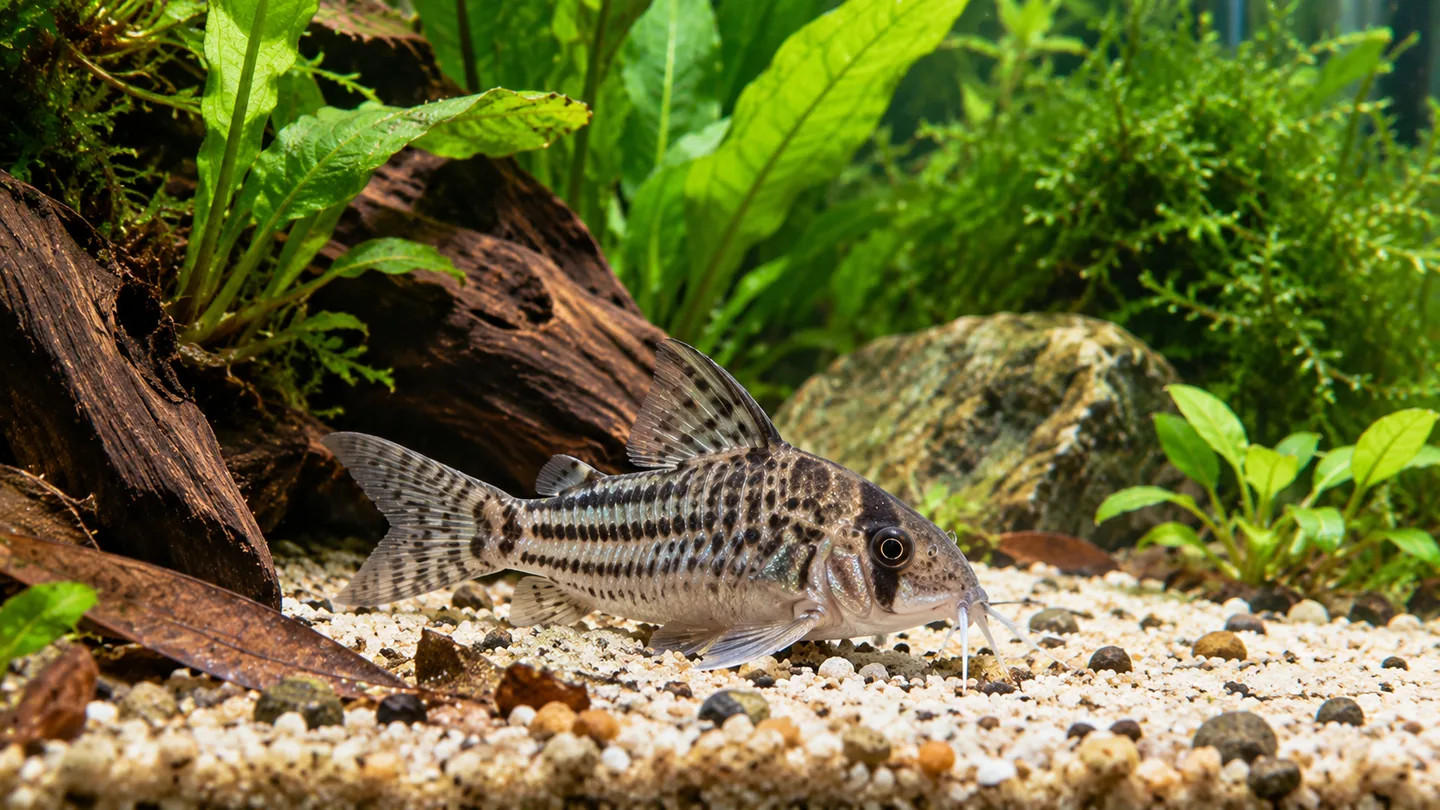
Normal bottom behaviour
Bottom-dwelling catfish and loaches forage and rest near the substrate as part of normal life. Some fish also sleep or rest lower in the tank when lights are off.
When bottom-sitting is concerning
- The fish normally swims in mid-water.
- It has stopped eating.
- Fins are clamped or breathing is rapid.
- The fish cannot maintain balance.
- Other fish are bullying it.
- Several fish change behaviour at the same time.
Test water and temperature
RSPCA notes that unusual sinking or swimming to one side can indicate poor health, and cold tropical water can make fish sluggish. Check ammonia, nitrite and temperature before assuming a specific disease.
Observe social and physical causes
A newly transported fish may rest after stress, while an injured or bullied fish may hide on the bottom to avoid tank mates. Watch interactions from a distance so your presence does not alter behaviour.
Seek diagnosis when the pattern persists
Bottom-sitting combined with swelling, spots, lesions, severe breathing changes or loss of balance requires closer health assessment. Avoid treating the whole aquarium blindly when the cause is unknown.
Related aquarium tools and guides
Frequently asked questions
Is it normal for fish to sleep on the bottom?
Some species rest near the bottom, especially at night. Know the normal behaviour of your fish.
Can cold water make fish sit at the bottom?
Yes. Tropical fish can become sluggish when water is too cold for the species.
Why are all my fish suddenly at the bottom?
A group-wide change points more strongly toward water quality, temperature, toxins or another environmental cause.
Sources and further reading
This guide separates general aquarium arithmetic from fish-welfare decisions. For species-specific limits, always check the needs of the fish you intend to keep.