If ammonia or nitrite seems unchanged for many days, first verify the test kit and dosing record. Then check pH and KH, temperature, oxygenation, filter flow and whether the filter media was exposed to untreated chlorinated water or allowed to dry. Very high ammonia can also slow a cycle. Fix the limiting condition rather than repeatedly adding more ammonia.
A stalled cycle is frustrating because the tank often looks perfectly normal. The cause is usually invisible: the bacteria have too little usable ammonia, too little alkalinity, too little oxygen, poor flow, unsuitable temperature or a test result that is being misread. A structured check is faster than guessing.
1. Verify the test before changing the tank
Repeat the test exactly according to the kit instructions, including shaking reagents and observing the stated development time. Check expiry dates and compare with source water where useful.
If a reading is already at the top of a colour chart, you may only know that it is 'high', not how high.
2. Confirm there is a controlled ammonia source
An empty tank with no nitrogen input cannot build a useful nitrifying population simply by circulating water. Follow one defined cycling method and keep a written dosing record.
Avoid switching between fish food, bottled ammonia and multiple bacterial products without knowing what total load you are creating.
3. Check pH and KH
Nitrification consumes alkalinity and can push pH downward. When pH becomes very low, nitrifying activity can slow markedly.
If the cycle progressed and then stopped, a pH crash is one of the first conditions worth checking.
4. Check temperature, oxygen and flow
- Make sure the filter has been running continuously.
- Ensure water is moving through the biological media rather than bypassing it.
- Provide good surface movement or aeration.
- Avoid unusually cold conditions that slow bacterial activity.
- Do not pack filter media so tightly that flow collapses.
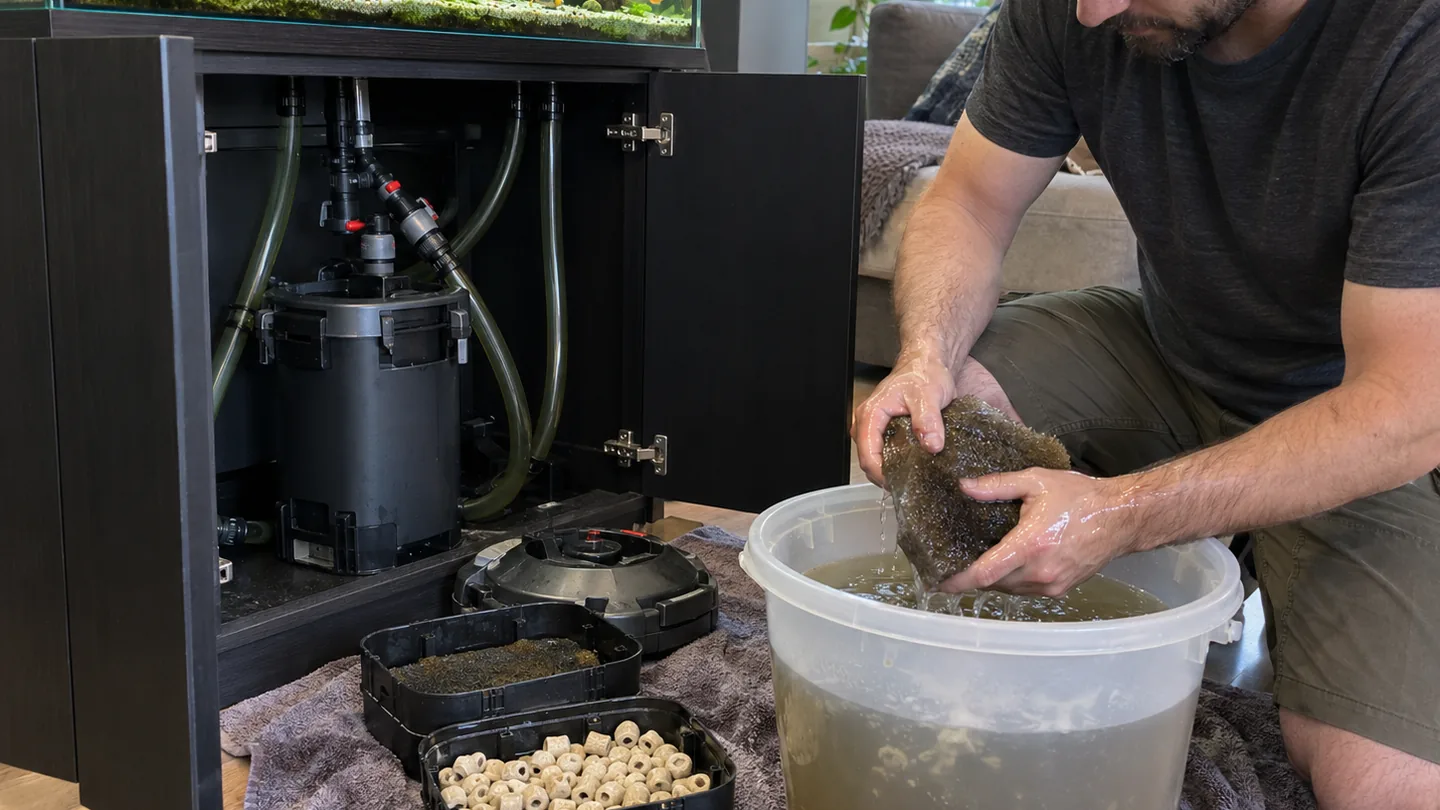
5. Think about recent cleaning or chemical exposure
Untreated chlorine or chloramine can damage biological filter organisms. Letting media dry out or sit without oxygenated flow for a long period can also reduce activity.
If you recently replaced all media, deep-cleaned the filter or rinsed it aggressively in untreated tap water, the cycle may need time to rebuild.
6. Do not confuse a nitrite backlog with failure
It is common for ammonia to begin processing before nitrite does. A long nitrite phase can look like a stall even though the first stage is working well.
Keep conditions stable and avoid adding ever larger ammonia doses that create an even bigger backlog.
Related aquarium tools and guides
Frequently asked questions
Can low pH stall an aquarium cycle?
Yes. Nitrifying activity slows as pH becomes very low, and cycling itself can consume alkalinity. Check pH and KH if progress stops.
Should I add more ammonia when a cycle stalls?
Not automatically. If ammonia is already present, adding more can make the problem worse. Diagnose the conditions first.
Can a test kit make a cycle look stalled?
Yes. Expired reagents, poor shaking, timing errors and readings beyond the colour scale can all mislead you.
Sources and further reading
This guide separates general aquarium arithmetic from fish-welfare decisions. For species-specific limits, always check the needs of the fish you intend to keep.