Driftwood floats when air-filled pores keep the piece buoyant. As water gradually replaces the trapped air, many pieces become heavy enough to sink. Thin dense wood may waterlog quickly; thick dry pieces can take much longer. You can pre-soak the wood or attach it securely to rock, slate or another aquarium-safe base while it saturates.
Floating driftwood is normal and does not mean the wood is unsuitable. It usually means the piece is still dry internally.
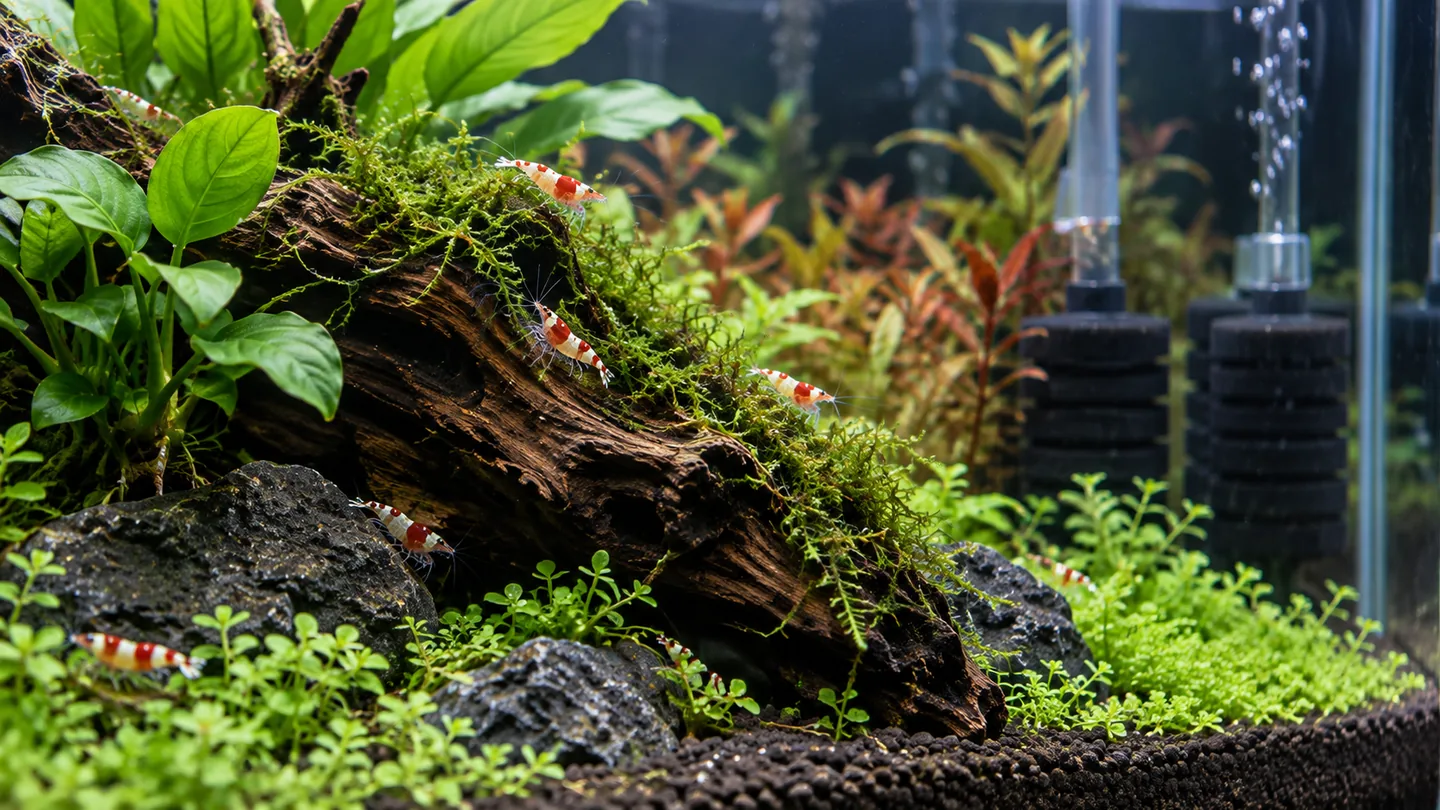
Waterlogging takes variable time
Wood species, density, thickness and how dry it was before purchase all affect the soaking period. There is no reliable universal number of days.
A piece is ready when it stays submerged without unsafe temporary weights.
Pre-soaking is the simplest method
Submerge the wood in a clean container and use a secure object to keep it below the surface. Change the water periodically, especially if it becomes heavily stained or develops odour.
Secure it mechanically if needed
- Attach the base to aquarium-safe slate or rock.
- Use stainless hardware known to be aquarium appropriate or inert plastic fasteners.
- Hide the attachment under substrate or hardscape.
- Make sure no sharp fastener is accessible to fish.
Avoid unstable improvised weights
A loose rock balanced on top can shift as fish dig or the wood moves. Hardscape should be stable before livestock is exposed to it.
Tannins may continue after the wood sinks
Waterlogging and tannin release are related but separate. A piece can sink and still colour the water for a long time.
Related aquarium tools and guides
Frequently asked questions
How long until driftwood sinks?
Anywhere from hours to several weeks depending on the piece. Use behaviour rather than a fixed deadline.
Can I screw driftwood to slate?
Yes if the hardware and base are aquarium-safe and all sharp edges are inaccessible.
Will boiling make driftwood sink faster?
Hot water can speed saturation for small pieces, but boiling is not necessary and is impractical for large wood.
Sources and further reading
This guide separates general aquarium arithmetic from fish-welfare decisions. For species-specific limits, always check the needs of the fish you intend to keep.