Fish deaths after a water change can result from chlorine or chloramine exposure, a large temperature difference, a rapid pH or hardness shift, incorrect conditioner use, contaminated equipment, disturbed anaerobic waste or severe pre-existing water quality that changed too quickly. Reconstruct the maintenance step by step. Do not assume water changes are inherently dangerous; correctly prepared partial changes are a core part of fishkeeping.
A water change often gets blamed simply because it is the last visible event before a fish declines. The useful investigation is to identify which part of the change could have altered the fish's environment abruptly.
Check dechlorination
RSPCA notes that chlorine in tap water is dangerous to fish and beneficial bacteria. If replacement water was untreated or conditioner was underdosed, gill damage and rapid distress can follow.
Check the product instructions and whether your water supplier uses chlorine, chloramine or both.
Compare temperature
A large temperature difference can shock fish. Replacement water should be matched closely enough that the aquarium does not swing abruptly.
Consider pH and hardness shifts
If tank water had drifted far from the tap because of low KH, evaporation or long-neglected maintenance, a large change can move pH and mineral content quickly. This is one reason severely neglected tanks may need a staged recovery plan rather than a casual huge reset.
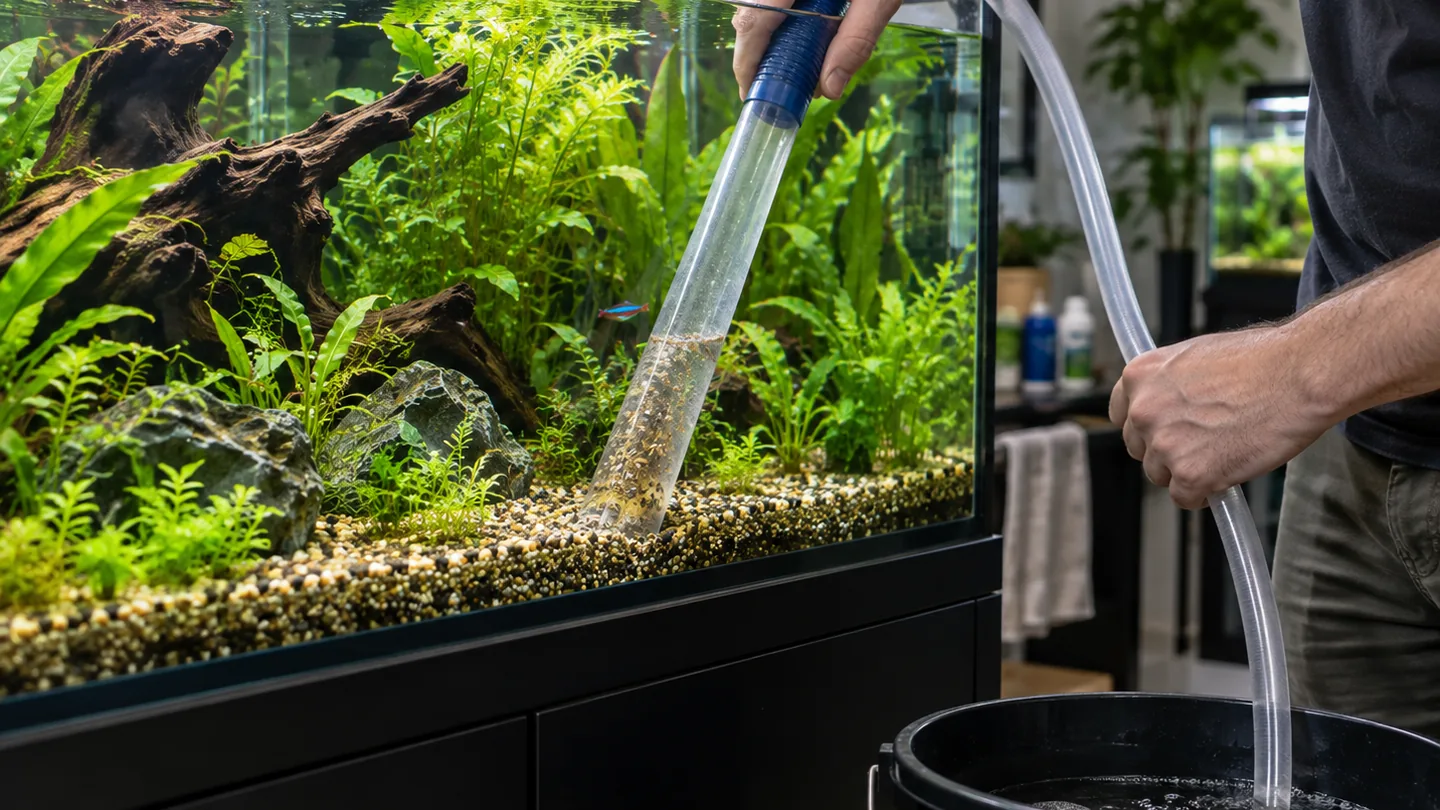
Review the cleaning itself
- Was the filter media replaced or rinsed under untreated tap water?
- Was deep substrate disturbed heavily?
- Did soap, spray cleaner or a household bucket contaminate the water?
- Was the heater left on while exposed?
- Was conditioner added to the correct volume of new water?
What to do now
Test ammonia and nitrite, increase aeration if fish are breathing rapidly and make any further correction gradually unless an active toxin requires emergency dilution. If surviving fish continue to deteriorate, seek specialist aquatic-vet advice.
Frequently asked questions
Are large water changes bad for fish?
Not inherently. Large changes can be safe when replacement water is conditioned and closely matched, but sudden chemistry differences can stress fish.
Can chlorine kill fish quickly?
Yes. Chlorine and chloramine can damage gills and must be neutralised before or as tap water enters the aquarium according to the conditioner instructions.
Can cleaning the filter during a water change cause problems?
Aggressive cleaning or replacing biological media can reduce beneficial bacteria and cause a later ammonia or nitrite spike.
Sources and further reading
This guide separates general aquarium arithmetic from fish-welfare decisions. For species-specific limits, always check the needs of the fish you intend to keep.