GH, or general hardness, measures the concentration of calcium and magnesium ions in aquarium water. These minerals support biological functions in fish and are especially important for shrimp moulting, snail shells and plant growth. GH is usually reported as degrees of hardness (dGH) or parts per million. There is no single ideal value for every freshwater species, so use the requirements of your livestock and the stability of your source water.
Two aquariums can have the same pH and completely different mineral content. GH is the test that helps reveal that difference. It explains whether the water is generally soft or hard and whether enough calcium and magnesium are available for the inhabitants that rely on them.
What GH actually measures
GH primarily reflects dissolved calcium and magnesium. It does not tell you the same thing as KH, and it does not directly tell you whether pH is stable.
A tank can have high GH with modest KH, or the reverse, depending on which minerals are present.
Why GH matters to livestock
- Fish use dissolved minerals in normal physiological processes.
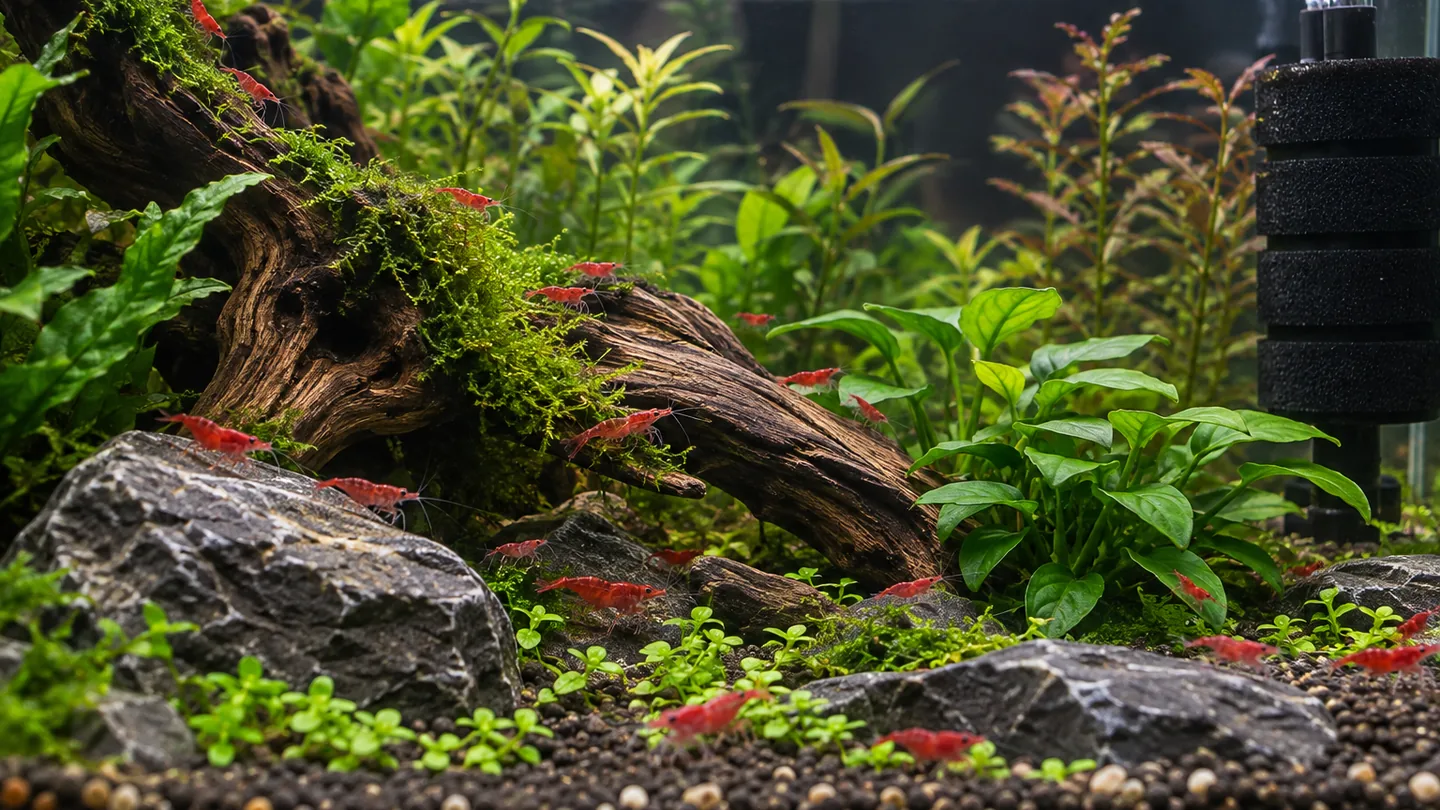
- Shrimp depend on suitable mineral balance for successful moulting.
- Snails require calcium for healthy shell growth.
- Aquatic plants use calcium and magnesium as nutrients.
Soft-water and hard-water species differ
Many South American species originate from softer water, while livebearers and African rift-lake cichlids generally prefer harder mineral-rich conditions. Captive-bred fish may tolerate wider ranges, but extremes still matter.
Choose livestock that suits your source water when possible; it is easier and more stable than constantly fighting the tap.
How GH is reported
GH may be shown as dGH or ppm. Aquarium Co-Op notes that 1 degree of hardness corresponds to roughly 17.9 ppm as calcium carbonate equivalent.
Always check which unit a test kit and care guide are using before comparing numbers.
Changing GH
To raise GH, use an appropriate remineralisation product or mineral source that supplies calcium and magnesium. To lower GH, dilute hard water with RO or deionised water and then ensure the final mix still contains the minerals your livestock needs.
Make changes gradually and keep replacement-water recipes consistent.
Related aquarium tools and guides
Frequently asked questions
Is GH the same as pH?
No. GH measures calcium and magnesium hardness, while pH measures acidity or alkalinity.
Is GH the same as KH?
No. KH measures carbonate buffering, while GH mainly measures calcium and magnesium.
Can GH be too low for shrimp and snails?
Yes. Very low mineral content can contribute to moulting and shell problems, depending on the species.
Sources and further reading
This guide separates general aquarium arithmetic from fish-welfare decisions. For species-specific limits, always check the needs of the fish you intend to keep.