Sponge filters are inexpensive, gentle and excellent for shrimp, fry, quarantine tanks and low-flow species. Hang-on-back filters usually move more water, trap debris more effectively and provide space for mechanical, biological and optional chemical media. Neither is universally better: match the filter to tank size, stocking, flow tolerance and maintenance preference.
Both designs can support a healthy biofilter. The real difference is how they move water and what sort of maintenance job you want the filter to perform.
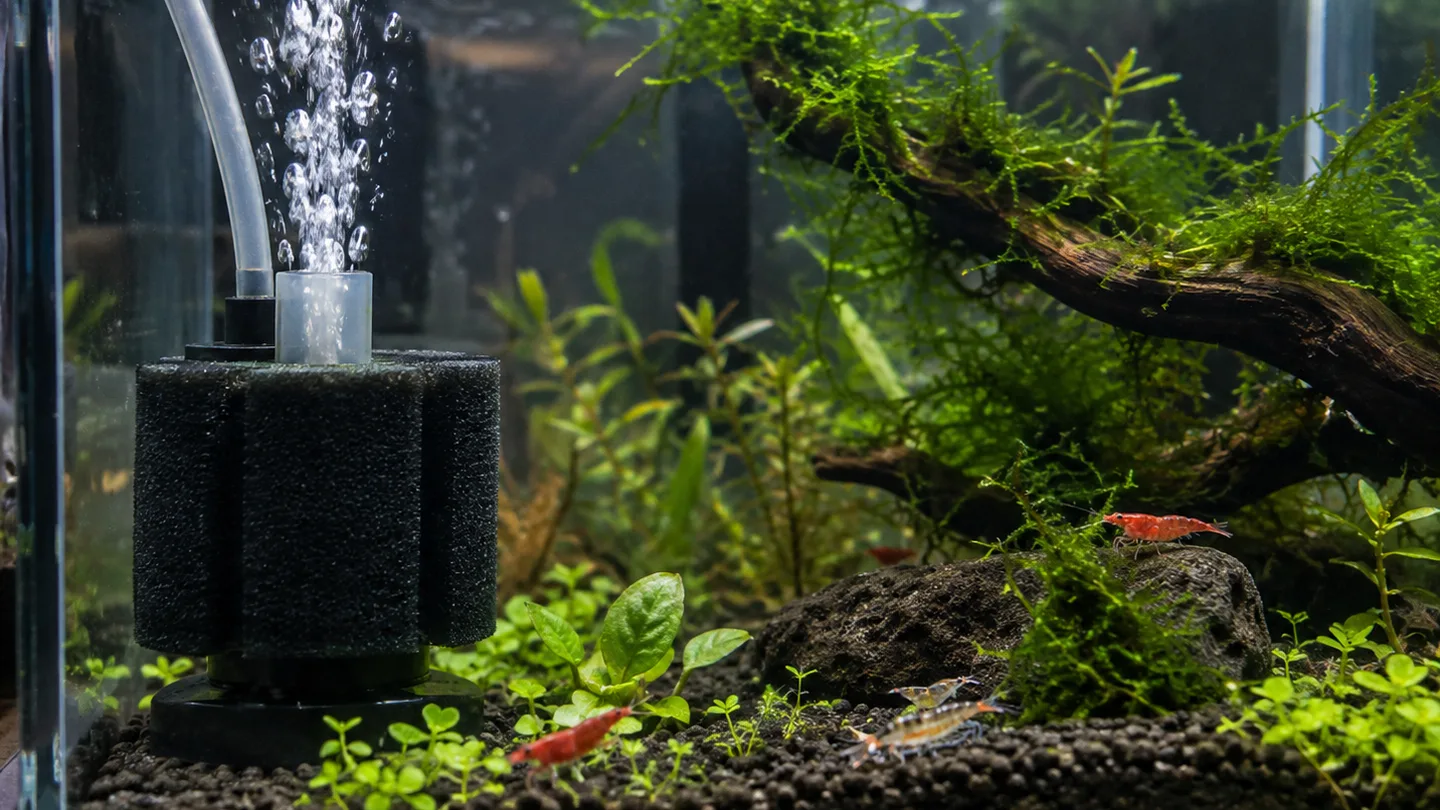
Where sponge filters win
- Very gentle intake with little risk to fry or shrimp.
- Large reusable sponge provides mechanical and biological filtration.
- Air-driven models add surface agitation and oxygenation.
- Simple construction and low replacement cost.
Where HOB filters win
- Higher mechanical debris capture.
- More flexible media baskets in many models.
- Easy top-access maintenance.
- Strong surface movement from the return.
Noise and power
A sponge filter needs an air pump, so pump vibration and bubbles are the main noise sources. A HOB uses an electric impeller and may produce waterfall noise if the water level is low.
Either can be quiet when installed and maintained well.
Flow matters to the livestock
Sponge filters suit species that dislike strong current. HOB filters can be baffled or adjusted, but some models still produce a concentrated return.
Do not choose solely by tank-size label; observe how the fish use the tank.
Using both together
A sponge plus HOB can be useful on breeding or heavily stocked tanks because the sponge gives gentle biological redundancy while the HOB handles more debris.
Two filters are not mandatory if one well-sized system already does the job.
Related aquarium tools and guides
Frequently asked questions
Is a sponge filter enough for a community tank?
It can be for lightly to moderately stocked tanks if sized well and maintained, but mechanical debris removal is usually less aggressive than a HOB.
Do HOB filters need cartridges?
Not necessarily. Many can be customised with reusable sponge and biological media instead of relying on disposable cartridges.
Which is better for shrimp?
Sponge filters are especially shrimp-friendly because the intake itself is a sponge.
Sources and further reading
This guide separates general aquarium arithmetic from fish-welfare decisions. For species-specific limits, always check the needs of the fish you intend to keep.