Research the species' adult size, group structure, temperature, hardness, pH, flow, substrate, cover and breeding behaviour first. Then choose a tank that gives the correct footprint and social space, build the habitat around those needs, cycle the aquarium fully and stock at the right group size rather than mixing in unrelated fish for variety.
Species-only tanks can be simpler than communities because every major decision points in one direction. The challenge is that there is nowhere to hide a poor assumption: if the species needs sand, a group of eight, dense cover or strong current, the whole tank should reflect that.
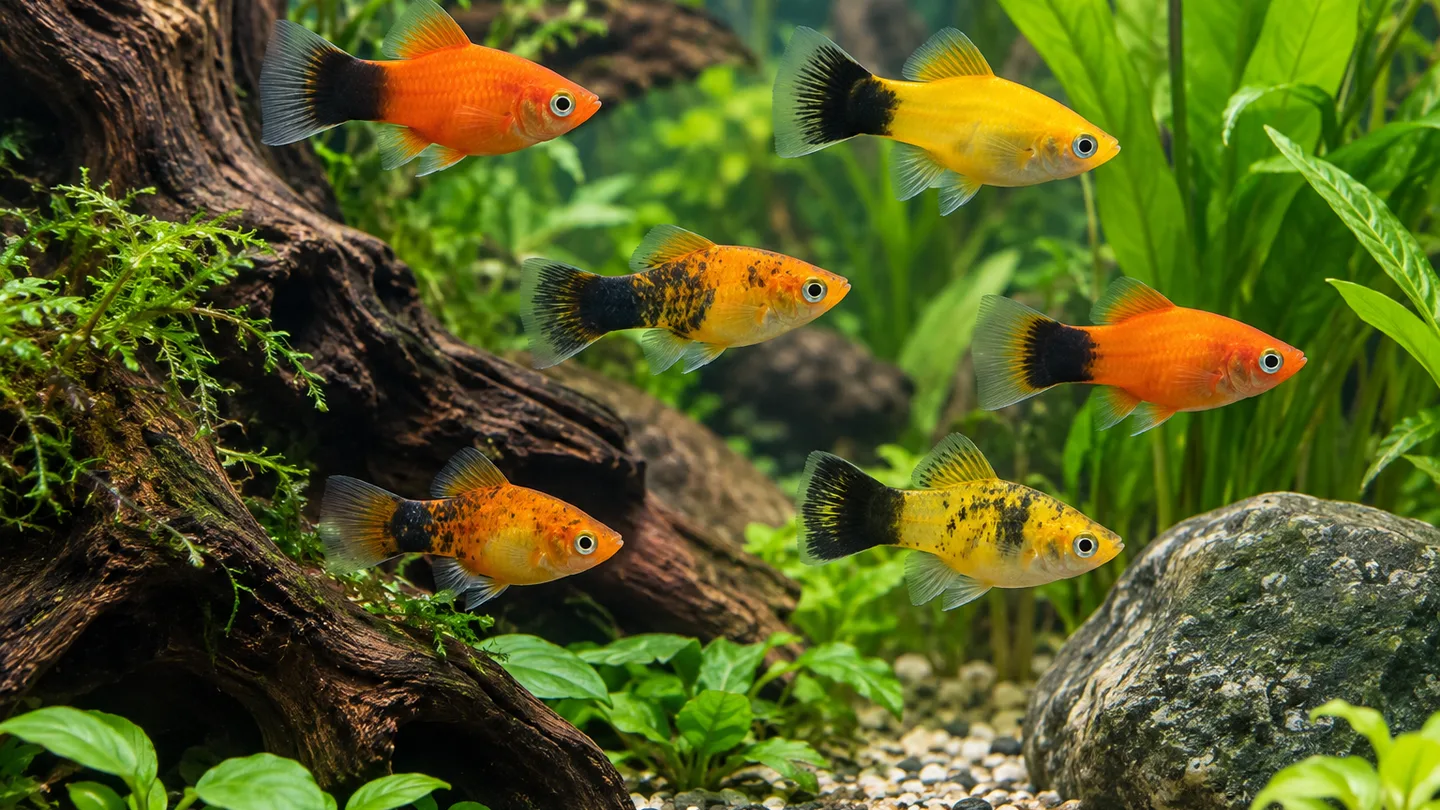
Start with the adult fish, not the juvenile in the shop
Record adult size, body shape, activity level and expected lifespan. A juvenile that looks comfortable in a small sales tank may need a much larger permanent footprint.
Also check whether males are territorial, whether the species forms pairs or groups, and whether juveniles tolerate each other better than adults.
Match habitat to natural behaviour
- Choose substrate that suits feeding and digging behaviour.
- Provide current or calm zones appropriate to the species.
- Use plants, wood, rock or open swimming space in the proportions the fish actually use.
- Provide visual barriers for territorial animals.
- Leave surface access for labyrinth fish and strong gas exchange for high-oxygen species.
Group size is part of tank size
A species-only setup should make it easier, not harder, to keep social fish in a proper group. If the species needs six, eight or more companions, size the aquarium for that full adult group.
For solitary or highly territorial species, more individuals are not automatically better. Species research should decide the number.
Filtration can be tailored more precisely
Without mixed species you can tune flow more closely to the target fish. Hillstream species may benefit from stronger circulation and oxygenation, while long-finned or still-water species may need gentle flow.
Use filter capacity for biological stability, but do not create unnecessary current simply because a pump has a high rated flow.
Species-only tanks are ideal for focused observation
Feeding response, breeding behaviour, hierarchy and health can be easier to interpret when one species occupies the tank. That can make the setup particularly useful for breeding projects or learning a species deeply.
Keep records of water parameters, feeding and spawning events if the goal is long-term husbandry rather than display alone.
Related aquarium tools and guides
Frequently asked questions
Are species-only tanks easier than community tanks?
They can be because all fish share the same core needs, but specialist species may still be demanding. Simpler compatibility does not always mean simpler care.
Can I keep snails or shrimp in a species-only tank?
You can, but it is no longer literally one species. Whether invertebrates are suitable depends on predation risk and the purpose of the setup.
Are species-only tanks better for breeding?
Often yes, because spawning behaviour, eggs and fry are easier to manage without unrelated tank mates, but breeding requirements vary greatly by species.
Sources and further reading
This guide separates general aquarium arithmetic from fish-welfare decisions. For species-specific limits, always check the needs of the fish you intend to keep.