Place small batches of ordinary gravel or sand in a clean aquarium-only bucket, add water, stir by hand, pour off suspended dust and repeat until the runoff is much clearer. Never use soap. For aquasoils, coated gravels and speciality substrates, check the packaging first because aggressive rinsing can damage the product or remove useful fine material.
Cloudy water after setup is often just suspended substrate dust, but the cure should not create a new problem. The safest rule is simple: rinse inert materials with clean water, never detergent, and treat specialist substrates according to their own instructions.
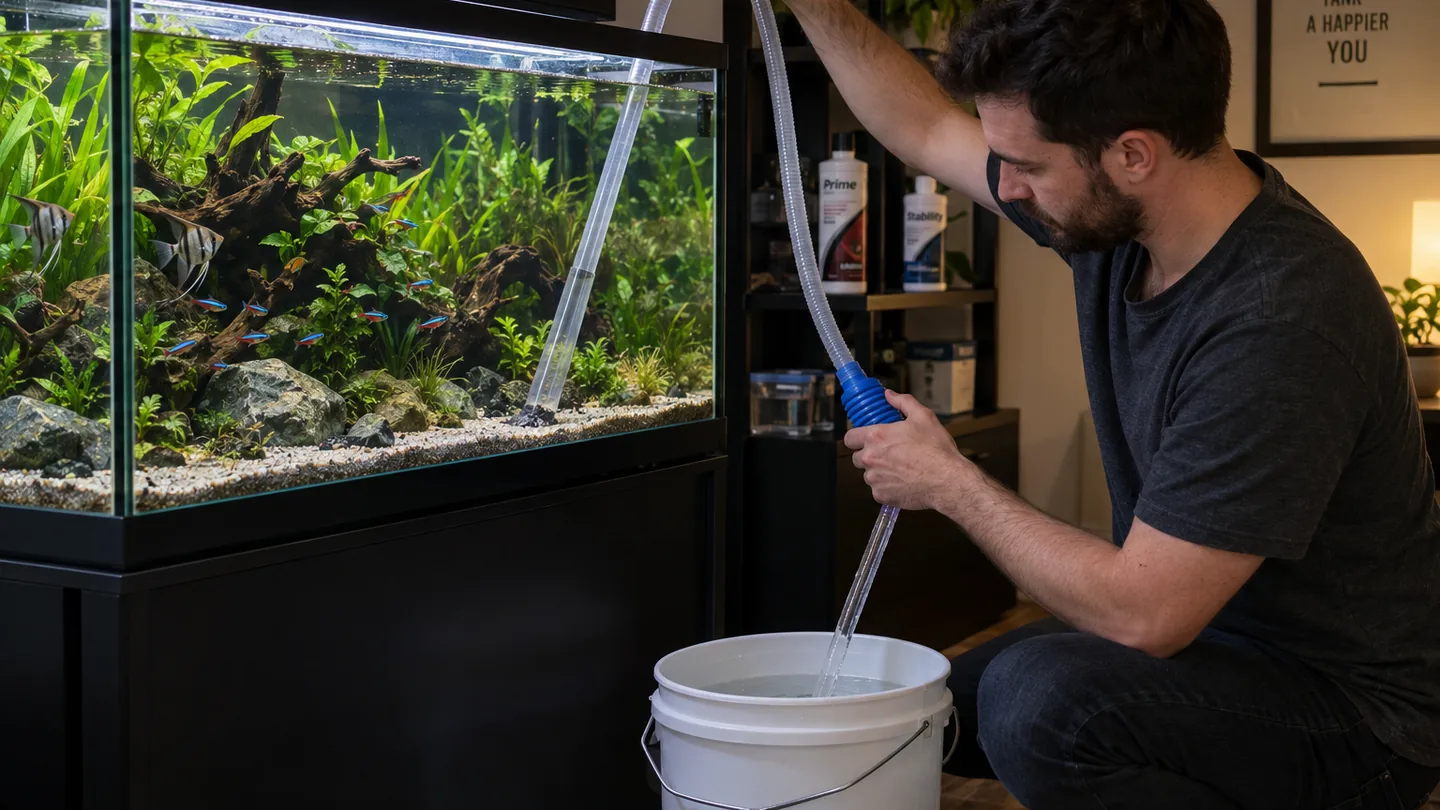
Rinsing ordinary gravel
Do not chase perfectly crystal-clear runoff forever. The aim is to remove loose dust and debris, not sterilise the gravel.
- Put a manageable amount of gravel in a clean bucket.
- Add tap water and agitate the gravel by hand.
- Pour away the cloudy water without losing substrate.
- Repeat until the water is substantially clearer.
- Transfer the rinsed batch to the tank and repeat.
Rinsing aquarium sand
Sand takes longer because fine particles stay suspended easily. Work in smaller batches and stir deeply so fines rise into the water. Pour off the cloudy layer and repeat.
A hose can speed the job, but use gentle flow so sand is not washed out of the bucket.
Specialist planted substrates are different
Some aquasoils are fragile granules rather than inert stone. Rough washing can break them down. Product instructions vary: some manufacturers recommend a gentle rinse, while other substrates are sold pre-washed or are intended to be used with minimal disturbance.
Fluval, for example, advises gently rinsing Stratum rather than aggressively agitating it. Follow the exact product instructions instead of applying a universal rule.
What not to use
- Dishwashing liquid or household detergent.
- Bleach unless a specific disinfection procedure calls for it and you know how to neutralise and rinse safely.
- Perfumed cleaners.
- A bucket previously used for cleaning chemicals.
- Boiling water on substrates or rocks that may crack or release trapped gases.
How to reduce cloudiness after rinsing
- Fill the aquarium slowly over a plate or plastic bag.
- Avoid pouring directly onto loose substrate.
- Run mechanical filtration after filling.
- Do not stir the bed unnecessarily once the tank is full.
- Expect some temporary haze even after careful rinsing.
Related aquarium tools and guides
Frequently asked questions
Do I need to rinse aquarium gravel?
Usually yes for ordinary inert gravel because it often carries dust from processing and transport. Check the packaging in case the product is pre-washed or specially coated.
Do I need to rinse aquarium sand?
Most ordinary aquarium sands benefit from rinsing to remove fines. Specialist or pre-washed products may have different instructions.
Can I use soap to clean new aquarium gravel?
No. Soap and detergent residues can be harmful to aquatic life and are unnecessary for normal substrate preparation.
Sources and further reading
This guide separates general aquarium arithmetic from fish-welfare decisions. For species-specific limits, always check the needs of the fish you intend to keep.