To feed bottom-dwelling fish successfully, use sinking pellets, wafers or gel foods that reach their feeding zone. Feed after the main surface rush or after lights dim if necessary, and place food in more than one location so dominant fish cannot monopolise it. Observe the bottom-dwellers periodically to confirm that they are actually eating rather than simply searching for scraps.
A community tank can be overfed overall while its bottom dwellers are underfed. The solution is better targeting, not simply adding more food.
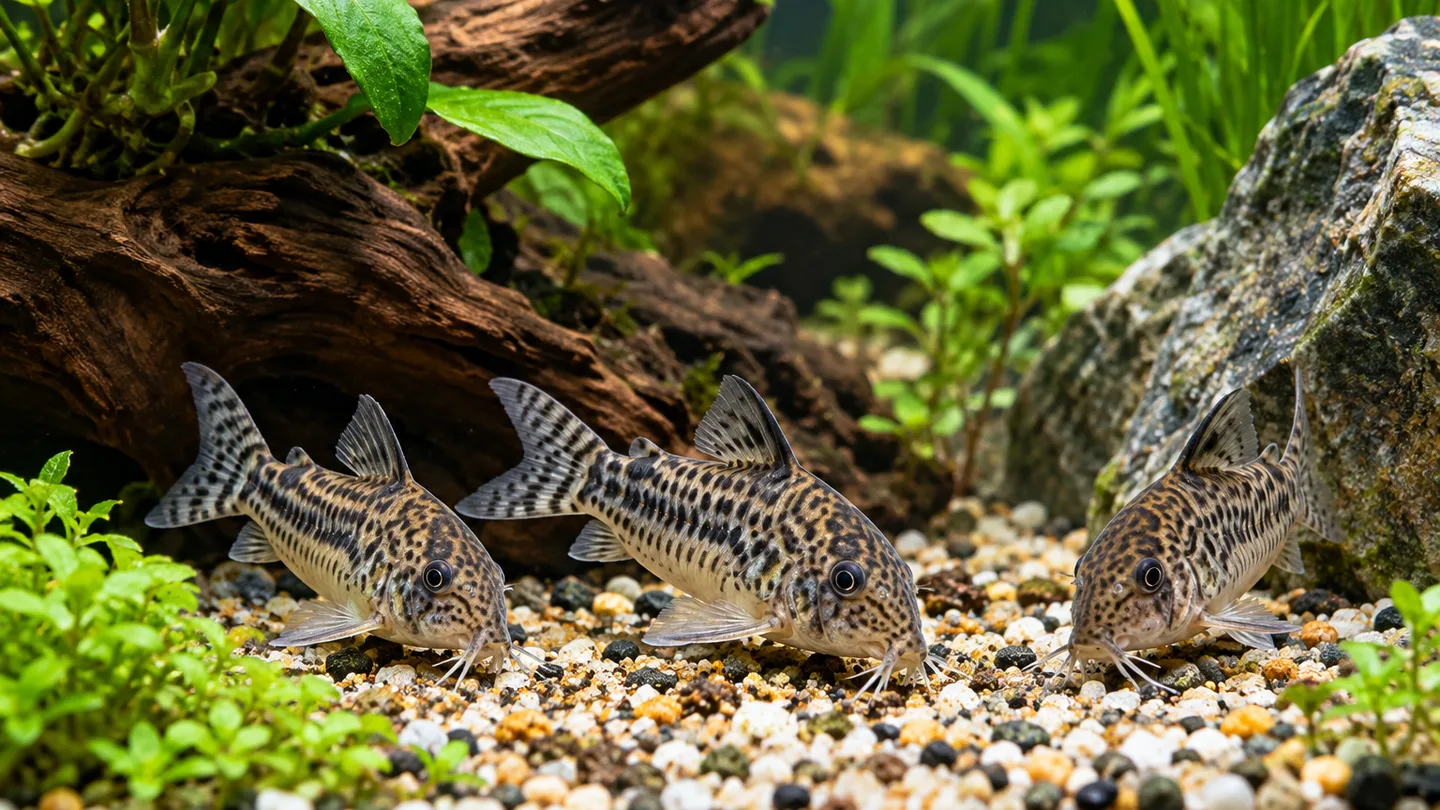
Choose food that reaches the bottom
- Sinking pellets for Corydoras and loaches.
- Wafers or tablets for plecos and grazing catfish.
- Gel foods that stay intact long enough for slow feeders.
- Species-appropriate frozen food delivered near the substrate when needed.
Use timing to reduce competition
Fast livebearers and tetras may intercept sinking pellets before they reach the substrate. Feeding bottom dwellers after the main meal or after lights-out can improve access.
Nocturnal species often become more confident once the tank is darker.
Use more than one feeding spot
Scatter or place food at opposite ends of the tank so one dominant fish cannot guard everything. This is particularly useful with larger plecos, loaches or mixed bottom-feeder groups.
Check that timid individuals emerge and feed.
Do not leave excess food overnight
Night feeding should still be controlled. Inspect for uneaten wafers or vegetables and reduce the next portion if a lot remains.
Targeted feeding should improve access while keeping the total waste load under control.
Related aquarium tools and guides
Frequently asked questions
Do bottom feeders eat fish waste?
No. They need proper food just like other fish.
Should I feed bottom dwellers after lights-out?
Often it helps, especially for shy or nocturnal species, but species behaviour varies.
How do I know if my bottom fish are eating enough?
Observe actual feeding, monitor body condition and make sure food reaches their area before other fish consume it.
Sources and further reading
This guide separates general aquarium arithmetic from fish-welfare decisions. For species-specific limits, always check the needs of the fish you intend to keep.