Common signs of overfeeding include food remaining after meals, swollen bellies, unusually heavy waste production, dirty substrate, cloudy water and rising nitrate. Aquarium Co-Op also notes that excess food can encourage algae, snails and worms. One sign alone is not proof, but a pattern of food waste plus deteriorating water quality is a strong reason to cut back.
Fish often behave as if they are starving even when they are well fed. That makes appetite a poor measure of how much they need. The aquarium itself gives better evidence.
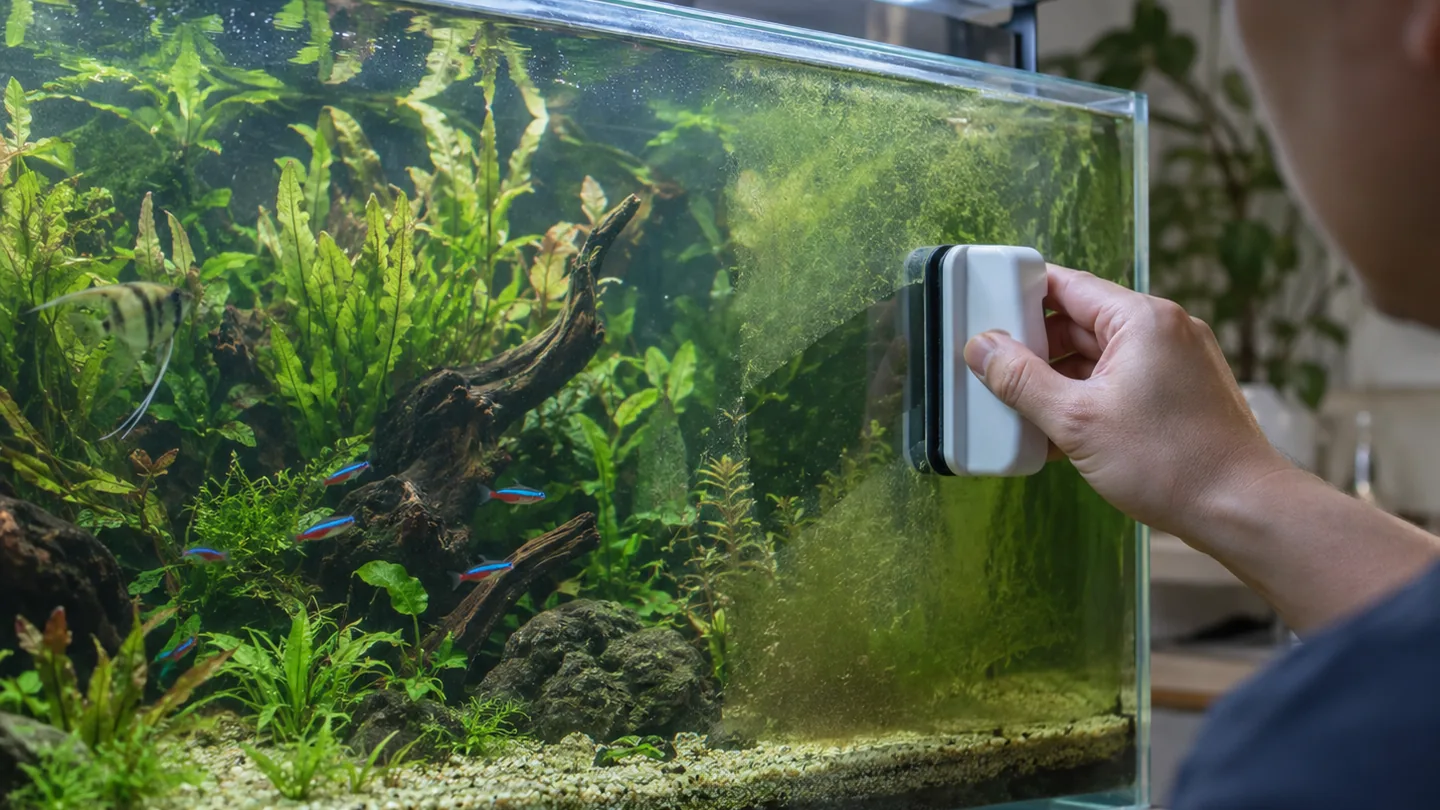
Signs in the tank
- Food sitting on the substrate or trapped behind décor.
- A film or fuzzy growth forming on old food.
- More detritus than usual between maintenance days.
- Cloudy water or surface foam after feeding.
- Nitrate rising faster than it used to.
Signs in the fish
Repeatedly swollen abdomens, unusually heavy faeces or reduced interest at the next feeding can indicate that portions are too large. Some species naturally have round body shapes, so compare individuals with normal examples for that species rather than applying one body-shape rule to every fish.
Watch trends over several days rather than one large meal.
Why overfeeding affects water quality
Food that is not converted into fish growth still becomes waste. Uneaten food decomposes, while extra food eaten by fish becomes extra metabolic waste. Both routes add nitrogen and organic load to the aquarium.
The filter may process that waste, but the end result can still be more nitrate and more maintenance.
How to correct it
- Reduce the portion immediately rather than changing multiple things at once.
- Remove obvious uneaten food.
- Check ammonia, nitrite and nitrate if water quality has deteriorated.
- Feed in more than one location if timid fish are being outcompeted.
- Track what the fish actually consume for a week and reset the routine.
Frequently asked questions
Do fish always act hungry?
Many fish readily beg for food even when they have eaten enough, so begging is not a reliable portion guide.
Can overfeeding cause cloudy water?
Yes. Excess organic material can contribute to bacterial blooms and degraded water quality.
Can overfeeding raise nitrate?
Yes. More food generally means more nitrogen entering the aquarium system.
Sources and further reading
This guide separates general aquarium arithmetic from fish-welfare decisions. For species-specific limits, always check the needs of the fish you intend to keep.