To clean aquarium glass without scratching it, use a pad, magnetic cleaner or scraper designed for the tank material and inspect the tool for trapped grit before every pass. Keep the cleaner above the substrate line so sand or gravel cannot become trapped underneath it. Glass tolerates tools that would scratch acrylic, so never assume a blade or pad is safe for both materials.
Algae itself is usually easy to remove. The real danger is one tiny grain of sand caught under a magnet cleaner or blade and dragged across the front panel.
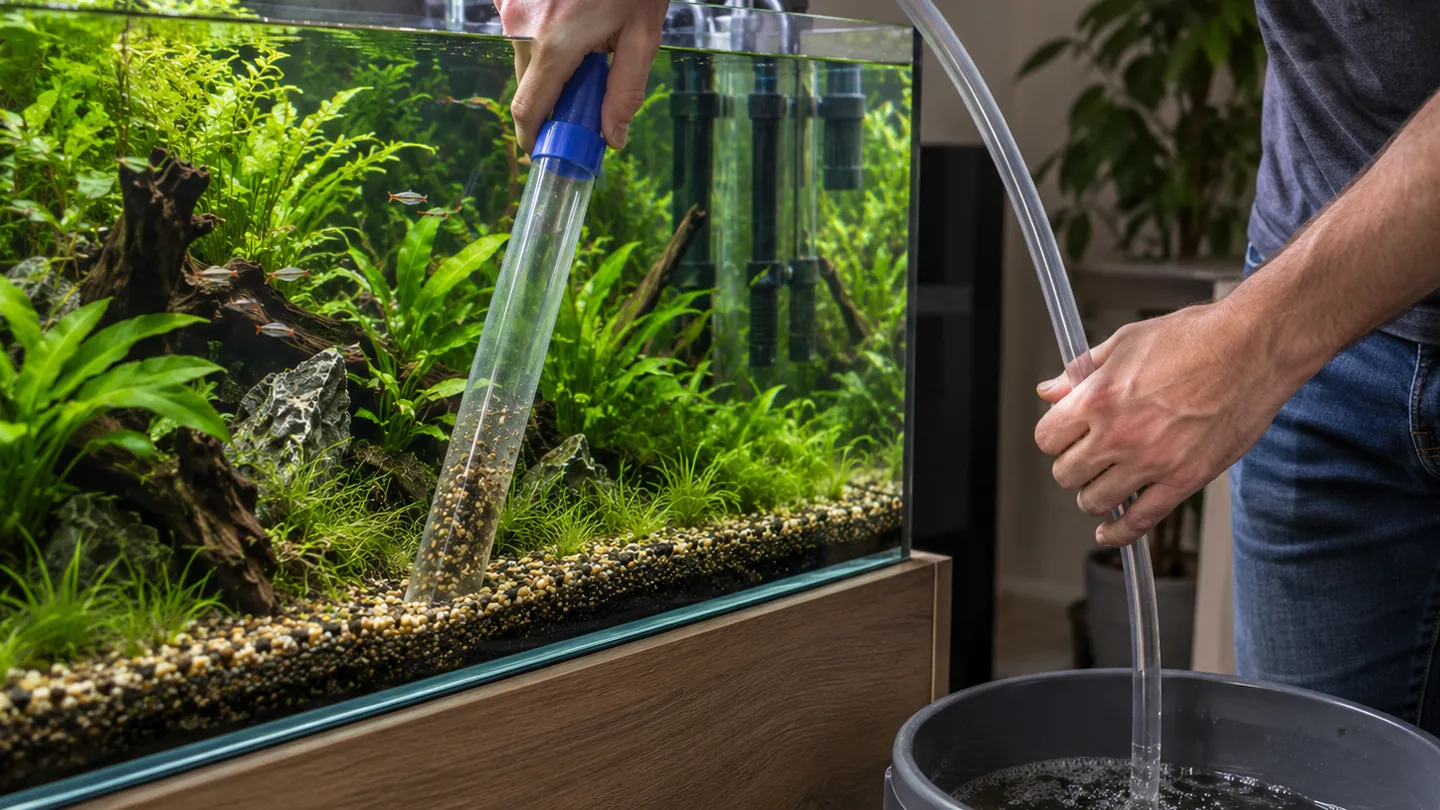
Match the tool to the tank material
Glass aquariums can tolerate certain scraper blades designed for glass. Acrylic scratches much more easily and needs acrylic-safe pads and scrapers.
If you are unsure what the tank is made from, use the gentler option.
Keep substrate away from the cleaner
Stop the pad or magnet before it touches gravel or sand. If a magnetic cleaner falls to the bottom, rinse and inspect it before placing it back against the panel.
Remove stubborn algae gradually
For green spot algae on glass, use a suitable glass scraper at a shallow angle. Avoid pressing harder with a contaminated pad because extra force increases scratching risk.
Never use household soap inside the aquarium
Soap and household cleaning residues can be harmful to aquatic life. Use aquarium-dedicated tools and plain water for inside surfaces.
Clean the outside separately
For exterior fingerprints and water marks, spray cleaner onto a cloth rather than toward the aquarium and keep chemicals away from open water. Plain water or an aquarium-safe exterior cleaner is the safest choice.
Frequently asked questions
Can I use a razor blade on aquarium glass?
A suitable blade can be used on glass, but not on acrylic. Keep the blade free of grit and follow the tank manufacturer's guidance.
Why did my magnetic cleaner scratch the tank?
A grain of sand or gravel may have become trapped between the cleaner and the panel.
Can I use a kitchen sponge?
Only if it is new, chemical-free and known to be non-abrasive; aquarium-specific pads are safer.
Sources and further reading
This guide separates general aquarium arithmetic from fish-welfare decisions. For species-specific limits, always check the needs of the fish you intend to keep.