Gravel quantity for a 20-gallon aquarium depends on footprint, depth and gravel density. A 20-gallon long has a larger floor area than a 20-gallon high, so it needs more gravel to create the same depth. Calculate the base area, multiply by average substrate depth and convert that volume using the chosen gravel's density or bag coverage.
Tank volume describes water capacity, not floor area. That distinction matters whenever substrate is spread across the bottom.
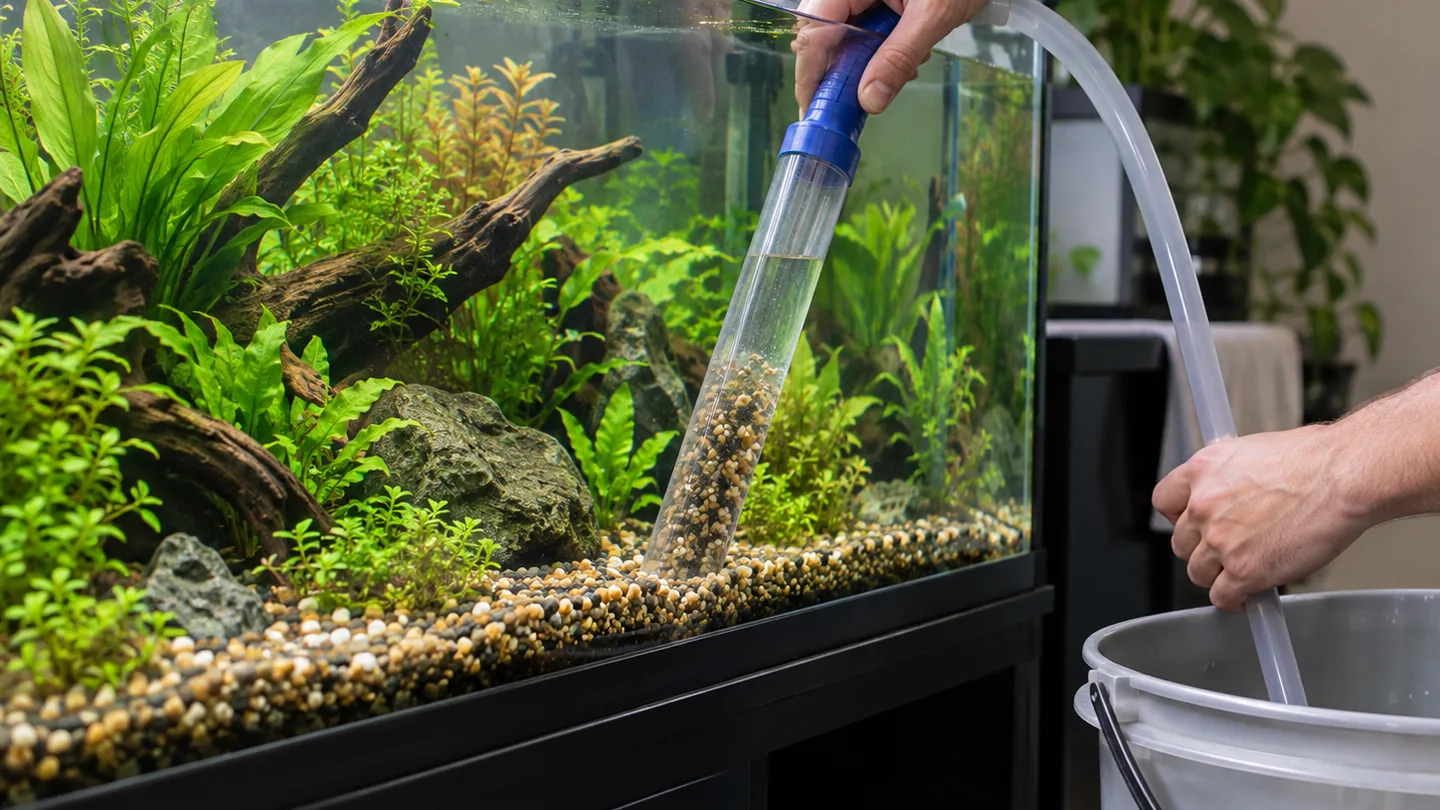
Long versus high changes the answer
The long format spreads water over a wider base, so the same 5 cm gravel depth covers more area and uses more material.
Measure the actual aquarium instead of relying on a generic online number.
Planting depth changes the total
A fish-focused display can use a relatively modest bed. Rooted planted tanks often need more depth, particularly around heavy root feeders.
You can also create deeper planting pockets instead of making the entire bed equally deep.
Account for hardscape displacement
Large stones and wood reduce the area that needs full substrate depth. Conversely, retaining banks and slopes require extra material.
A dry hardscape mock-up before filling gives the best estimate.
Use the calculator rather than a fixed pounds rule
Different gravel products have different densities and bag sizes. Volume-first calculation lets you compare products fairly.
Related aquarium tools and guides
Frequently asked questions
Does a 20-gallon long need more gravel than a 20-gallon high?
Usually yes for the same substrate depth because its base is larger.
How deep should gravel be for plants?
Enough to anchor the root systems you plan to keep; heavy root feeders generally benefit from a deeper zone.
Should I rinse aquarium gravel?
Usually yes for inert gravel, unless the manufacturer's instructions say otherwise.
Sources and further reading
This guide separates general aquarium arithmetic from fish-welfare decisions. For species-specific limits, always check the needs of the fish you intend to keep.