A 10-gallon tank may need only a modest amount of gravel for a decorative layer, while a planted layout needs a deeper root zone. Because gravel density and bag size vary, calculate the substrate volume from the aquarium's footprint and chosen depth, then convert using the product's coverage or density.
Small tanks make it tempting to buy one bag and hope for the best. That can work, but calculating first gives you better control over depth and cost.
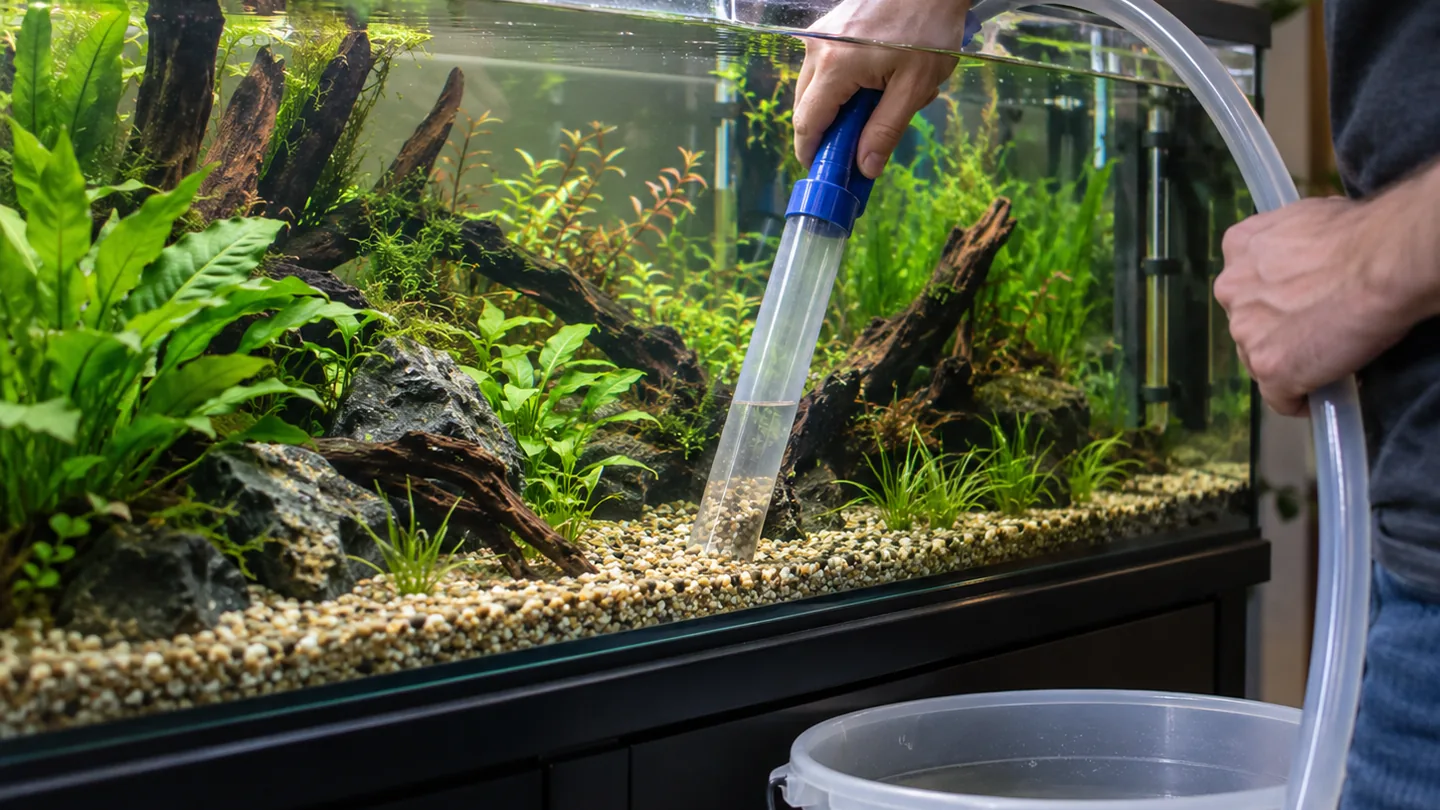
Choose the depth before the bag size
- Thin decorative cover if plants are attached to hardscape.
- Moderate depth for general rooted plants.
- Deeper zones only where the layout needs them.
- Allow for displacement from large rocks or wood.
Gravel is easy to adjust
Unlike active soil, inert gravel can usually be rinsed, added and removed without altering water chemistry. That makes it forgiving if you need to fine-tune the amount.
Use aquarium-safe material with a grain size suited to the fish.
Root feeders still need nutrients
Gravel does not automatically feed plants. Heavy root feeders such as swords and Cryptocoryne often benefit from root tabs or another controlled nutrient source.
This lets you keep stable inert substrate while fertilising only where needed.
Avoid very coarse gravel in a small tank
Large stones reduce usable planting depth and trap more debris relative to the tank size. Medium or fine aquarium gravel is usually easier to work with in a 10-gallon footprint.
Related aquarium tools and guides
Frequently asked questions
Is one small bag enough for a 10-gallon tank?
It may be, depending on bag size and your planned depth. Calculate the volume first.
Can I use gravel with bottom-dwelling fish?
Yes if it is smooth and appropriately sized. Avoid sharp material around delicate barbels.
Can I plant directly in gravel?
Yes. Many rooted plants grow well in gravel when nutrients are supplied.
Sources and further reading
This guide separates general aquarium arithmetic from fish-welfare decisions. For species-specific limits, always check the needs of the fish you intend to keep.