There is no single universal ammonia dose for every aquarium. Many modern fishless protocols use a modest target rather than extremely high concentrations, often around the low single-digit ppm range, but you should follow one method consistently and dose from the actual product concentration. Calculate using the tank's working water volume, test after dosing, and avoid repeatedly adding more ammonia while a previous dose is still present.
Ammonia dosing is where fishless cycling can become unnecessarily complicated. Online recipes vary because they were written for different products, target stocking levels and test kits. The safest approach is to pick one recognised method, know your working water volume and verify the result with a test rather than trusting drops or capfuls alone.
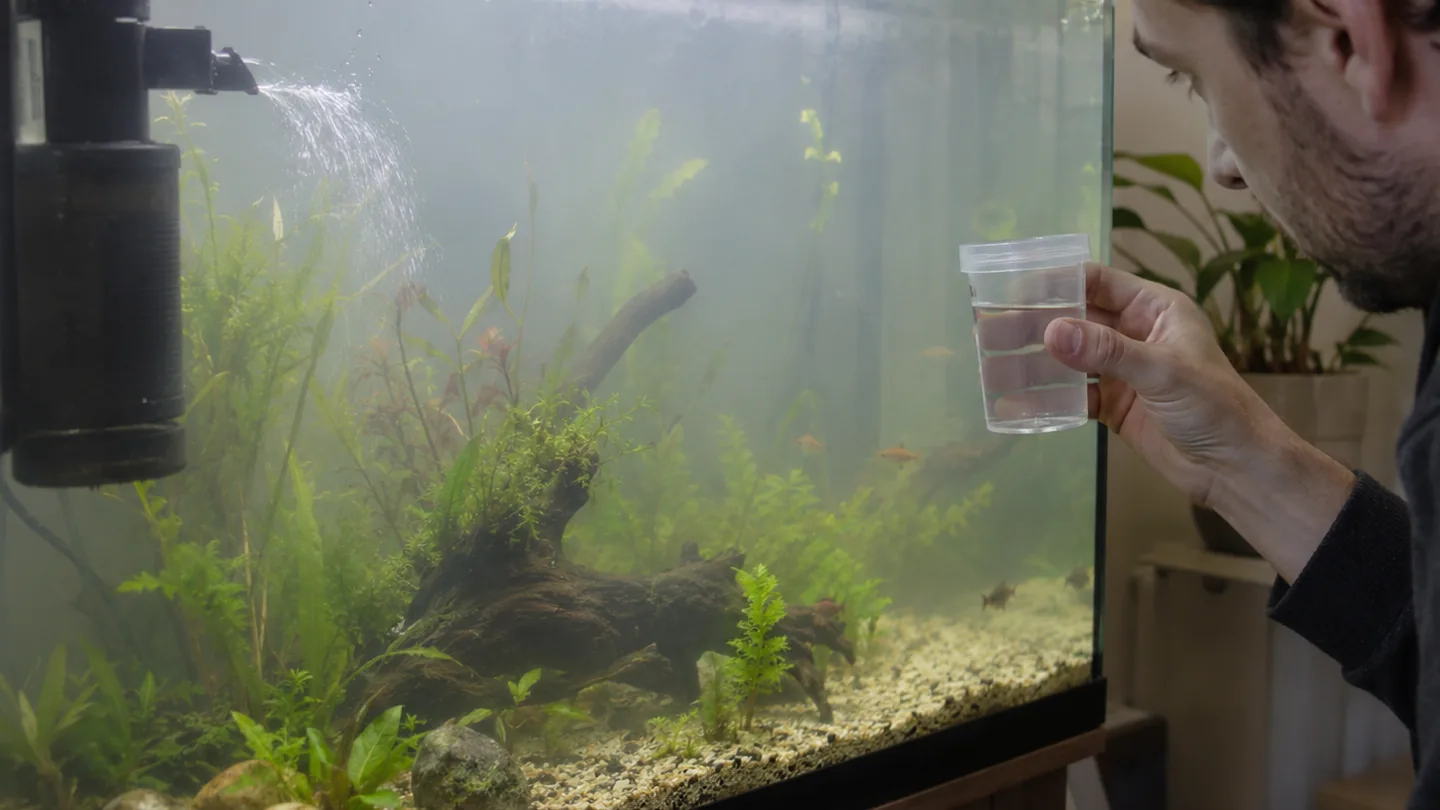
Why there is no universal number
A lightly stocked shrimp tank and a heavily stocked cichlid aquarium do not produce the same future waste load. Cycling methods also use different finish tests and dosing schedules.
The goal is to build enough capacity for the planned stocking without creating concentrations far beyond anything the tank will normally experience.
Work from actual water volume
Nominal tank size overstates the water in many setups because substrate, rocks, glass thickness and the operating waterline reduce volume.
Use the real working volume for dosing and record the amount added so the process can be repeated consistently.
Read the ammonia product label carefully
- Use a product intended for aquarium cycling or one whose ingredients and concentration are clearly known.
- Avoid household cleaners containing surfactants, perfumes or additives.
- Do not assume two brands have the same concentration.
- Dose in a measured container or syringe rather than an unmarked cap.
Test after dosing instead of trusting maths alone
Product labelling, tank volume and measurement errors can all shift the real concentration. Test the aquarium after the dose has mixed thoroughly.
If the result is much higher than intended, a conditioned water change can reduce it without removing the surface-attached bacteria.
Do not redose into an existing high reading
When ammonia is still clearly present, adding more every day can create a large nitrite backlog and lengthen the process.
Follow the redosing rule of the method you selected rather than treating daily ammonia addition as mandatory.
Related aquarium tools and guides
Frequently asked questions
Is more ammonia better for cycling?
No. Excessive ammonia can make the cycle harder to interpret and may slow parts of nitrification. Build realistic capacity, not the highest possible test reading.
Can I use household ammonia?
Only if the product is clearly suitable and contains no detergents, surfactants, fragrances or other additives. Aquarium-specific cycling ammonia is easier to dose safely.
Should I dose ammonia every day?
Only if the cycling method tells you to and the previous dose has been processed appropriately. Do not blindly stack doses.
Sources and further reading
This guide separates general aquarium arithmetic from fish-welfare decisions. For species-specific limits, always check the needs of the fish you intend to keep.