Corydoras are social catfish and should not be kept as single 'cleaner fish'. The RSPCA notes that many catfishes are shoaling and recommends groups of six or more for shoaling tropical fish. Aim for a same-species group where practical, then size the aquarium around the adult footprint, substrate area, filtration and the rest of the community.
One Corydoras may survive, but survival is not the same as meeting behavioural needs. Grouping lets these catfish forage, rest and move with conspecifics rather than living as an isolated bottom-dweller.
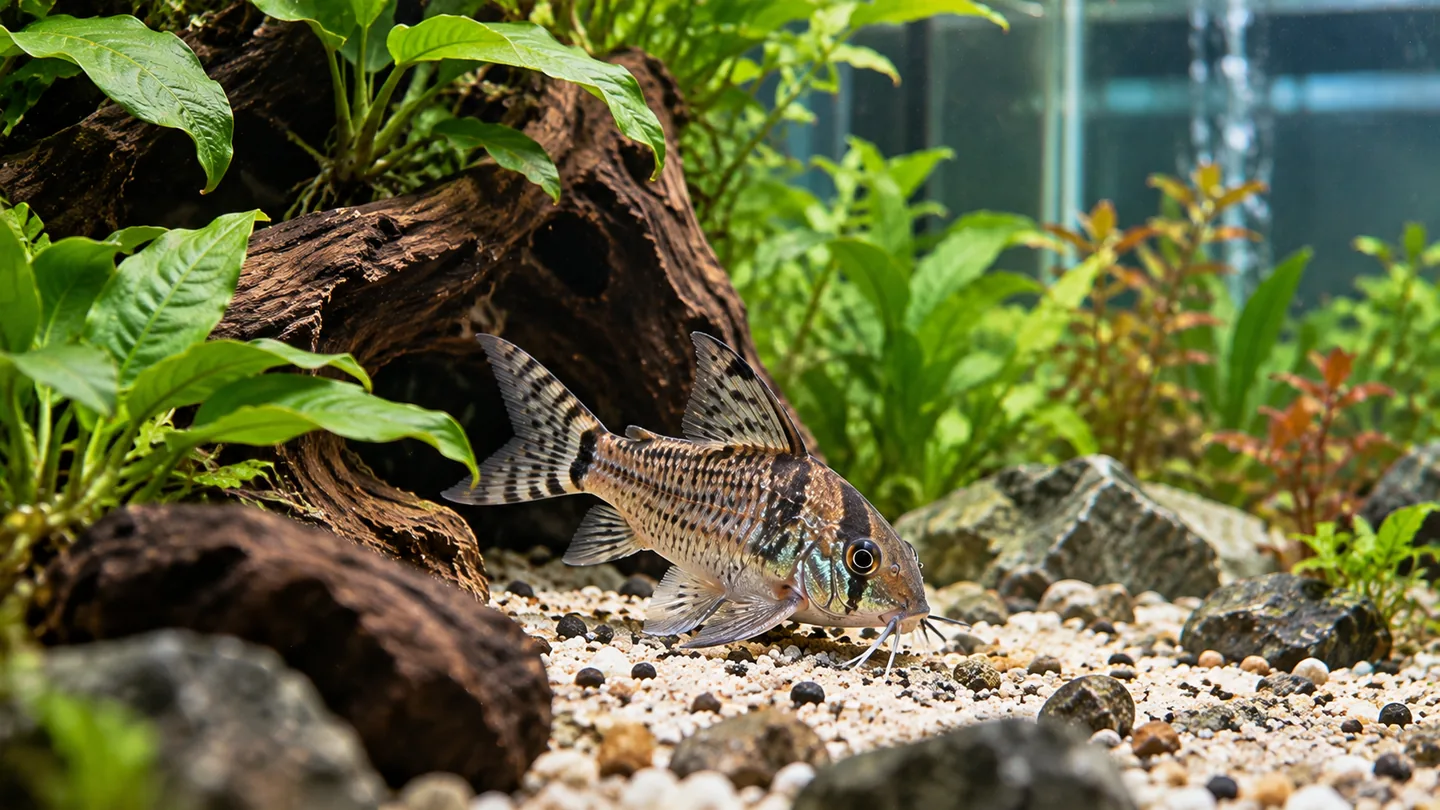
Why same-species groups are better
Different Corydoras species may associate, but a proper group of the same species gives the clearest opportunity for normal social behaviour.
Footprint matters more than height
Corydoras spend most of their time on the bottom, so floor area is more useful than a tall column of water when evaluating group size.
Adult size changes the answer
Pygmy Corydoras use less floor space than larger species. Always plan around adult size rather than juveniles in the shop.
Group size does not replace maintenance
A social group still needs good oxygenation, appropriate filtration, smooth substrate and direct feeding.
Related aquarium tools and guides
Frequently asked questions
Can I keep two Corydoras?
A pair is below the usual group recommendation for social Corydoras.
Can different Corydoras species make one group?
They may mix, but same-species groups are preferable where possible.
Do pygmy Corydoras need a group too?
Yes. Their smaller size does not remove their social behaviour.
Sources and further reading
This guide separates general aquarium arithmetic from fish-welfare decisions. For species-specific limits, always check the needs of the fish you intend to keep.