Corydoras are often among the better betta companions because they are peaceful bottom-dwellers and usually do not resemble a territorial rival. The tank still needs enough bottom area for a Corydoras group, suitable smooth substrate, sinking food and compatible temperature. Monitor the betta closely because individual aggression varies.
The pairing works best when each species can use its own part of the aquarium. Bettas tend to spend more time in the upper water, while Corydoras forage on the bottom.
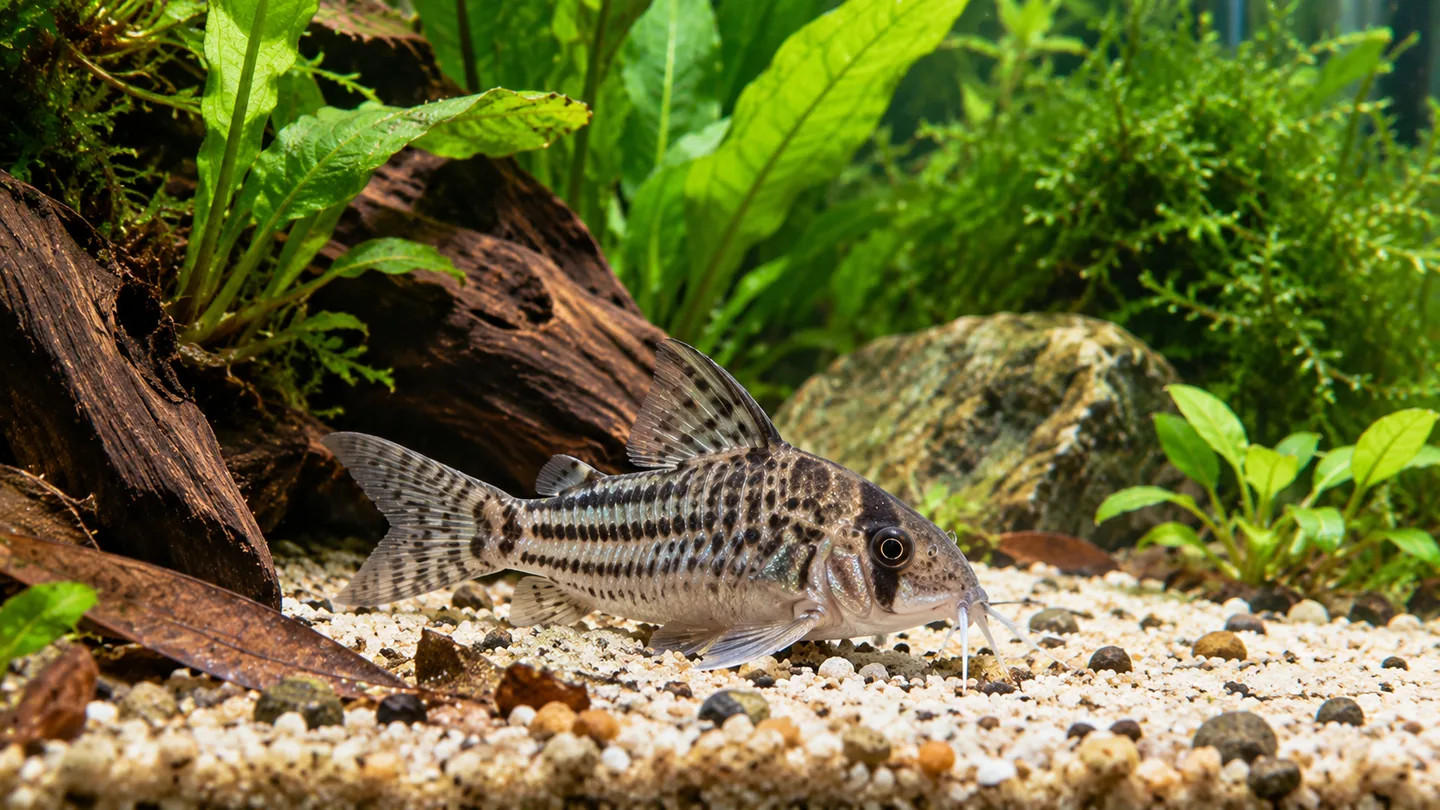
Why the pairing often works
- Different swimming zones.
- Corydoras are not flashy long-finned rivals.
- Corydoras are generally peaceful.
- Plants and wood can create further separation.
The Corydoras group still comes first
Do not keep one Corydoras simply because the tank contains a betta. Corydoras need conspecific company.
Make sure food reaches the bottom
Feed appropriate sinking foods rather than relying on betta leftovers. Watch that the betta does not monopolise every feeding.
Know when to separate
Persistent chasing, torn fins, Corydoras refusing to forage or constant hiding all indicate the combination is failing.
Related aquarium tools and guides
Frequently asked questions
Can a betta hurt Corydoras?
Yes. Individual bettas can harass almost any visible tank mate.
Can one Corydoras live with a betta?
No. Corydoras should have their own proper social group.
Do they need the same temperature?
Yes. Choose a Corydoras species whose temperature range overlaps the betta's setup.
Sources and further reading
This guide separates general aquarium arithmetic from fish-welfare decisions. For species-specific limits, always check the needs of the fish you intend to keep.